
Loading article...
Slot ID: blog-post-top
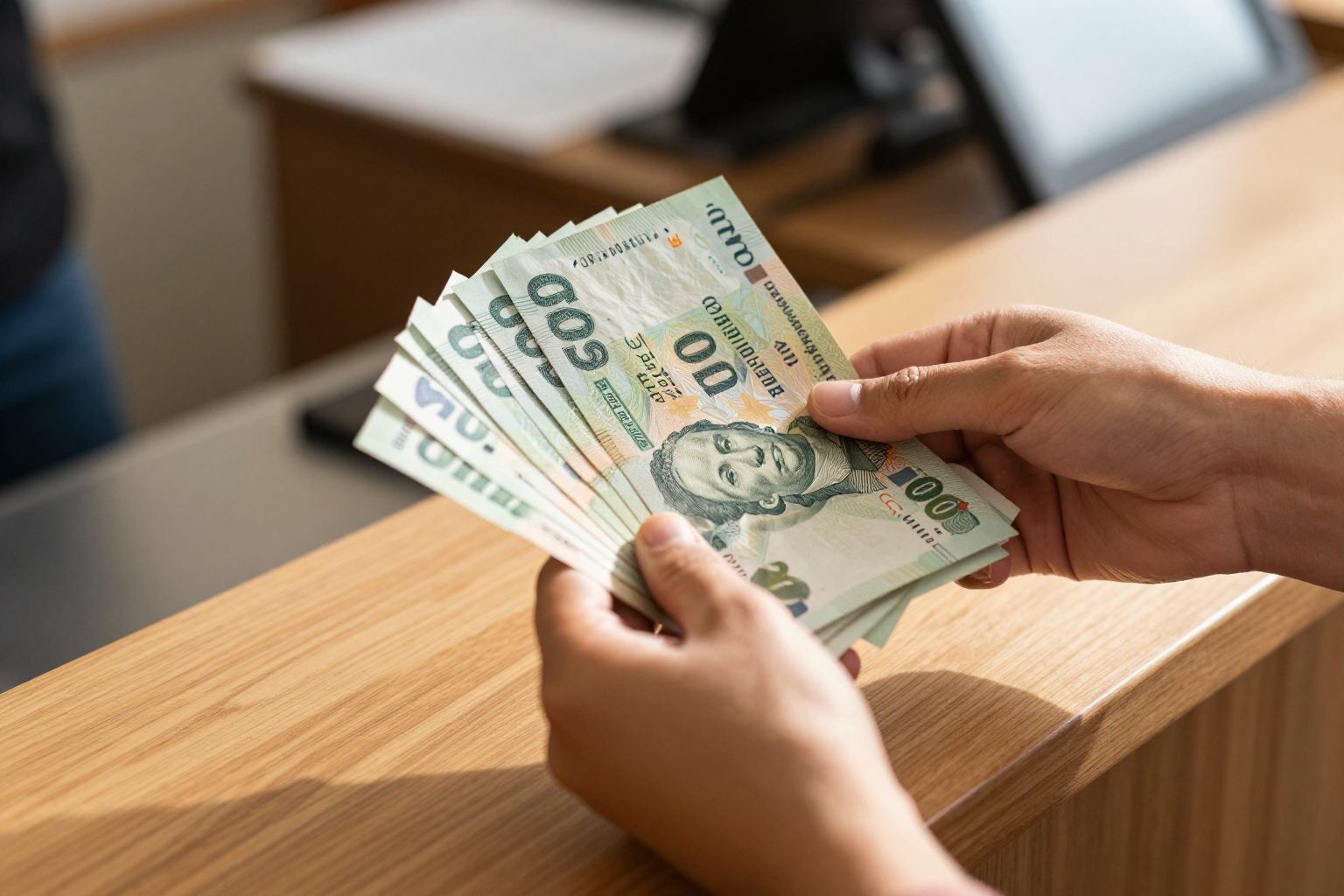
If you're holding Colombian pesos and want dollars, the figure Google shows you is not the figure you'll get. That gap, usually somewhere between 2% and 6%, is the real story behind every COP to USD conversion. And the rate itself never sits still. The peso traded near 5,100 per dollar in November 2022, spent much of 2023 and 2024 drifting between roughly 3,900 and 4,400, and every move changes what your money is worth on the day you decide to exchange it.
A quote of 4,200 COP to USD simply says that one US dollar costs 4,200 Colombian pesos. Flip it around and each peso is worth about $0.00024. That sounds trivial until you're moving 50 million pesos, at which point a 100-peso difference in the rate is worth around $28.
What you're looking at is a relative price. It tells you how the market values Colombia's currency against America's, which means it responds to anything that changes demand for pesos or the supply of dollars. Two forces do most of the work, and they're the same ones behind the USD to Colombian peso rate, just read from the other side of the trade.
Crude oil is Colombia's single biggest export, often accounting for around 40% of goods sold abroad. Coal, coffee, gold and cut flowers follow behind it. When Brent crude slides from $90 to $70, fewer dollars flow into Bogotá and Barrancabermeja, and the peso weakens fast. This is why an OPEC meeting in Vienna can matter more to your exchange rate than anything happening inside Colombia that week.
Banco de la República pushed its policy rate to 13.25% in 2023 to fight inflation, then cut it steadily through 2024 and 2025. High local rates attract foreign money hunting for yield, and that demand props up the peso. When the gap between Colombian and US rates narrows, some of that cash leaves and the currency sags. It's the same mechanism behind what moves the British pound against the dollar. Dollar strength is a global story, and Colombia is a small, open economy that feels it hard.
Colombians abroad sent home more than $11 billion in 2024, a record, and that steady stream of dollars supports the peso month after month. Tourism adds more on top. Politics cuts the other way. The 2022 election of Gustavo Petro pushed the peso to its weakest level on record within months, driven by uncertainty over oil policy, pension reform and the fiscal deficit. Reform votes and election years are reliably volatile for anyone converting a large sum. You can see the same pattern in how the Thai baht reacts to political noise.
The mid-market rate you find on Google or XE is the midpoint between what banks pay to buy dollars and what they charge to sell them. Nobody actually gets it. Whoever handles your conversion takes a slice, and that slice is the only part of the deal you genuinely control.
Four costs show up in a typical conversion:
Add those up and a "free" conversion can cost 6% to 8%. It's the same trap that explains how people quietly lose 4% on yen conversions without noticing anything on the receipt.
Casas de cambio are the classic option, and rates are almost always better in city centres than at airports, hotels or border crossings. In Bogotá, the cluster around Calle 19 and the Centro district is competitive precisely because shops sit side by side. Ask for the tasa de venta, the rate at which they sell dollars, and compare two or three before committing.
Banks such as Bancolombia, Davivienda and BBVA will convert for account holders, but you'll usually need documentation for larger sums and the spread tends to be wider than a good exchange house. They're convenient if the money is already sitting in your account.
ATMs abroad work if you need cash in a hurry, though the combined fees rarely make sense above a few hundred dollars. Multi-currency apps and transfer services are worth checking too, but note that outbound transfers in COP are a thinner market than inbound ones. Availability shifts, so confirm before you rely on it.
Whatever route you pick, compare the final number: how many dollars actually land in your hand or account for a fixed amount of pesos. That single figure cuts through marketing promises, and it's the same test that tells you whether you're getting a fair deal on Vietnamese dong or being quietly overcharged.
Say you hold 5,000,000 COP and the mid-market rate is 4,200.
At the mid-market rate you'd receive $1,190. A casa de cambio in central Bogotá selling dollars at 4,400 returns $1,136, a cost of about $54 for the service. An airport counter quoting 4,600 hands you $1,087, which means you've paid $103 for the convenience of not walking ten minutes down the road. On that amount, the difference between a good counter and a bad one is a decent dinner in either city.
Probably not, and here's the honest reason: almost nobody forecasts the peso consistently. Banks publish year-end targets that miss by 10% or more on a regular basis. If you need dollars within three months, splitting the conversion into three equal chunks spreads your risk far better than betting everything on one day. Set a rule in advance, such as converting on the first of each month, or whenever the rate crosses a level you'd already be happy with, and then follow it. The people who lose the most on currency are the ones waiting for a number they saw once and may never see again.
Look up the mid-market rate. Ask for the total in dollars after every fee, not just the headline rate. Compare two providers on the same amount. Do those three things and you'll typically keep 3% to 5% more than the person standing next to you, which on a $10,000 conversion is a $300 to $500 difference.
Then ask whether you need the dollars at all right now. If the money is staying in Colombia for the next year, holding pesos and earning a high local interest rate may beat converting early, even after tax. If you're leaving the country, paying a foreign supplier or helping family abroad, convert what you need and leave the rest where it earns something. Currency decisions rarely reward cleverness. They reward a few minutes of checking, repeated every time.
Slot ID: blog-post-bottom