
Loading article...
Slot ID: blog-post-top
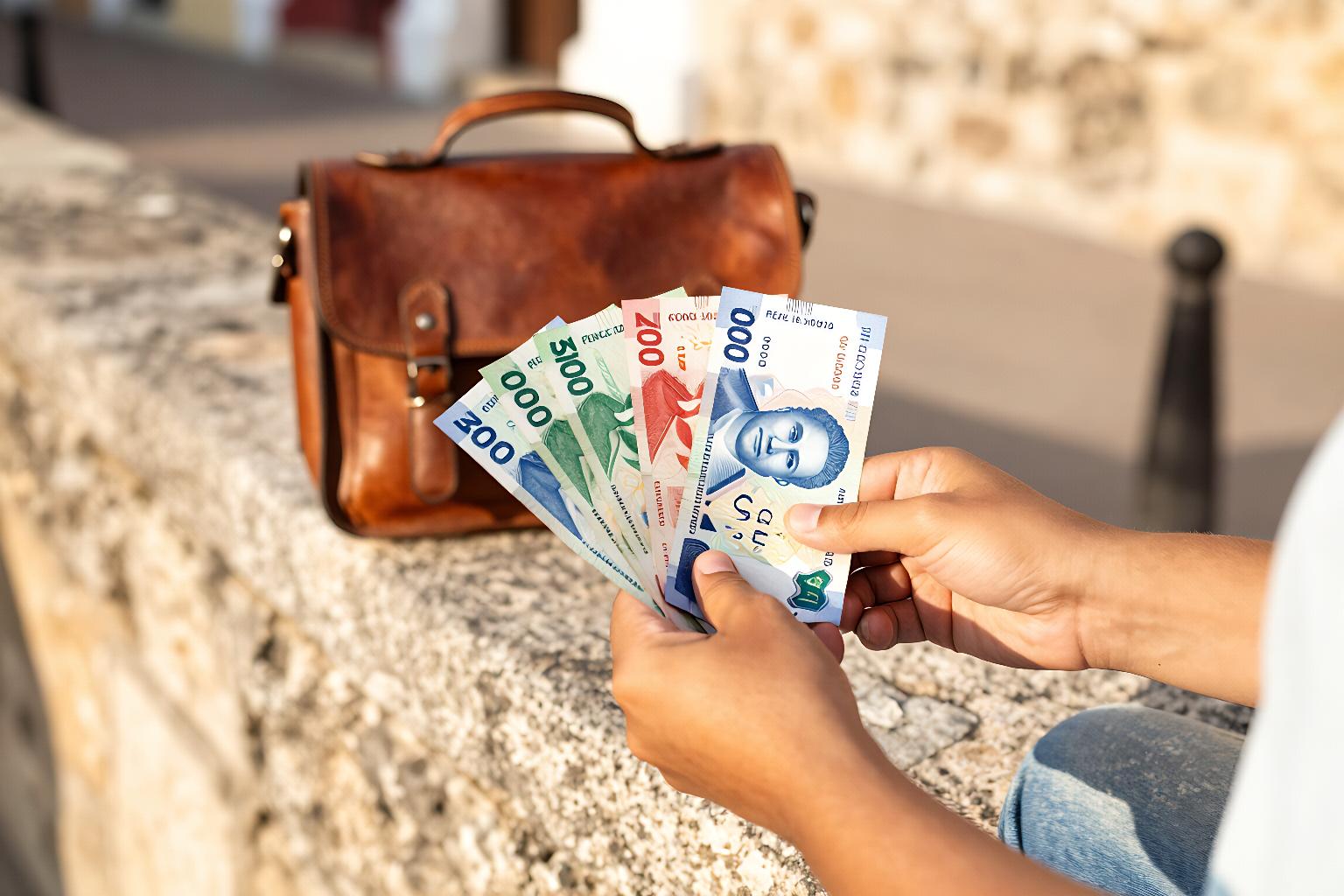
If you're searching for the USD to Colombian peso rate, you probably need one of two things: a number to multiply your dollars by, or a gut check on whether the rate you've just been offered is fair. The second one matters more than most travellers realise. On a $1,000 exchange, the gap between a good rate and a lazy one is routinely 150,000 to 250,000 pesos, enough for a week of lunches, a domestic flight, or three nights in a decent Medellín hotel.
Colombia is one of the more interesting currencies in Latin America to follow. It moves for reasons you can actually understand: oil exports, interest rates, remittances, and the occasional political shock. Knowing which lever is being pulled right now tells you more about the USD to Colombian peso exchange rate you'll get than any chart on a screen.
The Colombian peso is quoted as pesos per US dollar. Around 4,000 at the time of writing, after spending most of the past decade somewhere between 2,900 and 4,300, with a spike above 5,000 in late 2022.
The direction works the way you'd expect once you've seen it once. When the number climbs, the peso is weakening and each dollar buys more pesos. When it falls, the peso is strengthening and your holiday budget stretches a little less. Someone who changed money at the 2021 average got close to 40% fewer pesos than someone who waited until the November 2022 peak. Same dollars, very different trip.
Colombia's export basket is commodity-heavy, and crude dominates it. When oil prices fall, fewer dollars flow into the country and the peso usually softens within weeks. Ecopetrol, the state oil company, is both a major exporter and a big source of government revenue, so a bad quarter for crude ripples through the budget and the currency at the same time. Coffee matters more to rural incomes than to the exchange rate, but a weak harvest still dents the trade balance.
Banco de la República sets Colombia's benchmark rate, and the gap between it and the US Fed's rate drives a lot of short-term money. When local rates sit several points above American ones, foreign funds borrow dollars cheaply and park them in peso deposits for the yield, pushing the peso up. When that gap closes, the trade unwinds and the currency sags. This is the single biggest driver of month-to-month swings.
Colombians working overseas send home more than $10 billion a year, most of it from the United States and Spain. That flow is steady, spikes around Christmas and Mother's Day, and quietly supports the peso even during rough patches.
Elections, tax reform and security headlines move the peso faster than any statistic. The 2022 presidential race pushed it to an all-time low as investors priced in uncertainty over energy policy and fiscal plans. If you're travelling during a Colombian election season, expect the rate to jump around.
The mechanics aren't unique to Colombia. The forces behind what really moves the dollar-peso rate in Mexico are much the same: commodity revenue, rate differentials and political risk doing most of the work.
The figure that shows up in a search result is the mid-market rate: the midpoint between what banks buy and sell dollars for among themselves. Nobody sells pesos to a tourist at that price. Every ATM, exchange bureau and card network adds a spread, and that spread is where your money quietly disappears.
Here's what a $1,000 exchange might look like at a mid-market rate of 4,000:
Same dollars, same day, a spread of more than 200,000 pesos between the best and worst option. It's the same trap that explains why the rate you search is never the rate you get with the yen. Currencies pegged to the dollar, like the UAE dirham, barely move at all, which is why the dirham-dollar rate stays so stable. The Colombian peso sits at the opposite end of that spectrum.
BanColombia, Davivienda, BBVA and Servibanca machines are everywhere in cities. Per-withdrawal limits are the catch. They're often 300,000 to 600,000 pesos, sometimes higher at BBVA. Fees run 12,000 to 22,000 pesos per withdrawal, and your home bank may add its own. Take out the maximum each time to spread that fixed cost. When the machine offers to charge you in dollars, decline. That conversion happens at a bad rate and it's entirely optional.
Currency exchange offices give the best rates for cash, especially along Bogotá's Calle 63, in El Poblado in Medellín and in Cartagena's old town. Bring $50s and $100s, since bigger notes get better rates, and make sure they're clean and untorn. Cracked or marked bills get refused outright. Rates are posted in the window, so walk two doors down and compare before committing.
Visa and Mastercard convert at rates close to mid-market, usually within 1%. Whether that beats cash depends entirely on your card's foreign transaction fee. A card with no fee is excellent. A card charging 3% is worse than an ATM withdrawal.
These exist for emergencies. Expect 8% to 15% worse than a city exchange office. Take out 200,000 pesos for a taxi into town and sort the rest out later.
If you live in Colombia or support family there, transfers beat stuffing cash in a suitcase. Wise, Remitly, Western Union and Global66 all compete, and the headline rate is rarely the whole story. A service advertising a great rate may charge a flat fee that wipes out the advantage. Compare the total pesos that land in the recipient's account. The maths is identical to getting a better deal on the rupee-dollar rate: ignore the advertised number and compare what actually arrives.
At 4,000 per dollar, $100 becomes 400,000 pesos, which is a genuinely useful amount in Colombia. A tinto, the small black coffee, costs 3,000 to 5,000. A menu del día at lunch, which is soup, a main, rice and juice, runs 15,000 to 25,000. A cross-town Uber in Bogotá is 15,000 to 30,000. A long-distance bus from Bogotá to Medellín is 80,000 to 120,000. A good dinner for two with wine lands between 150,000 and 250,000. For a fuller breakdown of where those notes go, this piece on what $100 turns into in Colombia is worth a read before you pack.
At roughly 4,000 to the dollar, drop three zeros and divide by four. A 120,000 peso bill is $30. An 80,000 taxi quote is $20. Going the other way, multiply dollars by four and add three zeros: $25 is 100,000 pesos. Adjust the divisor if the rate has drifted, since at 4,300 you'd divide by 4.3 and at 3,800 by 3.8, but the three-zeros trick keeps you from overpaying when you're tired and jet-lagged.
Do the boring prep and the rest takes care of itself. Set a rate alert a week out so you know whether the peso is drifting up or down. Order a small amount of cash from your bank only if its rate beats what you expect to find locally, which it usually won't, and plan to pull your first proper withdrawal from a bank ATM in the city rather than at the airport. Write down your card's foreign transaction fee somewhere you'll actually see it. That single number decides whether you should be paying with plastic or cash for the whole trip, and it's the difference between a budget that works and one that quietly bleeds 3% on every meal.
Slot ID: blog-post-bottom