
Loading article...
Slot ID: blog-post-top
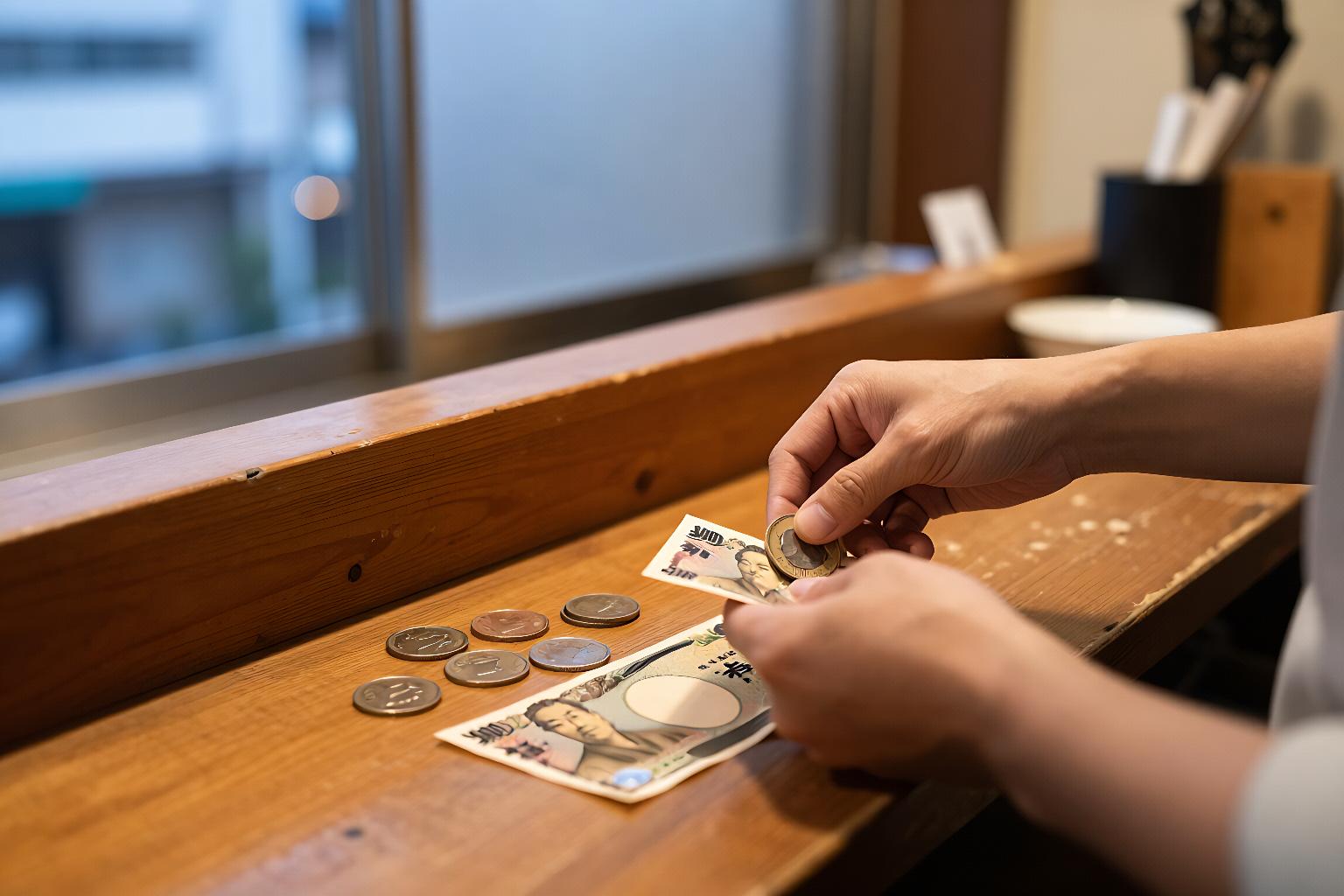
Type "dollar to yen" into a search bar and you get one clean number. This morning it might read 157.42. That figure comes from the interbank market, where banks trade millions of dollars at a time, and it is the fairest single measure of what one US dollar is worth in Japanese currency.
It is also not the number you will get. Not at the airport counter, not at your bank, and certainly not at the exchange desk in a Tokyo hotel lobby. The gap between the rate you searched and the rate you settled at is where most travellers quietly lose money, and that gap matters more than guessing where USD/JPY heads next.
Here is how the pair works, what actually moves it, and how to keep more of your money when you convert.
USD/JPY tells you how many yen one dollar buys. That direction trips people up, because most major pairs are quoted the other way round. With EUR/USD you are watching the euro's strength. With USD/JPY, a number going up means the dollar is getting stronger and the yen is getting weaker.
The scale of the move is what surprises people. A shift from 145 to 155 looks modest on a chart, but it means your $1,000 goes from ¥145,000 to ¥155,000. Same dollars, roughly 7% more spending power. For Toyota selling Camrys in Ohio, that move is a windfall. For a family in Sapporo filling a tank with imported fuel, it is a squeeze.
One yen is worth well under a cent. At 157.4, ¥1,000 is about $6.35. That is why yen prices look enormous at first glance: a ¥14,000 train ticket is roughly $89. It also means a 2% move in the rate is genuinely significant in yen terms, even though it sounds like rounding noise in dollar terms.
Money drifts toward higher yields. When the Federal Reserve's policy rate sits around 4.25% to 4.50% while the Bank of Japan's sits at 0.5%, Japanese institutions and households have a strong reason to move cash into dollar assets. That steady flow is the single biggest driver of the pair over months and years.
The BOJ only ended its negative rate policy in March 2024, and has raised rates in small steps since. Each hike narrows the gap and gives the yen a push. Each Fed cut does the same. Currency pairs that sit on wide rate gaps tend to behave in a similar way, which is why the same pattern shows up in what really moves the dollar-peso rate, where Banxico and the Fed set the terms.
Borrow yen cheaply, buy something that yields more, pocket the difference. That trade ran for years and pushed the yen as weak as 161.95 in early July 2024, its lowest level since 1986. Then it broke.
On 5 August 2024, a combination of a weak US jobs report and a BOJ rate hike triggered a violent unwind. USD/JPY dropped roughly five yen in a single session and the Nikkei fell more than 12% in a day. Anyone converting dollars to yen that morning got a materially better rate than they would have at lunchtime the previous Friday. Carry trades are calm right up until they are not.
Japan imports the overwhelming majority of its oil and gas, and those contracts are priced in dollars. A weaker yen makes those imports more expensive, which feeds into household electricity bills and supermarket prices. That is the political pain that eventually forces a response.
Japan's Ministry of Finance has stepped into the market repeatedly. In April and May 2024 it spent around ¥9.8 trillion on yen-buying intervention, and roughly ¥5.5 trillion more in July. Officials also make "rate check" calls to dealers, which often spook the market into moving before a single yen is spent.
Say the mid-market rate is 157.42 and you want to convert $1,000. A no-markup provider gives you about ¥157,420. A bank charging a 3% margin gives you roughly ¥152,700. You just lost ¥4,720, or about $30, before you have bought a single coffee.
That is not a yen-specific problem. It is the same mechanics behind why the number you search is never the number you get on any pair. The headline rate is a market rate. The rate on your receipt is a retail product, and the difference is the seller's revenue.
One rule saves more money than any comparison shopping. When a terminal or a card machine offers to charge you in US dollars instead of yen, decline it. That is dynamic currency conversion, and the markup is typically 3% to 5% for the privilege of seeing a dollar figure you did not need. The playbook is the same one behind how to get a better deal on a currency exchange: compare the all-in cost, not the advertised rate.
Abstract rates become real once you price a trip.
Now run a two-week trip on ¥300,000. At 157 you need about $1,911. At 145 you need $2,069. That is a $158 swing on the same itinerary, purely from timing and where you converted. Smaller amounts feel the same way, which is exactly why what $100 really turns into depends so heavily on the counter you walk up to.
Mostly, no. Forecasting USD/JPY is a full-time job that plenty of professionals do badly. Analysts spent most of 2023 and 2024 calling for the yen to strengthen, and it kept sliding to 38-year lows.
What actually works is mechanical. If you need ¥1.2 million for a move or a long trip, split it into three or four conversions over as many months. You will never get the best possible rate, but you will also never get the worst, and the average outcome beats a single panicked exchange the week before you fly.
For amounts above roughly $20,000, a forward contract from a specialist broker locks the rate today for a future settlement date. You give up the upside in exchange for certainty, which is usually the right trade when you are paying a tuition bill or closing on a property.
If you do want to time a conversion, ignore the daily headlines and track four things. Federal Reserve meeting dates and the rate projections published alongside them set the dollar side. Bank of Japan policy meetings, held roughly every six weeks, set the yen side. US inflation prints move the pair more than almost any other data release.
The one you will not see on a calendar is Tokyo's tolerance. When the yen slides past levels officials describe as excessive, intervention risk climbs, and the market knows it. A sharp, unexplained rally in the yen during Asian trading hours is usually the ministry, not a change in sentiment. Watching for those spikes is far more useful than reading another forecast, because the yen has spent years proving that the people publishing those forecasts do not know either.
Slot ID: blog-post-bottom