
Loading article...
Slot ID: blog-post-top
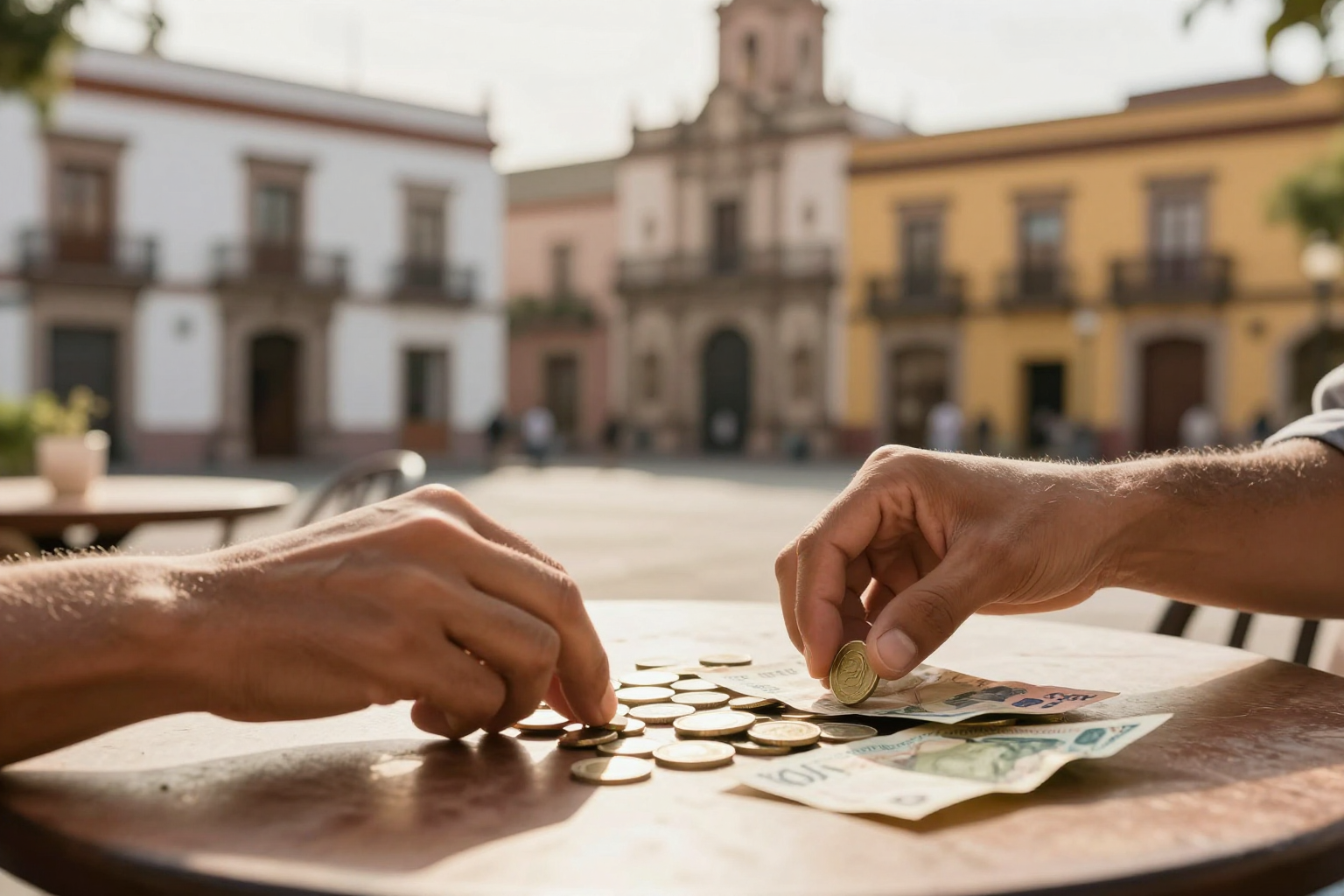
If you've wired money to Mexico, split a dinner bill in Mexico City, or just watched a currency app drift while you waited for coffee, you've met USD/MXN. It's one of the most actively traded currency pairs in the world, and unlike the euro or the yen, it moves for reasons that touch everyday life on both sides of the border.
Here's what the quote actually means, what pushes it around, and how to stop losing money in the gap between the number you search and the number that lands in your account.
USD/MXN is the price of one US dollar expressed in Mexican pesos. If the quote reads 18.40, one dollar buys 18.40 pesos. The dollar is the base currency and the peso is the quote currency, and the pair is written that way by convention across banks, brokers, and news feeds.
The direction trips people up. When USD/MXN rises, the dollar is strengthening and the peso is weakening. When it falls, the peso is gaining. A move from 17.00 to 18.50 is roughly a 9% swing, which on a $10,000 transfer is about $880 depending on which side of the move you're on. Currency is not a rounding error.
The market runs nearly around the clock, from Sunday evening to Friday afternoon, with the deepest liquidity when New York and Mexico City trading hours overlap. The rate you see at 3 a.m. on a Sunday is often wider and less dependable than one quoted at 11 a.m. on a Tuesday.
Banxico, Mexico's central bank, has historically run far higher rates than the Federal Reserve. Through 2024 its benchmark sat at 11.25% while the Fed's target range hovered around 5%. That gap pulled money into peso assets and was the single biggest reason the currency held up so well. As Banxico cut through 2024 and 2025, eventually easing toward 7.5%, some of that support came out of the market.
The peso is a high-beta currency. It does well when investors feel bold and badly when they don't. A selloff in US equities, a spike in volatility, a sudden geopolitical headline: the peso usually weakens first and asks questions later. It works as a live reading of how much risk the market wants to hold that day. That sensitivity shows up across emerging markets, from how the rupee-dollar rate works to the Brazilian real, and it's one of the first things professional traders check in the morning.
Mexico receives more than $60 billion a year in remittances, most of it from workers in the United States. That's more foreign income than tourism or oil exports generate. Every one of those dollars converted into pesos is a natural seller of USD/MXN, a steady structural flow that cushions the currency on rough days. The Philippines runs a similar remittance engine, and the same pattern shapes its exchange rate.
Mexico's 2024 election, the judicial reform fight, and US tariff threats all moved the peso sharply within hours. So did the upside: manufacturers shifting supply chains closer to the US market send dollars into Mexico, and inbound dollars tend to support the currency.
From mid-2022 into early 2024, the peso did something unusual. It strengthened while most emerging-market currencies weakened, touching around 16.7 per dollar in April 2024, a level last seen in 2015. Traders called it the super peso.
Then it unwound fast. After Mexico's June 2024 election, USD/MXN jumped more than a peso in a single session as investors repriced political risk. Over the following year the pair swung mostly between the high teens and the low twenties. The lesson isn't that the peso is doomed or invincible. It's that trends can reverse inside a week, and anyone who assumed the calm would last got hurt.
Type "USD/MXN" into a search bar and you'll get the mid-market rate, the midpoint between what banks are buying and selling dollars for at that instant. It's a reference point, not an offer. Nobody is obligated to trade with you at it. That gap between the headline number and the payout is the same story as why the US-to-pounds rate you search isn't the rate you get, and it's the most expensive misunderstanding in personal currency exchange.
What the markup typically looks like:
One warning worth taping to the inside of your wallet: when a Mexican ATM or card terminal offers to charge you in dollars instead of pesos, decline. That's dynamic currency conversion, and it quietly adds 3-7% to the bill in exchange for a number that feels familiar.
Those high Mexican rates made the peso a favourite target for carry trades, where traders borrow in a cheap currency and park the proceeds in a higher-yielding one to collect the difference. As long as the peso stayed stable, that trade printed money for years.
In August 2024, a surprise rate hike from the Bank of Japan blew up the yen-funded version of the same trade and USD/MXN spiked as positions unwound worldwide. It was a blunt reminder that the yen-dollar rate and the peso are linked through global leverage, not just through bilateral trade. If you hold peso assets or peso savings, that connection deserves your attention.
A few habits separate people who get a fair deal from people who don't.
If you're travelling rather than transferring, keep in mind that the exchange rate is only half the equation. Purchasing power is the other half, which is why what $100 really turns into in Colombia can look nothing like the same $100 in Mexico City. Local prices move independently of the currency quote.
Three things will shape USD/MXN over the next year or two.
The first is the rate gap. If Banxico keeps cutting faster than the Fed, the peso loses part of its yield advantage and tends to soften. If the Fed cuts harder, the opposite happens, and the peso usually firms.
The second is trade policy. Tariffs, USMCA reviews, and any change to remittance rules hit Mexico's dollar inflows directly, and the peso reacts within minutes of a headline, often before anyone knows the detail.
The third is near-shoring, which is slower but more durable. Every new plant announced in Monterrey or Guadalajara represents a long-term buyer of pesos. That flow won't rescue the currency in a bad week, but it shifts the baseline over years.
Nobody knows where USD/MXN sits twelve months from now, and anyone claiming otherwise is guessing. What you can control is the spread you pay, the timing of your conversions, and whether you understand why the number moved in the first place. Those three things are worth more than any forecast.
Slot ID: blog-post-bottom