
Loading article...
Slot ID: blog-post-top
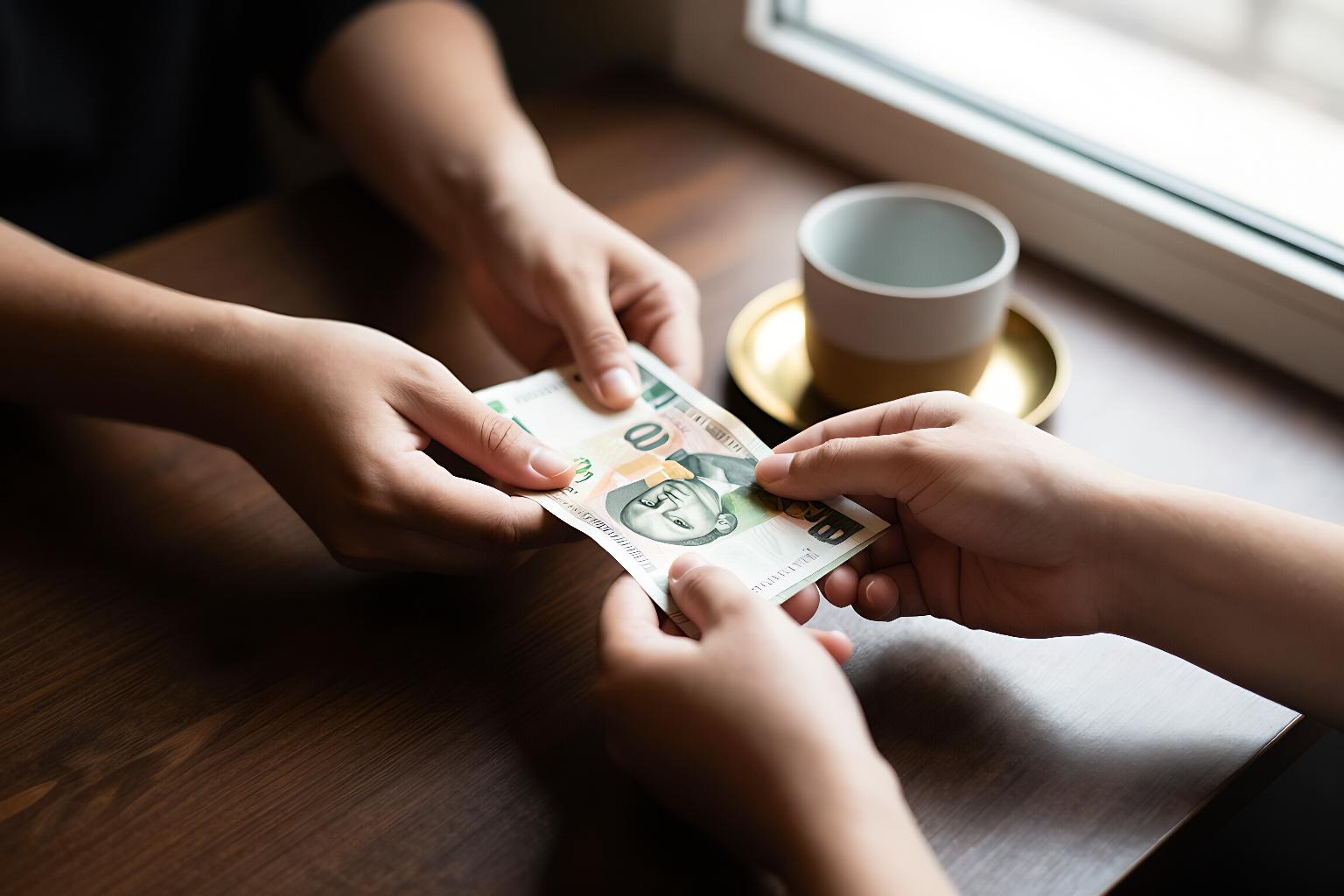
"What's the yen to USD rate today?" sounds like a question with one answer. It isn't. The figure on a bank's currency converter, the one Google shows you, and the one you actually get when you hand over ¥100,000 at a counter in Tokyo can differ by enough to cover a good dinner. On a conversion worth $3,000, that gap runs into the hundreds.
The yen-dollar pair is one of the most heavily traded in the world, and one of the most misunderstood by ordinary people. If you're paid in yen, sending money home from Japan, planning a trip, or holding a bit of each, the useful question isn't what the rate is. It's which rate you can actually get.
The quoting convention trips people up, so let's settle it. The rate is written as USD/JPY, meaning the number of yen one dollar buys. A quote of 150 means $1 = ¥150, and ¥1 is worth roughly $0.0067.
When that number climbs, the dollar is strengthening and the yen is weakening. A weak yen makes Japan cheaper for anyone spending dollars, flatters the earnings of exporters like Toyota, and makes imported fuel, food and electronics more painful for households in Japan. When the number falls, everything flips. Every headline about the yen "sliding" or "surging" is really just this one figure moving.
Japan held its policy rate at or below zero for the better part of two decades. The US Federal Reserve pushed its benchmark to 5.25–5.50% by mid-2023. A dollar deposit pays you several percent a year; a yen deposit pays almost nothing. Money follows yield, and that gap is the single biggest reason the yen fell from around 115 per dollar in early 2022 to beyond 160 by mid-2024.
The gap has since narrowed. The Bank of Japan lifted rates to 0.5% in early 2025 while the Fed began cutting, and the yen clawed its way back into the 140s. Nothing fundamental about Japan changed. Only the price of holding one currency instead of the other did. The full mechanics are worth understanding if you convert regularly, and this breakdown of what really moves the yen-dollar rate goes deeper into the drivers.
Because yen were so cheap to borrow, funds borrowed them and bought higher-yielding assets, from US Treasuries to emerging-market debt. That amplifies every move. When the BOJ hinted at hikes in late July 2024, the trade unwound fast: the yen jumped from about 161 to 142 against the dollar in roughly three weeks. Anyone converting yen into dollars in that window got a gift. Anyone who had borrowed in yen to buy dollars did not. It's the same mechanic that makes volatile pairs like the dollar and Mexican peso so jumpy, which is why the rate on your screen is never the rate you get on those pairs either.
Japan imports almost all of its oil and gas, and those bills are settled in dollars. When crude spikes, Japanese importers sell yen to buy dollars, which pushes the yen down further. There's a seasonal angle too: Japanese exporters tend to bring foreign earnings home around the March fiscal year end, which can give the yen a brief lift.
Google and currency sites show the mid-market rate, the midpoint between what big banks pay to buy and sell dollars between themselves. It's a fair reference point, not a price you can transact at.
When you hand over yen and ask for dollars, the provider quotes a rate above mid-market, because they need more yen for every dollar they hand you. That difference is the spread, and it's where your money quietly disappears. An airport counter at Narita might sit 4–6% off mid-market. A high-street Japanese bank might be 2–3%. A good online multi-currency account runs about 0.4–1%. Same product, wildly different prices. That pricing trap shows up across most major pairs, as this guide to avoiding losses on every dollar you convert makes clear.
Say mid-market is 150. Your ¥500,000 is worth $3,333.
Your bank quotes 153.5, so you receive $3,258. That's $75 gone before you've left the branch.
A kiosk quotes 156.5, and you walk away with $3,195. Now $138 has evaporated, about 4% of your money, for the privilege of standing at a worse counter. Run that across a year of monthly transfers and the spread alone costs you close to $900.
The same arithmetic applies to any pair where one currency is far weaker than the other. Converting Vietnamese dong carries the identical trap, just with more zeros on the receipt, as this explainer on what 25,000 dong per dollar really means sets out.
You don't need a calculator for a rough figure. Around 150, drop two zeros and take two-thirds:
If the rate is nearer 145, nudge the answer up a little. Nearer 160, shave it down. Handy in a shop when the price tag runs to six figures and your brain hasn't switched currencies yet.
Nobody calls the top or bottom of the yen consistently, including people who do it for a living. What you can control is everything around the rate: how much you convert at once, which provider you use, and how exposed you are to a single day's move.
If you need dollars for a tuition payment in three months, splitting it into three or four conversions smooths out the luck considerably. Set a rate alert in your banking or conversion app and treat it as a nudge to act, not a signal to dump everything at once.
The biggest single-day swings tend to land on Bank of Japan and Federal Reserve decisions, plus US inflation releases. Those dates matter because spreads widen when the market is volatile, so you can pay more for the same trade on exactly the days you're watching most closely.
Three checks, every time:
If a deal looks too good, it usually is. A "0% commission" counter quoting 5 yen worse than mid-market hasn't waived its fee; it has folded the margin into the exchange rate where it's harder to spot. Compare the final dollar amount that lands in your account, not the headline percentage being advertised. That landing figure is the only number that matters, and it's the one providers rarely put in the window.
Slot ID: blog-post-bottom