
Loading article...
Slot ID: blog-post-top
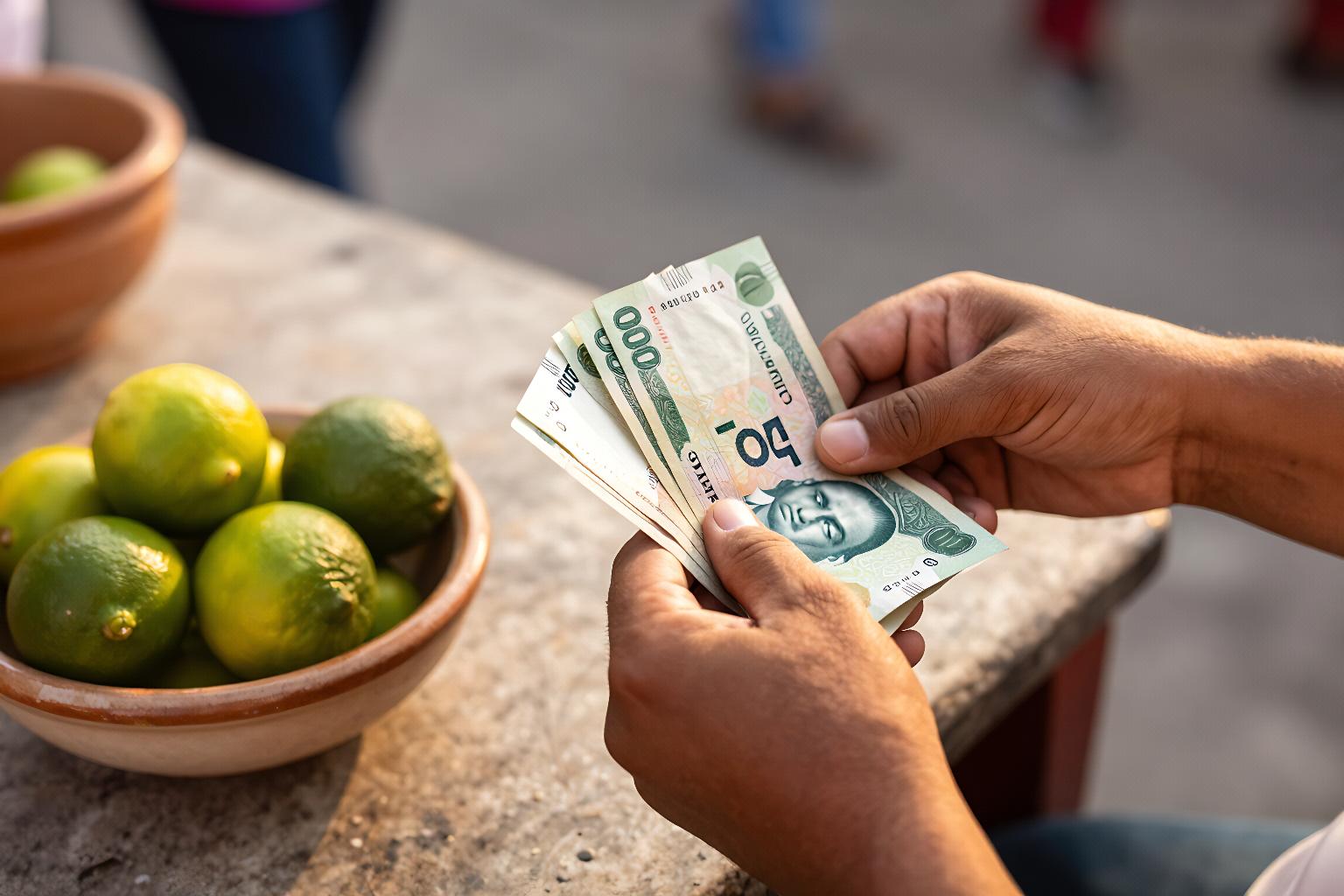
Search "usd to mxn" and you get an instant answer: 18.42, or 17.90, or 20.05, depending on the week. One clean, authoritative number. It's also not the number you'll get. If you convert $1,000 at a bank branch in Chicago or an ATM in Oaxaca, the pesos that land in your hand will reflect a rate noticeably worse than the one on your screen, usually by 3% to 6%.
That gap is where the real money lives. Understanding it takes ten minutes and can save you hundreds of dollars a year, whether you're sending money home to Guadalajara, paying a contractor in Mexico City, or spending two weeks in Baja with a rental car to pay for.
The rate is simply how many Mexican pesos one US dollar buys. If it reads 18.00, one dollar gets you eighteen pesos, and 500 dollars gets you 9,000. Nothing complicated there.
The complication is that at least three different numbers exist at any given moment:
Whenever you compare offers, compare each one against mid-market rather than against each other. Two services can advertise "no fees" and still differ by 4% once their rates are lined up against the real one. That single habit is the reason why the rate you're shown isn't the one you get becomes obvious the moment you look for it.
USD/MXN is one of the most heavily traded emerging-market pairs in the world. It moves for reasons that have surprisingly little to do with Mexico's day-to-day economy and a great deal to do with interest rates and risk appetite.
If you've watched other major pairs behave this way, the mechanics will feel familiar. The same forces that drive the yen-dollar exchange rate show up here too, just with a different cast of characters and a very different time zone.
The worst option, nearly every time. Convenience aimed at a captive audience is expensive: spreads of 8–15% are common, and some counters stack a flat commission on top. Use them for the equivalent of a taxi fare, then find something better before you leave the terminal.
Better than airports, still not good. Expect 3–6% off mid-market plus paperwork and a queue. Fine for emergencies and small amounts.
Generally the best walk-up choice. You get close to the wholesale rate, and you withdraw pesos directly instead of carrying cash to convert. Two catches. Your home bank may add a foreign transaction fee of 1–3%, and the Mexican ATM operator charges its own fee, often 30–60 pesos. If the machine offers to do the conversion for you, decline. That's the ATM quoting you a rate, and it's a bad one. Always be charged in pesos.
The other habit that matters: withdraw larger amounts less often. A fixed 50-peso ATM fee on a 2,000-peso withdrawal costs 2.5%. On a 10,000-peso withdrawal, it costs 0.5%.
Remittances are where the difference turns into real money. Say you send $500 a month.
One service advertises "$0 fee" and gives you a rate of 17.95 when mid-market is 18.50. That's about 55 centavos per dollar, or roughly $15 on the transfer. A competitor charges a $4 flat fee but uses 18.45, costing you about $5.40 in margin. Total: $9.40. Over a year, the "free" service costs you roughly $180 more.
That's the whole game. Fee headlines are noise; the rate is the price. The same trap catches people converting US dollars to euros, where the advertised fee looks tiny and the margin quietly does all the damage.
Before you convert anything, look up mid-market. Then ask the provider what rate they'll give you, in writing, and do one subtraction. The percentage you lose is your true cost, fees included. Here's how to read the result:
Timing matters too. USD/MXN routinely swings 5–10% within a year, so for a large conversion it's often smarter to split the amount across two or three transfers a few weeks apart than to bet everything on one day's number. If you want a fuller breakdown of where the leaks happen and how the professionals plug them, this walkthrough on staying ahead on every dollar you convert is worth ten minutes.
Keep a rough mental anchor as well. If you remember that a dollar has bought somewhere between the high teens and twenty pesos for years, you'll notice instantly when a provider quotes you 16.80. That isn't a deal, it's a haircut. The same math applies to every other corridor you might use, whether you're sending dollars to the Philippines or topping up a peso wallet for a holiday.
So the next time you're standing at an ATM in Mexico City and the screen offers you "a guaranteed rate of 17.10," you'll know exactly what you're looking at: a 7% charge dressed up as a courtesy. Decline it, take the network rate, and keep the difference. Do that twice and you've paid for dinner.
Slot ID: blog-post-bottom