
Loading article...
Slot ID: blog-post-top
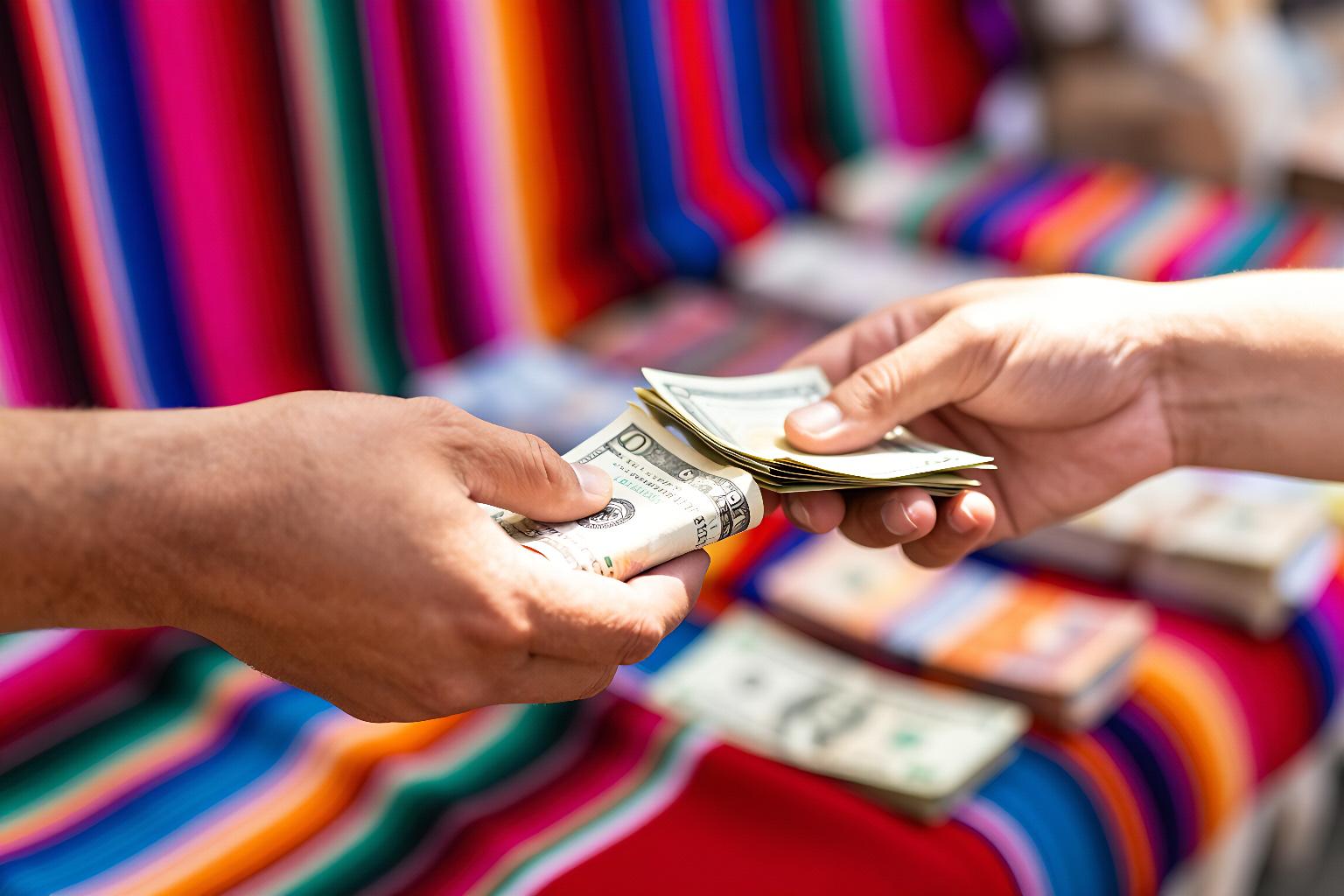
Many people look up the USD to Mexican peso rate before a trip to Cancun, Mexico City, or Oaxaca. They assume the number they see on Google is exactly what they'll get when they exchange money. That number is the mid-market rate. In practice, you'll almost never get it.
Exchange services need to make money. They build a profit margin into the rate they give you. The problem is that some margins are far larger than they need to be, especially when you're a tired traveller with a handful of dollar bills.
Let's look at how the dollar to peso exchange actually works, where the real costs hide, and how you can save a meaningful amount on your next transfer or trip.
Search for USD to MXN and you'll get a live trading number. Currency traders use the mid-market rate for huge interbank transactions. Retail money changers do not trade at that level. They buy dollars from you at one price and sell them at a slightly different one. The gap is called the spread.
Here's a concrete example. Say the mid-market exchange rate is 17.50 pesos per US dollar. You walk into an airport exchange desk in Mexico and see it quoting 16.30 for cash dollars. For your $300, you'd expect 5,250 pesos at 17.50. At 16.30 you'll get only 4,890. You just lost 360 pesos, roughly $20. That's not a fee. It's just a brutal exchange rate.
That spread is the single biggest cost in retail currency exchange, and it varies wildly based on where you change money.
The Mexican peso is one of the most traded currencies in the world. The dollar-to-peso rate reacts to US interest rates, oil prices, Mexico's central bank decisions, and trade agreements like the USMCA. Political news matters too. Just look at recent history: in 2020 the peso tumbled to around 24 per dollar when the pandemic hit. A few years later it strengthened to almost 17 as Mexico raised interest rates and attracted foreign capital.
This volatility means the pesos you buy in October might cost noticeably more or less than the ones your friend bought in March. If you're planning a big purchase in Mexico, property for instance, it can pay to watch the trend for a while rather than converting everything on one random Tuesday.
Every currency exchange option has its own trade-off between convenience and cost. Here's how they stack up for visitors to Mexico.
You've just landed, your phone is almost dead, and a taxi driver is waving at you. The trade desk right outside the arrivals gate looks like the easiest option. Unfortunately, it's also the most expensive. Mexican airport kiosks often pay around 2% to 5% below the market rate. They're banking on your desperation. If you must change money there, exchange only enough to cover a taxi and a snack, perhaps $50, then sort out the rest in town.
Walking into a Mexican bank branch can get you a far better rate. Many banks will exchange US cash for tourists, although some branches limit how many dollars they'll accept. The rate published on their board is usually closer to the wholesale rate than any airport stand. You'll need your passport so they can fill out the paperwork required by Mexican anti-money-laundering rules. Expect to spend a bit of time in line.
Using an ATM in Mexico is often the most cost-effective way to get pesos, provided you choose the right options on the screen. Your bank exchanges the money for you. Mastercard or Visa apply their own exchange rate, which is within a tiny fraction of the mid-market rate.
The trap is dynamic currency conversion. The ATM may ask: "You will be charged in US dollars. Continue?" Always decline. If you accept, the ATM operator sets their own exchange rate, and it's almost always bad. Choose to withdraw money in pesos and let your card network handle the conversion. This single choice saves thousands of pesos every year for frequent travellers.
If you're sending money to someone in Mexico or paying a deposit from home, you're better off using a digital transfer service than a bank or airport. Providers like Wise, Revolut, and Remitly typically display their exchange rate clearly and charge a small, transparent fee. Because Mexican pesos are a popular remittance currency, competition is fierce, and rates are quite close to the mid-market level.
For a detailed look at the US dollar-to-peso conversion process across both Mexico and the Philippines, check out this breakdown of converting US dollars to pesos and saving money in the process.
You'll see signs all over Cancun and Los Cabos advertising "0% commission" or "no fee." These signs are marketing, not a sign you're getting a good deal.
When a currency exchange says they don't charge commission, they make up for it by widening the exchange rate spread. Suppose your bank charges a $5 fee but gives you a rate of 17.40. Another shop charges no fee but gives you 16.90. On a $500 conversion, the commission-free shop leaves you $14 worse off.
Always compute the total pesos you'll end up with. Compare that number with the current mid-market rate. If the final rate is more than 3% lower, start negotiating or look elsewhere. This rule applies well beyond Mexico. The same tactics exist when you're changing dollars to Chinese yuan or any other currency. An honest transfer service will post its markup upfront.
Many tourists don't realise that their credit card can give them a better exchange rate than any cash exchange booth. Cards that charge no foreign transaction fee use the Visa or Mastercard exchange rate, which is essentially the same rate financial institutions use for large trades.
But if your credit card charges a 3% foreign conversion fee, the benefit vanishes completely. Check your card agreement before you travel. If your card hits you with that fee, keep it in your wallet.
This fee trap is not unique to Mexico. It's particularly annoying in countries where banknotes come in huge denominations, like the situation travellers face when exchanging dollars to Thai baht. The same card tricks still apply.
Once you have pesos in your hand, hold on to the smaller notes. In Mexico, street vendors, small tiendas, and taxi drivers rarely have change for a 500-peso note. The local Oxxo convenience store doesn't want to break a note that large just to sell you a bottle of water.
When you use an ATM, withdraw an amount that gives you a sensible mix of denominations. A 200 or 500-peso withdrawal won't always produce small bills either. The best tip is to buy something small at a large chain supermarket as soon as you have cash. Ask for the rest in smaller bills.
Whether you're physically in Mexico or sending money from the US, use a simple method to compare providers.
This comparison method works for every currency, including if you're heading farther south and need to know the true costs of converting Colombian pesos to dollars when you return.
Buying pesos at your local bank before you leave home sounds smart. But many US banks charge a high markup on foreign cash, and small regional banks may only offer a tiny selection of currencies. You'll probably pay far more than you need to.
A better approach is to bring a small number of US dollars as a backup and withdraw pesos from an ATM after you arrive. Just remember to decline the dynamic currency conversion screen at the ATM and you'll get your bank's real exchange rate.
The relationship between the US dollar and the Mexican peso matters for more than just vacations. It directly affects workers sending remittances home, exporters on both sides of the border, and companies that manufacture in Mexico. The cross-border flow from the US to Mexico exceeded $63 billion in 2023, making it one of the largest remittance corridors in the world.
Because of that volume, even small movements in the exchange rate translate into millions of dollars of difference for real families. If you send money regularly, setting a rate alert could allow you to time your transfers when the dollar looks strong against the peso.
And if you're transferring money between two countries far apart, like the US and Thailand, skim through this practical guide on avoiding high exchange rate losses with dollars to Thai baht. You'll recognise the same spread tricks.
Keeping your budget on track isn't about timing the market perfectly. It's about refusing to accept a poor retail exchange rate when better options exist. The cheapest way to get Mexican pesos is usually a debit card at an ATM that charges you in pesos, or a transparent online transfer service. Avoid airport desks, avoid dynamic currency conversion, and always compare the final all-in cost. Do that consistently and the USD to Mexican peso rate will feel a lot friendlier.
Slot ID: blog-post-bottom