
Loading article...
Slot ID: blog-post-top
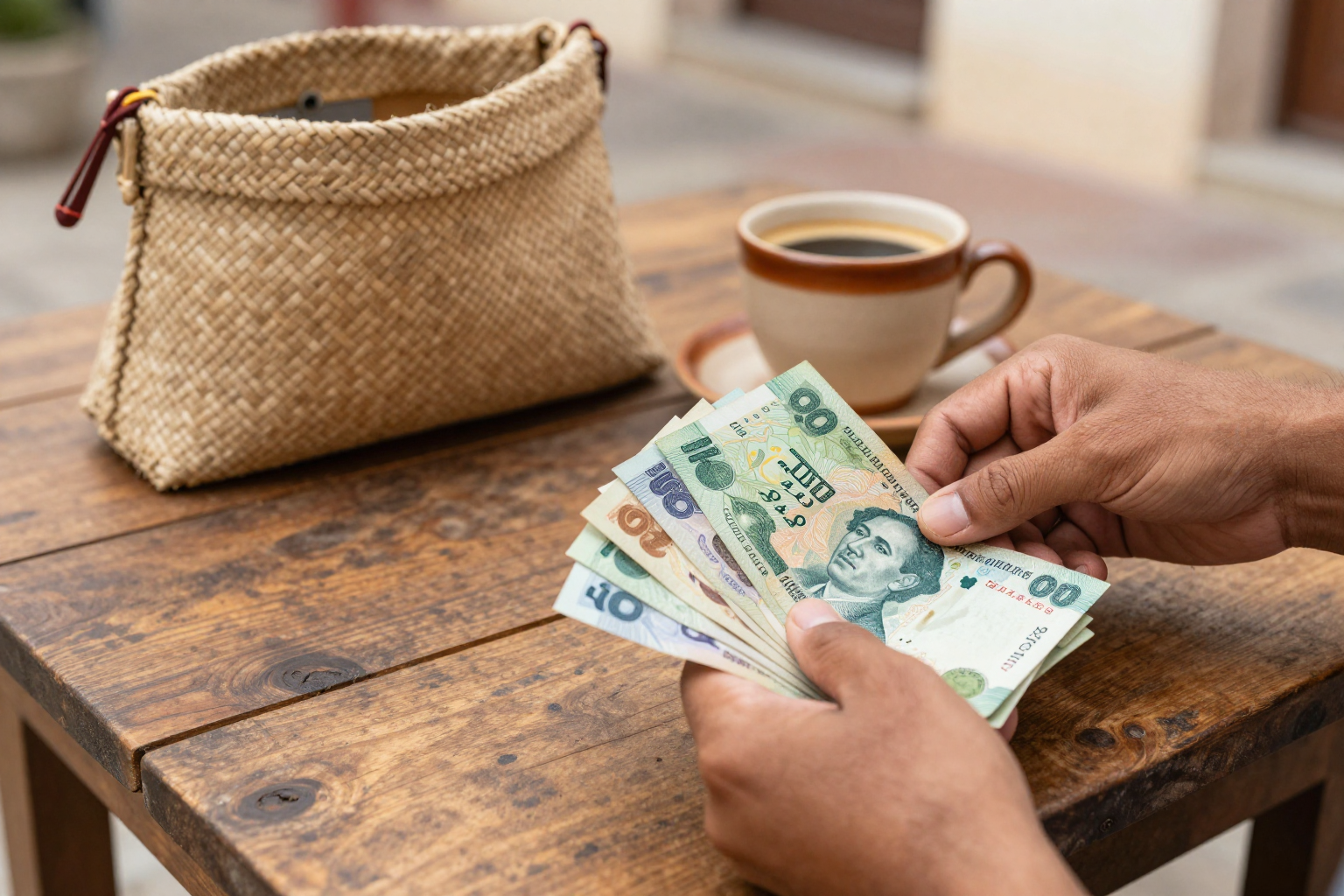
You check the dollar to Mexican peso rate before your trip, see something around 17.4, and feel fine about it. Then you land in Cancún, pull 2,000 pesos from an airport ATM, and see a $127 charge on your banking app. That works out to about 15.75 pesos per dollar. The rate didn't collapse while you cleared customs. You just converted money in the worst place on the board.
That gap between the rate you look up and the rate you actually receive is the quietest cost of a trip to Mexico. Over two weeks it can easily run to a few hundred dollars, and not one cent of it appears as a fee on your receipt.
When Google, XE, or your banking app shows you a rate, you're looking at the mid-market rate, sometimes called the interbank rate. It sits halfway between what large institutions pay to buy pesos and what they charge to sell them. It's a benchmark, not an offer. No counter anywhere hands it to you.
Every business that sells you pesos builds a margin on top of that number. The margin is the product. It's also why two exchange desks on the same street can quote rates that differ by 8%.
Pesos received divided by dollars paid gives you your effective rate. Compare that with mid-market and you know exactly what the conversion cost you. If mid-market is 17.40 and you got 16.10, you paid roughly 7.5%.
Run that maths once on a small withdrawal before you change a large amount. It's the core habit behind stop overpaying on every dollar you convert to Mexican pesos.
Many Mexican ATMs now offer dynamic currency conversion. You ask for 3,000 pesos and the screen asks whether you'd prefer to be charged in US dollars instead. The dollar figure it shows looks clear and helpful. It's neither.
That number is calculated using the ATM operator's own rate, often 5–8% worse than what your bank would apply. Always select pesos and let your bank handle the conversion, because it nearly always gets a better wholesale rate.
Then there's the machine fee, typically 20–50 pesos per withdrawal, plus your own bank's foreign transaction fee. That fee, usually 3%, applies to card purchases as well as cash, so a card that waives it is worth having even if you travel twice a year. The same 3% quietly taxes every dollar you convert to Thai baht on a Bangkok trip.
In Mexico City, Guadalajara, and Mérida, cards work almost everywhere: restaurants, hotels, supermarkets, ride-hailing. Cash still wins at markets, street taco stands, and in smaller towns where card machines are rarer and signal is patchy.
A practical split is 2,000–3,000 pesos for your first day or two, topped up by ATM withdrawals as you go, with a no-fee card for everything else. Don't arrive with a fat stack of dollars assuming you'll change it when you need it. You'll end up taking whatever rate happens to be nearest when you run short.
If Mexico is one stop on a longer Latin American trip, don't assume the same rules apply everywhere. Getting a fair conversion from Colombian pesos back into dollars involves different fees, lower ATM limits, and a very different street rate.
Assume mid-market is 17.30. You need about $1,000 of spending money for a week.
The spread between the best and worst outcome is more than 1,700 pesos. Same trip, same spending, very different value.
That arithmetic isn't unique to Mexico. Euro conversions behave in much the same way, which is why avoiding losses on every dollar you convert to euros comes down to the same two decisions: never accept the offered conversion, and always know your effective rate.
One clarification worth making, since it trips people up. The word peso also refers to the Philippine peso, and a generic search for a dollar to peso rate often returns quotes for the wrong country. If your destination is Manila rather than Mexico City, converting dollars to Mexican or Philippine pesos without wasting money follows the same logic but runs on a completely different rate.
The peso is one of the most heavily traded emerging-market currencies, and it responds to a small set of forces:
None of that helps you time a holiday purchase with any reliability. Over the past decade the rate has ranged from around 13 to above 20. Treat forecasts as guesses and focus on the part you control: the margin you pay.
Pick a number before you travel. If mid-market is 17.40, tell yourself that anything under 16.50 is poor and anything above 17.00 is acceptable for cash. Then measure every conversion against it, whether it happens at an ATM, a hotel desk, or a card terminal in a restaurant.
The exact rate will drift while you're there. Your tolerance for a bad one shouldn't. Travellers who get close to mid-market don't have secret access to anything. They've simply decided in advance what they're willing to accept, and they walk away when the number doesn't clear the bar.
Slot ID: blog-post-bottom