
Loading article...
Slot ID: blog-post-top
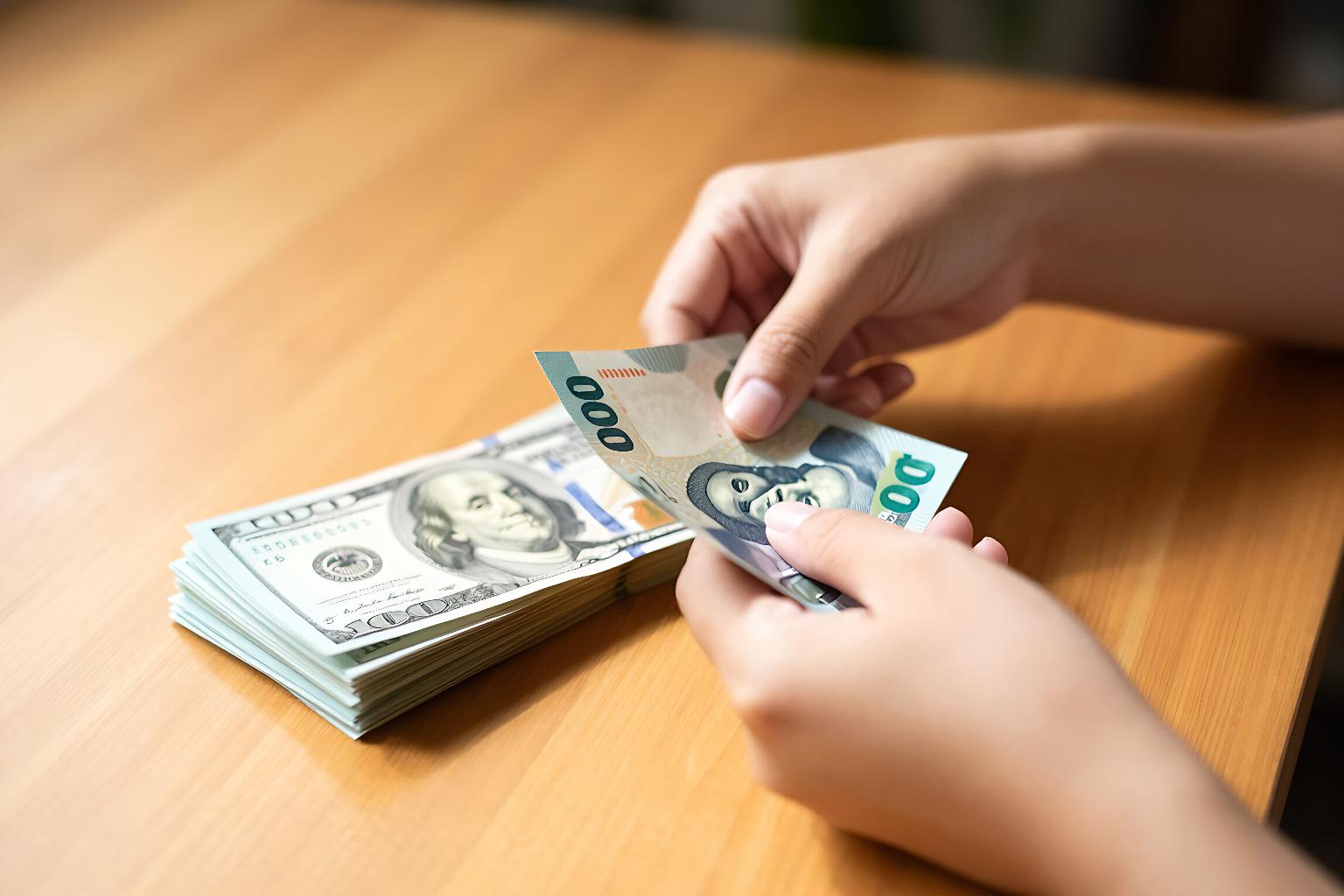
If you searched "us dollar to Philippine peso today" this morning, you got one number. Maybe ₱58.10. Then you opened your banking app and saw ₱56.40. Same currency pair, same day, two different numbers, and a gap that quietly costs you money every time you convert.
That gap isn't a scam or a glitch. It's the distance between the mid-market rate, which is roughly the midpoint where global buyers and sellers are trading, and the retail rate a bank or money changer hands you. Close that gap and you keep more of every dollar you send.
The peso trades around the clock, but the real action happens during Manila and New York hours. Over the past few years the pair has spent time in the high 50s, dipped toward ₱55, and swung hard on every Federal Reserve headline. Any specific number you read online, including in this article, is a snapshot from the moment it was typed.
So treat the mid-market rate as your benchmark and everything else as a markup. If Google shows ₱58.20, that's roughly where large institutions are trading. A bank quoting ₱57.30 is charging you about 1.5% inside the exchange rate. A money changer quoting ₱57.90 is charging you far less. Neither will announce the markup out loud. They just show a number and hope you don't compare.
This isn't a peso-only quirk. It's why the number you search isn't the number you get with any currency pair, whether you're changing dollars into pounds or pesos into yen.
Three costs get layered on top of the mid-market rate, and most providers only advertise one of them.
A $500 transfer with a 3% markup and a $10 fee loses about $25 in total. On $5,000, the same percentages cost you $160. That's a round-trip flight to Cebu disappearing into the spread.
Personal remittances from overseas Filipinos run above $30 billion a year, somewhere near 8% to 10% of GDP. That is enormous, structural demand for pesos. Flows peak in December and around school enrollment in May and June, and you can sometimes watch the peso firm up when that money lands. If you send money home regularly, you're part of the flow moving the very rate you're staring at.
Bangko Sentral ng Pilipinas sets its own policy rate, and the gap between that and the US federal funds rate drives a lot of short-term movement. When US rates stay high, dollars earn more sitting in Treasuries, so capital leans toward the dollar and the peso softens. When the Fed cuts, that advantage narrows and the peso usually gains. Neither central bank cares about your transfer, but both move your number.
The Philippines imports most of its fuel and a large share of its rice. Expensive oil widens the trade deficit and weighs on the peso. Global risk events, whether a banking scare or a China slowdown, push money toward the dollar as a safe haven. That's why the peso can weaken on a day when nothing Philippine-specific happened at all.
Say the mid-market rate is ₱58.20. A Philippine bank offers you ₱57.30 with no visible fee. An online service offers ₱58.05 with an $8 fee.
Bank: $2,000 × 57.30 = ₱114,600.
Online service: $1,992 × 58.05 = ₱115,635.
The "no fee" option is about ₱1,000 worse. That's a week of groceries in Manila, and it vanishes precisely because the bank never called it a fee.
Small transfers get hit even harder. A flat $5 charge on a $100 send eats 5% before the exchange rate enters the picture, the same squeeze people feel with what $100 really turns into in a currency like the Colombian peso, where fixed costs dominate the math.
Compare two or three providers side by side on the same day, and look at the final peso amount that lands in the account rather than the headline rate. That landing number is the only one that matters.
Send larger amounts less often. If you support family monthly, one $1,000 transfer beats four $250 transfers, because fixed fees multiply while exchange rates don't.
Skip weekends when you can. Many providers set their rate on Friday and hold it through Sunday, and spreads tend to widen while global markets are closed.
Watch for fee-free promotions. Remitly and WorldRemit run them regularly on the US-to-Philippines corridor, and a first-transfer offer can beat everything else on your list.
The logic behind what moves an exchange rate and how to get a better deal is the same everywhere: pick a benchmark first, then shop the market against it.
People heading the other direction, whether balikbayans, remote workers paid in pesos, or anyone cashing out savings, face identical math in reverse. The spread still works against you, and the "best rate" board at a mall kiosk is still a retail rate. It's worth knowing what you actually get when you convert Philippine pesos before you assume the peso figure on your screen is the dollar figure in your pocket.
Set a rate alert in your banking app or on Google, pick a threshold that would genuinely change your plans, and ignore the daily noise. The peso moves a few centavos most days and a peso or two over a full year. Catching the exact top is a losing game even for professionals with Bloomberg terminals.
If you send money monthly, consistency beats cleverness. You'll collect the average rate over time, which usually lands better than the rate you'd get by panicking in either direction. What you can control is the markup, the fees, and whether you compared options before you clicked send. Nail those three and you'll come out ahead of most people typing "us dollar to Philippine peso today" into a search bar.
Slot ID: blog-post-bottom