
Loading article...
Slot ID: blog-post-top
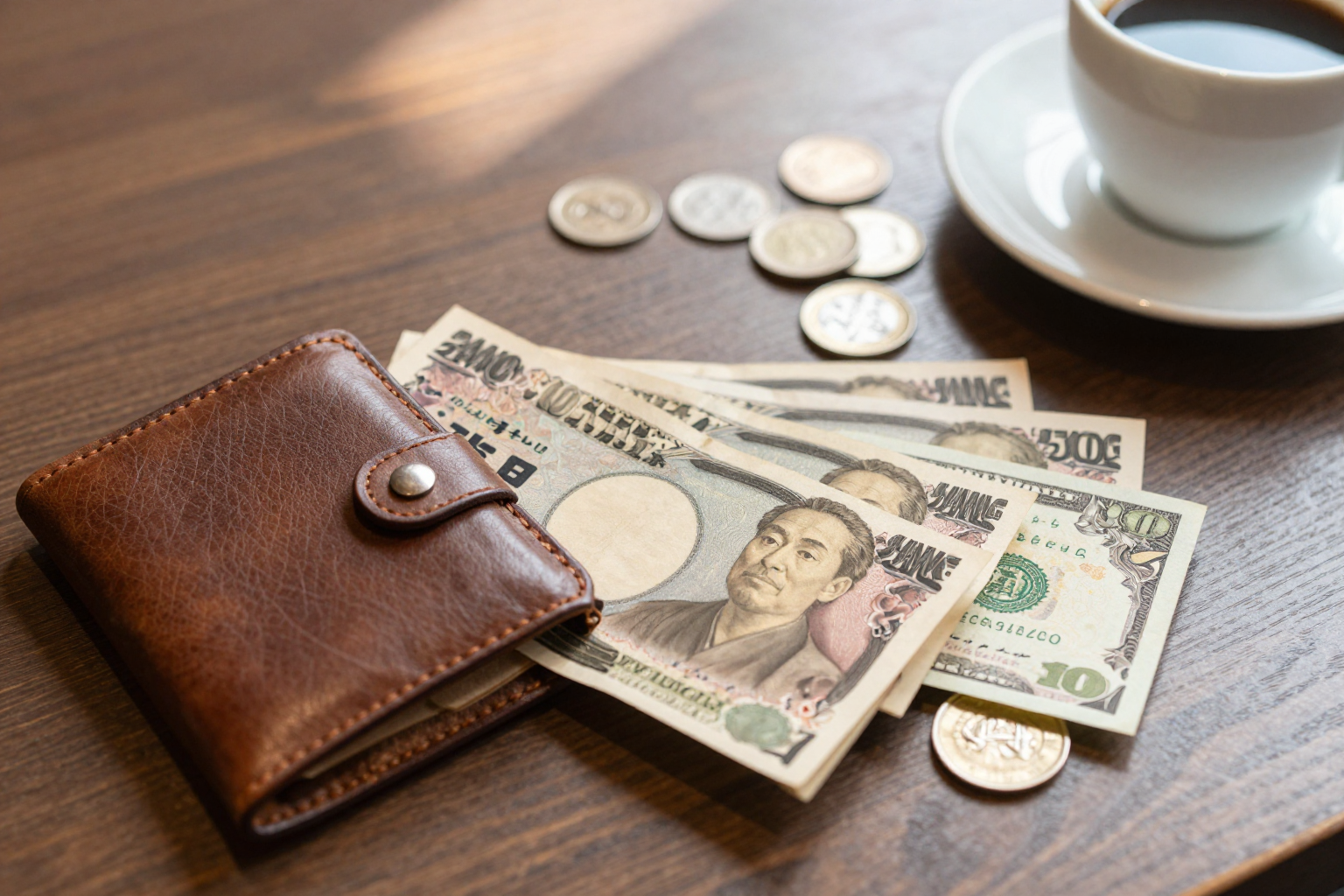
In July 2024, a US dollar bought just under 162 yen. In January 2021, it bought about 103. If you were sending money to family in Osaka, booking a trip to Kyoto, or getting paid by a Japanese client, that swing rewrote the maths on everything. The yen has been one of the most talked-about currencies of the past few years, and there are solid reasons for that.
So what actually sits behind the japanese yen to usd conversion, and how do you make sure you aren't quietly handing over 3% or 4% every time you move money between the two? Here's the practical version.
An exchange rate is a price. It tells you how many dollars one yen buys, or the reverse, and it changes every second the market is open. That's it. Everything else is context.
Most of the world quotes this pair as USD/JPY, meaning the number of yen per one dollar. When that number climbs, the yen is weakening against the dollar. When it falls, the yen is strengthening. Search engines often flip it to JPY/USD, showing dollars per yen as a small decimal like 0.0065. Same information, opposite direction. Mixing the two up is the single most common mistake people make when they start tracking this pair.
Through 2023 and 2024 the Federal Reserve held rates at 5.25% to 5.5%, while the Bank of Japan kept its policy rate barely above zero. That gap is enormous by developed-market standards, and money drifts toward higher yields. The same logic plays out in every major pair, whether it's the US dollar against the British pound or the euro. Japan's rates were simply the outlier.
For years the BoJ bought government bonds to hold long-term yields down, a policy known as yield curve control. Dismantling it has been a slow, cautious process. The central bank lifted rates to 0.25% in July 2024 and to 0.5% in January 2025, still low by global standards. Officials have also stepped directly into the market, spending tens of trillions of yen on intervention in 2022 and again in 2024 to slow the currency's slide.
Japan imports almost all of its oil and gas. When crude prices rise, Japanese companies need more dollars to pay for shipments, which adds natural selling pressure on the yen. It's a structural drag that shows up in the trade balance month after month, whatever the central bank does.
The yen is the world's favourite funding currency. Traders borrow cheaply in yen and invest the proceeds in higher-yielding assets elsewhere. When markets get frightened, those positions unwind and the yen can rocket. In early August 2024, a BoJ rate hike combined with a weak US jobs report pushed USD/JPY from around 161 to roughly 142 in a matter of weeks. Nothing remotely like that happens with a pegged currency, which is why the dirham-to-dollar rate barely budges from one year to the next.
If USD/JPY reads 150, one yen is worth about 0.67 cents, and a dollar buys 150 yen. To go from yen to dollars, divide by that rate.
At 160, that last figure drops to $3,125. At 140, it climbs to $3,571. Same pile of yen, an $800 difference depending on the day you convert. That's why timing gets so much attention.
A quick search gives you the mid-market rate, which is the midpoint between buy and sell prices on the global market. Banks and apps don't hand you that number. They add a margin. A high-street bank might mark up 3% to 4% on top of mid-market and charge a fixed fee as well. On ¥500,000 that adds up quickly. We broke the mechanics down in this piece on why the dollar-to-yen rate you search is never the rate you get, and the same logic runs in both directions.
The only number that matters is how many dollars land in your account after every fee. Ask for a quote showing the rate, the fee, and the final amount, then compare that final amount across providers.
Multi-currency accounts and transfer specialists typically charge 0.3% to 0.6% over mid-market plus a small fixed fee. That's a fraction of what a traditional bank takes, and the gap is largest on mid-sized transfers.
In Japan, Seven Bank and Japan Post ATMs inside convenience stores accept most foreign cards, and the rates are far better than airport counters. Withdraw larger amounts less often to limit per-withdrawal fees, and always choose to be charged in yen rather than letting the machine convert for you.
Suppose USD/JPY sits at 150.
Same transfer, roughly $108 difference. Repeat that monthly for a year and you're past $1,200 without doing anything unusual.
Travellers from the US get more sushi, more train rides and more hotel for their money. Japanese exporters booking overseas revenue in yen report fatter profits, which is one reason the Nikkei hit record highs in 2024. Households in Japan face the opposite problem, since imported food, fuel and electronics all cost more. If you're sending dollars to relatives in Japan, they're receiving less yen per dollar than they would have a few years ago.
The dollar's strength in 2022 and 2024 wasn't a yen-only story, either. The Vietnamese dong and several other Asian currencies slipped against the dollar for related reasons. Currency values shift travel budgets in every direction, and the Thai baht has followed a very different path, so the same dollar buys a wildly different holiday depending on where you land.
Nobody knows where USD/JPY goes next, and anyone who claims otherwise is guessing. What you can control is how you convert, and that's usually worth more than a perfect entry point.
Split large conversions. If you need to move the equivalent of $50,000 or more over a few months, converting in three or four chunks smooths out the peaks and troughs rather than betting everything on one day.
Set rate alerts. Most transfer apps let you name a target, say 145, and ping you when it hits. That takes the daily checking off your plate.
Lock in with a forward contract. For a property purchase, tuition payment or business invoice, a forward contract fixes today's rate for a future date. You give up the upside if the yen strengthens, but you remove the risk entirely.
Watch two calendars. Bank of Japan policy meetings and US inflation prints are the events most likely to jolt this pair by two or three yen in a day. Both are published months ahead, so you can schedule transfers around them rather than through them.
If you only need spending money for a two-week trip, don't overthink it. The difference between 148 and 152 on $2,000 is about $54. Convert when you need to, pull cash from a convenience store ATM once you land, and save the analysis for the transfers where the stakes are genuinely high.
Slot ID: blog-post-bottom