
Loading article...
Slot ID: blog-post-top
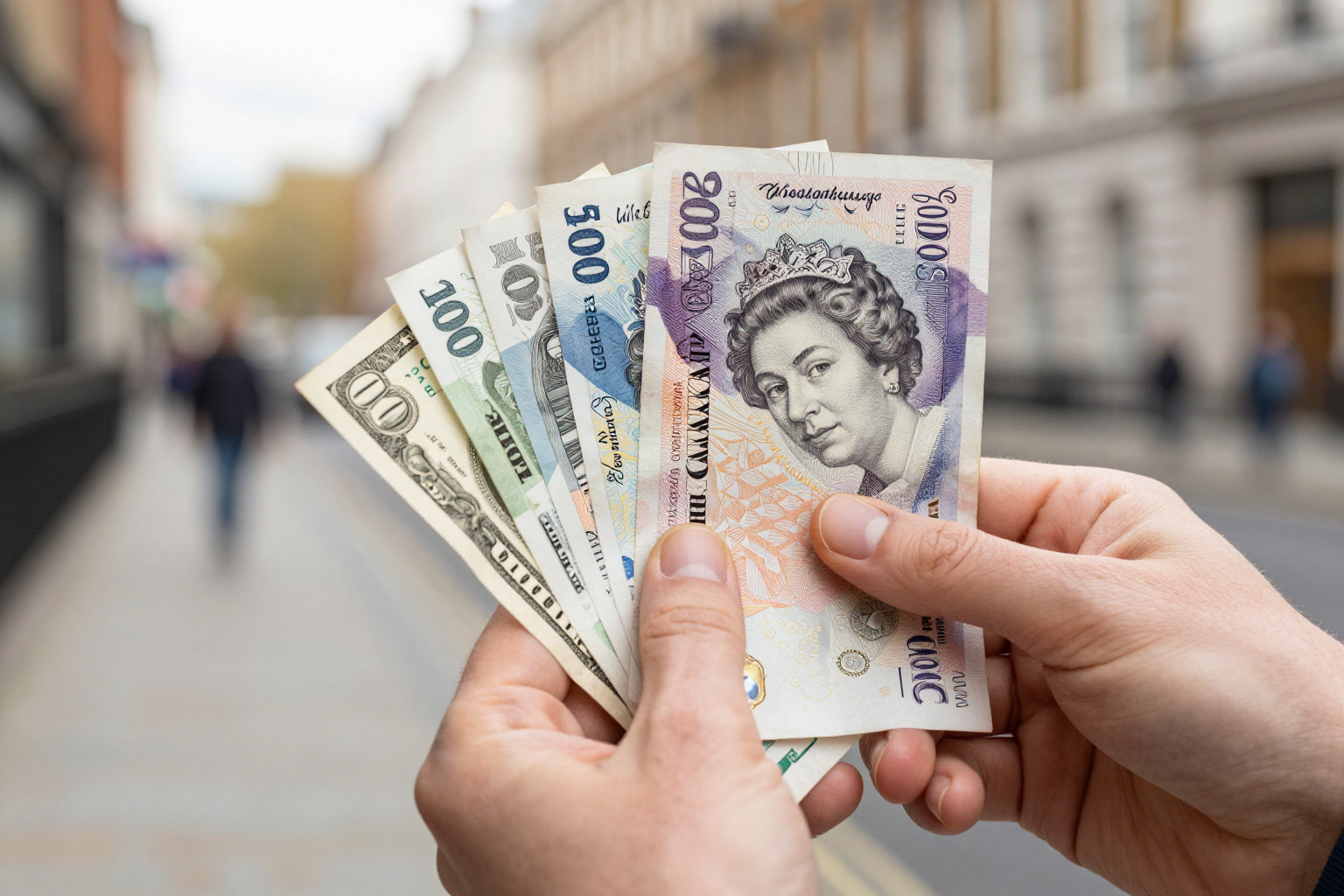
The US dollar to British pound exchange rate is one of the most closely watched currency pairs in the world. Whether you're an American planning a trip to London, a business paying a UK supplier, or an investor moving money across the Atlantic, the rate you get can make a real difference. A swing of a few cents might not sound like much, but on a $10,000 transfer that's $200 in your pocket—or lost. So here's what actually moves the USD/GBP rate, why the number you see on Google isn't what you'll get, and how to keep more of your money.
The dollar-pound rate floats freely, meaning it's driven by supply and demand in the global currency markets. Traders, banks, and institutions buy and sell pounds and dollars every second, reacting to news and data. Several key forces are behind those moves.
The Federal Reserve and the Bank of England are the two big players. When the Fed raises interest rates relative to the BoE, dollar assets become more attractive, boosting demand for USD and often weakening the pound. Conversely, if the BoE hikes rates or signals a faster pace of tightening, the pound tends to strengthen. In 2022, for example, the pound briefly hit a record low near $1.03 after the UK's mini-budget spooked markets, while the Fed was aggressively hiking. That's a dramatic example, but even a 0.25% rate differential can shift the rate by a cent or more over time.
Monthly jobs reports, inflation figures, GDP growth, and retail sales all move the needle. Strong US data typically supports the dollar; weak UK data can drag the pound down. Political uncertainty—elections, Brexit fallout, Scottish independence talk—adds a risk premium to the pound. Remember the chaos of the 2016 Brexit vote? The pound plunged from $1.50 to $1.20 in months.
The dollar is the world's reserve currency, so in times of global stress, investors flock to it. That can push USD/GBP higher even if UK fundamentals haven't changed. The pound, meanwhile, is more sensitive to risk appetite. When markets are calm and optimistic, sterling often outperforms.
You check Google: 1 USD = 0.79 GBP. You go to your bank and get 0.76. Where did those three cents go? The mid-market rate you see online is the midpoint between buy and sell prices on the wholesale market—it's not available to consumers. Banks and currency providers add a spread to cover costs and profit. That spread can range from 0.5% to 4% or more. On a $5,000 transfer, a 3% spread costs you $150. This is why the rate you see online rarely matches what you actually get. It's a common frustration across all currency pairs, as this explanation of why the dollar-yen rate you search is never the rate you get shows.
Here are the common hidden costs when exchanging USD to GBP:
High-street banks are convenient but rarely competitive. Specialist currency brokers offer rates much closer to the mid-market, often within 0.5% to 1%. They also provide tools like forward contracts (locking in a rate for up to a year) and limit orders (automatically buying when a target rate is hit). For large transfers, the savings can be thousands. If you're moving money to India, for example, the same principle applies—getting a better deal on the rupee-dollar rate means avoiding banks and using a specialist. And the tactics that help you get more Colombian pesos for your dollars translate directly to pounds.
Nobody can consistently predict currency movements. However, you can improve your odds by watching the economic calendar and avoiding major data releases if you're not in a hurry. If you need to convert a large sum, consider splitting it into smaller transfers over a few weeks to average out the rate. This is called dollar-cost averaging, and it reduces the risk of converting at a temporary low.
Airport exchange counters and hotel front desks are the most expensive places to change money. Their rates can be 10% or worse off the mid-market. If you need cash, use an ATM with a card that doesn't charge foreign transaction fees, or withdraw from a bank branch. For larger amounts, always use a transfer service.
Even seasoned travelers and businesses make these slip-ups.
Knowledge is power. Use a reliable currency converter to monitor the mid-market rate, but remember it's not the rate you'll get. Set rate alerts with your broker or bank so you're notified when your target is hit. Follow central bank announcements and key data releases—the Fed's FOMC meetings and the BoE's Monetary Policy Committee decisions are the big ones. Understanding what moves the dollar-pound rate is similar to understanding what really moves the dollar-peso rate: interest rate differentials, economic data, and political risk all play a role. The more you know, the better your decisions.
Before you convert, do this:
The USD/GBP rate will keep fluctuating, driven by forces beyond any individual's control. But by understanding what moves it and shopping around, you can keep more pounds in your pocket. Whether you're sending $500 to a friend in London or $500,000 for a property purchase, the same principles apply: know the mid-market rate, avoid the obvious traps, and use a specialist when it counts.
Slot ID: blog-post-bottom