
Loading article...
Slot ID: blog-post-top
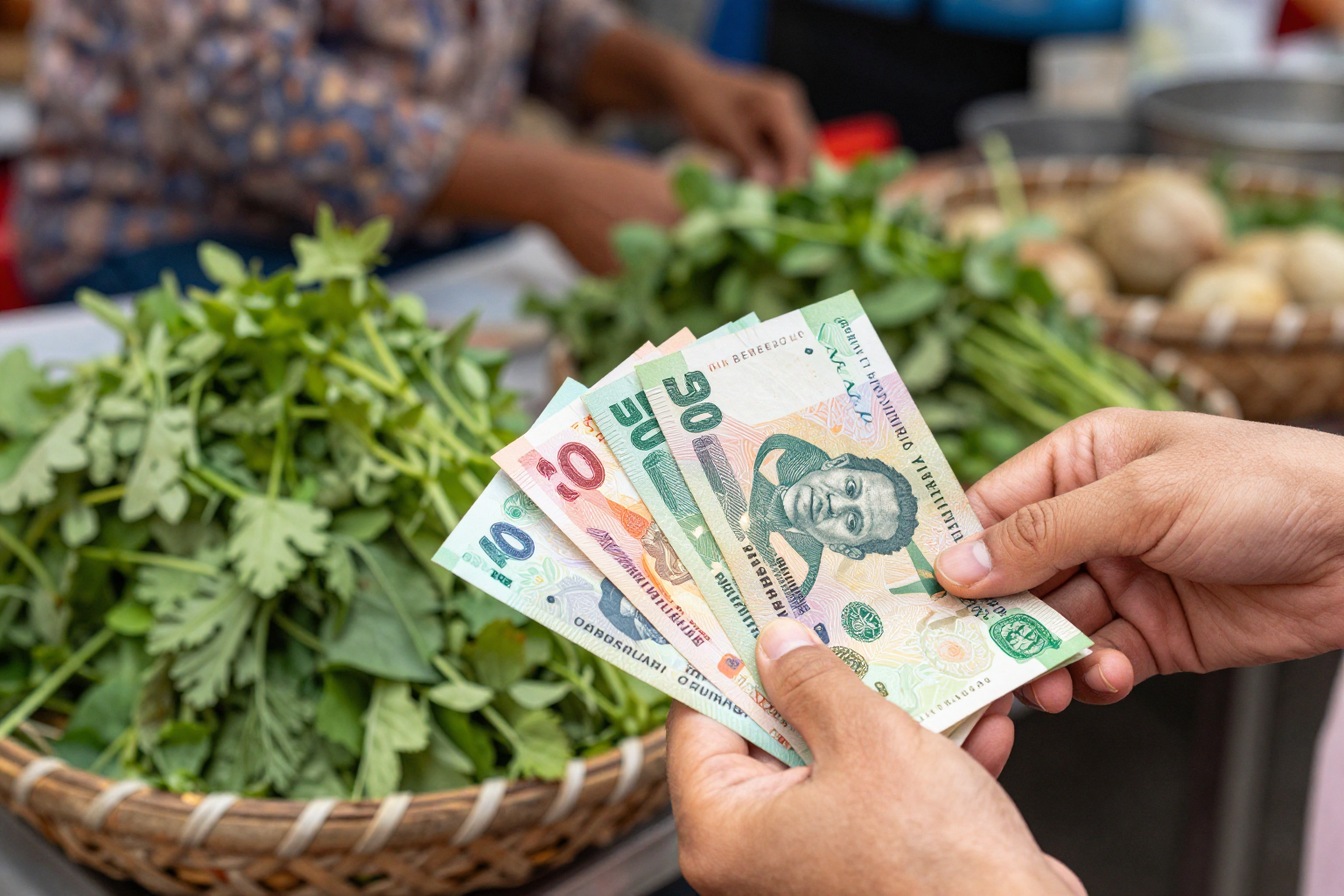
Type "dong to USD" into a search engine and you get one clean figure, usually sitting somewhere in the mid-25,000s. It looks authoritative. It is also not the rate you'll be offered when you slide a hundred-dollar bill across a counter in Hanoi or Ho Chi Minh City.
The gap is small on paper and surprisingly big in practice. On a $1,000 exchange, two percent is twenty dollars, which in Vietnam buys a proper dinner, a few beers, and a Grab ride home. Knowing where that gap comes from is most of the battle.
The dong (VND, written ₫) is issued by the State Bank of Vietnam. Notes range from 100₫ up to 500,000₫, and every one of them is polymer. Coins were pulled from circulation back in 2003 and have effectively vanished, so nobody is digging around for small change.
The zeros are what throws visitors. A 500,000₫ note sounds like a fortune and is worth roughly $20. Market vendors often quote prices in thousands and drop the final three zeros out loud, so "fifty" means 50,000₫, not 50₫. Lose track of that and you'll either overpay or hold up the queue while you work it out.
A shortcut that works well enough: delete three zeros, then divide by 25. A 200,000₫ bowl of pho becomes 200 ÷ 25, or about $8. It isn't precise, but at a market where you're making a decision every thirty seconds, fast beats exact.
At a rate of roughly 25,400 VND per dollar, the numbers land like this:
The rate is a moving target. The dong traded near 22,700 to the dollar in early 2022 and has drifted into the 25,000 to 26,000 band since, with the central bank stepping in whenever it moves too quickly in either direction. If you're planning a trip months ahead, don't fix a number in your head and then feel cheated when reality disagrees.
Every search result shows the mid-market rate: the midpoint between what banks pay for dollars and what they sell them for. Nobody trades at the midpoint except other banks.
Walk into a bureau with dollar bills and you're selling dollars while buying dong, which puts you on the less generous side of the spread, usually one to three percent away from the headline figure. That isn't a scam, it's how currency desks pay their staff, but it explains why a search result of 25,400 can leave you with an effective rate closer to 24,900. It's the identical mechanism behind why the dollar to yen rate you see online is never the rate at the counter, and once you've internalised it, you stop being surprised anywhere in the world.
Vietnam doesn't let its currency drift wherever the market takes it. The State Bank of Vietnam publishes a daily central reference rate and allows commercial banks to trade within a band around it, currently about five percent in each direction. When the dong presses against the edge of that band, the central bank sells dollars from its reserves to pull it back.
The result is a currency that moves deliberately rather than violently. Compare that with the UAE dirham, which is pegged to the dollar and barely budges at all, or with Thailand's baht, which reacts sharply to tourism numbers and foreign portfolio flows. Vietnam sits in the middle, and for anyone converting dong to USD that's mostly good news. You're unlikely to get wiped out by a sudden ten percent swing between booking flights and landing.
Vietcombank, Techombank and BIDV branches give rates within a percent or so of mid-market on large notes. Bring your passport, expect a short form, and plan around weekday hours that often finish by 4pm. Some branches close on weekends entirely.
Ha Trung Street in Hanoi's Old Quarter and the lanes around Ben Thanh Market in Ho Chi Minh City are the best-known spots. These shops frequently beat bank rates on $100 bills and move you through in two minutes. They sit in a legal grey area, so stick to busy, long-established places and count your money before leaving the counter.
Convenient and rarely worth it. Kiosks at Noi Bai and Tan Son Nhat can sit three to six percent off mid-market, and that's before any commission.
Withdrawal fees run 20,000₫ to 66,000₫ per transaction, and machines often cap you at two to five million₫. Add your home bank's foreign transaction fee and the real cost can pass three percent. Take the maximum each time instead of making three separate smaller withdrawals.
Arriving with leftover currency from elsewhere in the region? Change it before you fly. Rates for Thai baht and other Southeast Asian currencies inside Vietnam are noticeably worse than the dollar rate, and small notes often get refused altogether.
Vietnamese money changers are unusually fussy about cash quality. A $100 bill with a hard crease, a pen mark, a tiny tear or a pre-2006 series date may be rejected outright, or accepted at a discount of two to three percent. Crisp, unmarked notes from newer series get the best rate, and $100 bills consistently beat $20s, $10s and $5s.
If you're coming from a country where cash quality is relaxed, order fresh notes from your bank before you leave. It takes a phone call and it's worth more than most people expect.
Converting dong back into dollars at the airport is the worst deal in the country. Banks will do it, but the buy-back spread is wide, and small amounts often aren't worth the paperwork. Two things work better: keep enough for a future trip (polymer notes don't deteriorate), or, if you're heading to the UK, change dong into dollars first and then handle the dollar to British pound conversion with a specialist service. A direct dong-to-sterling rate in Vietnam is almost always poor.
For remittances to family or paying a local supplier, the maths changes completely. Specialist transfer services typically land within half a percent of mid-market plus a small fixed fee. Bank wires often cost $25 to $40 on top of a two to three percent margin, which on a $5,000 transfer is a difference of well over $100.
The same logic applies to transfers in and out of other emerging-market currencies, whether you're converting dollars into Colombian pesos or moving money between accounts in Asia and Latin America. Compare the total cost to the recipient, not the advertised rate.
Vietnam runs consistent trade surpluses, attracts heavy foreign manufacturing investment, and hosts millions of tourists a year. All of that generates demand for dong. Against it sits steady demand for dollars from importers and from companies repatriating profits.
The central bank manages the balance by allowing a slow, controlled depreciation, which is exactly what has happened over the past decade. A gradually weaker dong keeps Vietnamese exports competitive in dollar terms, whether those goods land in a warehouse in California or compete directly with imports priced in other currencies.
For anyone on the ground, that means the rate you get today will look slightly better than the rate in a year, and considerably better than it looked five years ago. Plan around a gentle drift rather than a shock, budget with a small buffer, and you'll rarely be caught out.
Slot ID: blog-post-bottom