
Loading article...
Slot ID: blog-post-top
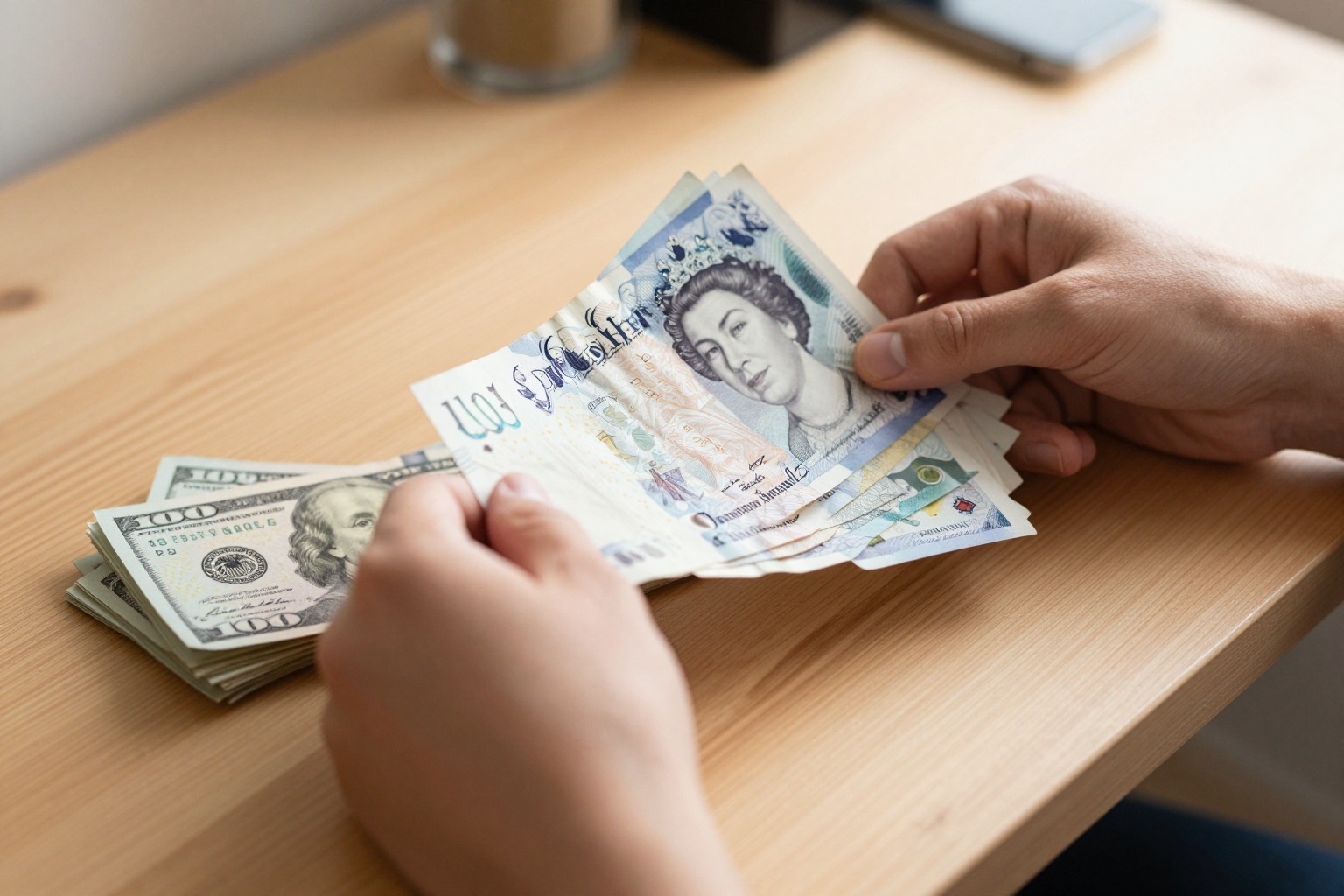
Sterling has been a benchmark for global trade for centuries, and GBP/USD is still one of the three most heavily traded currency pairs on the planet. Traders call it “cable”, a nickname that goes back to the transatlantic telegraph line that carried exchange rates between London and New York from the 1850s onwards.
If you're actually moving money between the two currencies, the number matters in a very concrete way. A move from $1.25 to $1.30 on a £10,000 transfer is a $500 difference. Over the past decade the rate has travelled from roughly $1.50 before the 2016 Brexit referendum to a record low near $1.035 in September 2022. Swings of that size aren't an anomaly. They're the normal behaviour of this pair.
Here's what's really behind those moves, and what to do about them when you need to convert.
The figure you see on Google or XE is the mid-market rate, the midpoint between what banks are buying and selling pounds for at wholesale. It's a reference point, not a price you can usually transact at.
Which direction you're on changes what you want to happen. Selling pounds for dollars, you want the rate as high as possible. Buying pounds (a US company paying a UK supplier, say, or an American tourist topping up a travel card), you want it low. Two people watching the same quote can be hoping for opposite outcomes.
Capital chases yield. When the Federal Reserve holds rates higher than the Bank of England, dollar deposits pay more, and money tends to drift toward the dollar. The gap between the two matters more than either rate in isolation. When markets decide the BoE will cut more slowly than the Fed, sterling firms up. When a US inflation print comes in hot, the dollar strengthens against almost everything.
UK CPI, US CPI and US nonfarm payrolls are the three releases that move cable fastest. A UK inflation reading 0.2 percentage points above forecast can shift the rate half a cent within minutes of the 7am release. Payrolls, published on the first Friday of each month, often does the same in the opposite direction.
In a global panic, money runs to the dollar. Sterling fell sharply in March 2020 and again through 2022 not because UK fundamentals collapsed overnight, but because investors wanted the deepest, most liquid market on earth. The yen reacts to the same flight-to-safety impulse, and the mechanics behind how safe-haven flows move the yen against the dollar apply just as well to the pound.
The September 2022 mini-budget is the clearest recent example. An unfunded tax package spooked gilt markets, the pound hit an all-time low against the dollar within days, and the Bank of England had to intervene. Currency markets price political risk quickly and ruthlessly.
Britain runs a persistent current account deficit, historically in the region of 3–4% of GDP. That means the country needs a steady flow of foreign capital to balance the books, and when that confidence wobbles, sterling is the release valve. Contrast that with currencies that barely budge: the UAE dirham has been pegged near 3.67 to the dollar for decades, which is why the dirham-dollar rate stays so stable and sterling-dollar does not.
This is where most people lose money, and it has nothing to do with forecasting. It's the spread.
On a £10,000 transfer, a 3% mark-up is £300. That's real money spent on nothing but the privilege of using the wrong provider.
Specialist transfer services exist precisely to undercut banks on this. The practical steps:
If you're converting the other way, the arithmetic flips but the logic doesn't. Understanding what drives the USD to British pound rate is the same exercise in reverse.
Say the mid-market rate is 1.2700 on the day you transfer.
The gap between the bank and the specialist is $336, or 2.7% of the transfer. Nothing about the exchange rate itself changed. The only difference was who processed it.
Fixating on the headline rate while ignoring the spread is the big one, and it gets worse on less liquid pairs where the margin widens considerably. That's the core problem with something like converting dong to USD, and it applies to a lesser degree on sterling too.
Other recurring errors:
Nobody reliably predicts short-term currency direction, including the people paid to try. What you can control is the process: pick a rate that makes your project work, set an alert, and execute when it triggers. If you need to move money regularly, split each transfer into two or three chunks spaced a few weeks apart. You'll rarely get the best rate of the year, but you'll also avoid getting the worst.
Keep an eye on the calendar. The Fed meets eight times a year, the Bank of England's Monetary Policy Committee meets roughly every six weeks, UK CPI lands mid-month, and US payrolls arrive on the first Friday. Those dates are when cable tends to make its biggest moves, and they're when a limit order or a forward contract earns its keep.
Slot ID: blog-post-bottom