
Loading article...
Slot ID: blog-post-top
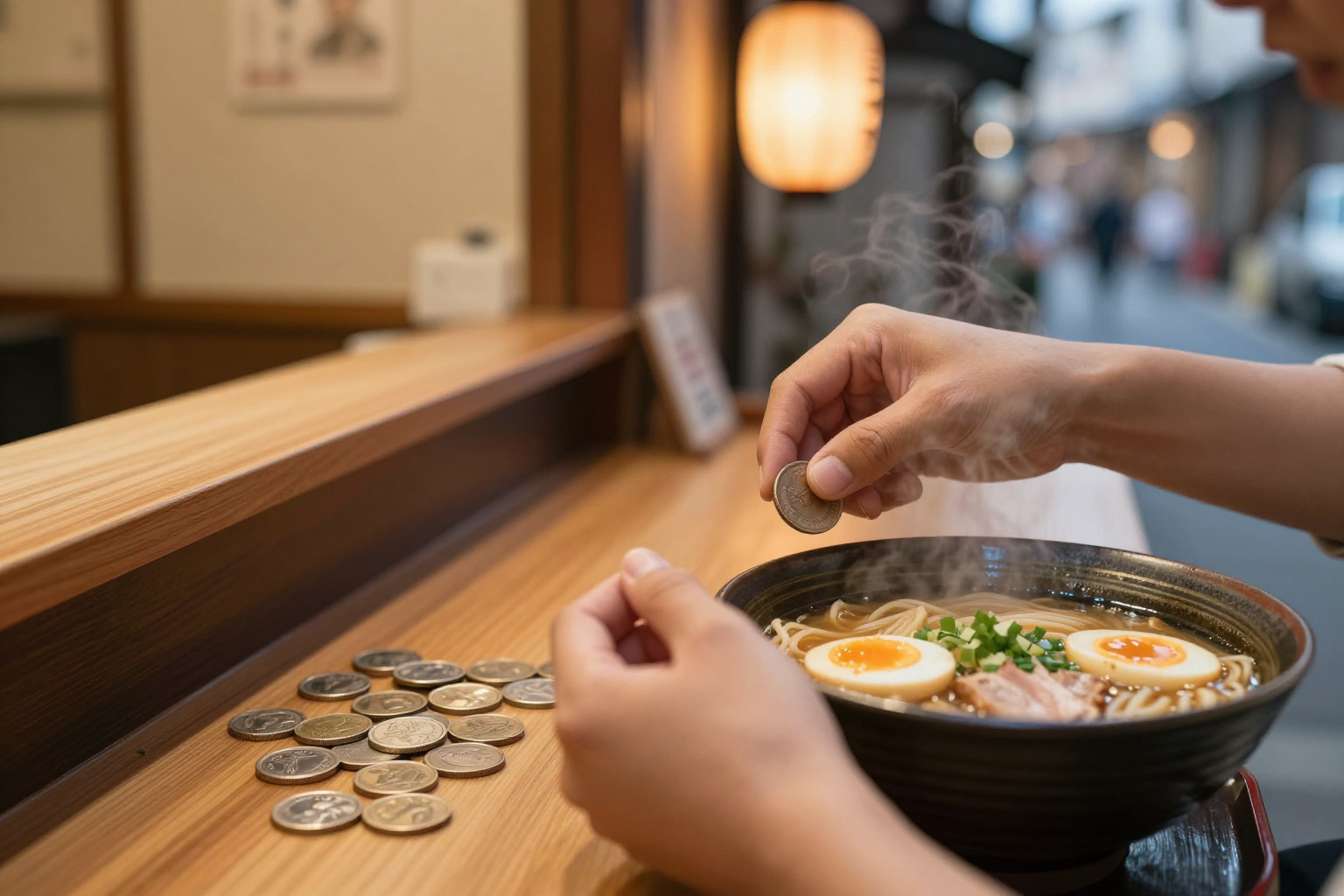
You check the rate the night before you fly and it says 156.80. By the time you land at Narita and pull cash from an ATM, your hundred dollars buys noticeably less. Nothing about your trip changed. The dollar simply drifted a few tenths of a yen, and on a $3,000 holiday that quiet movement is worth a good dinner.
That's the odd thing about the US dollar to yen rate. It's quoted to two decimal places, it updates every second, and most people glance at it once and move on. But USD/JPY is one of the most watched numbers in global finance, and understanding what pushes it around is the difference between a fair deal on your money and handing a few percent to somebody else for no reason at all.
The quote works like a price tag. The dollar is the base currency, the yen is the quote. One dollar buys 156.80 yen. If that number rises to 160, the dollar has strengthened and your money goes further in Japan. If it falls to 148, the yen has strengthened and everything from a bowl of ramen to a Shinkansen ticket costs you more.
Run the maths on a real sum. $2,000 at 150 gives you 300,000 yen. The same $2,000 at 160 gives you 320,000 yen. That 20,000-yen gap, roughly $125, is why the rate matters long before you start thinking about airport currency counters.
Going the other way, from yen back into dollars, the arithmetic flips and the spreads tend to bite harder. It's worth understanding what a yen-to-dollar conversion really costs you before you plan on bringing unspent cash home.
Currency pairs don't move in a vacuum, and USD/JPY is among the most volatile of the majors. A handful of forces do most of the work.
This is the big one. For years the Bank of Japan held rates near or below zero while the Federal Reserve pushed US rates above 5%. Money flows toward higher yields, so investors borrowed cheaply in yen, parked the cash in dollar assets and pocketed the difference. That trade applied steady downward pressure to the yen. When the BOJ finally started nudging rates up and the Fed signalled cuts, the gap narrowed and the yen snapped back fast.
Carry trades work beautifully until they don't. In August 2024, a modest BOJ rate hike combined with weak US jobs data triggered a scramble to close those positions. The Nikkei fell more than 12% in a single session, its worst day since 1987, and USD/JPY dropped several yen within days. Nothing had changed about Japan's underlying economy. The crowd simply ran for the exit at the same time.
Japan imports almost all of its oil and gas, so a spike in crude prices widens its trade deficit and weakens the yen. At the same time, the yen has long been a safe-haven currency. During global panics, money flows in. It shares that role with the franc, and the mechanics look a lot like what drives CHF/USD when markets get jittery: yield pulling one way, fear pulling the other, and violent short-term moves when the two collide.
Japan's Ministry of Finance has stepped into the market repeatedly over the years, most recently in 2022 and again in 2024 when the rate pushed past 160. Officials never announce it in advance, so what you see is a sharp, unexplained reversal on the charts. It rarely changes the underlying trend, but it does mean the rate can move 3 or 4 yen in an hour.
A weak yen is good news for one side of the ledger and bad news for the other.
The same dynamic plays out, often more brutally, in emerging markets. The Colombian peso can lose 10% against the dollar in a matter of weeks when US rates rise, which is why the mechanics behind USD to Colombian peso conversions reward people who plan ahead rather than converting at the last minute.
Now the part nobody puts on a rate board. The number on Google is the mid-market rate, the midpoint between what banks pay and what they charge. You will almost never get it.
It's the same trap travellers hit on almost any Asian route. We've written before about how dollar-to-won conversions quietly overcharge people, and the fix is identical whether you're buying yen or won.
Look it up, note it down, and treat it as your benchmark. Any provider that won't state its spread in plain numbers is telling you something.
Ask one question: if I hand over $1,000, exactly how many yen land in my account? That single figure cuts through fee structures instantly. The method works on any pair, whether you're dealing with USD/CAD and its tighter spreads or something less liquid.
Wise, Revolut and similar services usually land within 0.4-0.8% of mid-market. On ¥500,000 that's a few hundred dollars saved compared with a high-street bank.
7-Eleven and Japan Post ATMs take foreign cards and generally apply decent rates. Decline the machine's offer to convert for you in dollars. Always choose to be charged in yen and let your own bank handle the conversion.
Nobody knows where USD/JPY goes next. If you need 400,000 yen over the next three months, converting a quarter of it every few weeks smooths out the swings instead of gambling everything on one morning's number.
A little context helps when headlines start screaming about the yen. In 2011, the dollar bought just 75 yen, a post-war record driven by safe-haven demand after the tsunami and the Fukushima crisis. Through much of the 2010s the rate sat between 100 and 120. In 2022 it blew past 150 for the first time in 32 years, and in July 2024 it touched roughly 161, the weakest the yen had been since 1986. Measured against that history, anything in the 140s or 150s is still a strong rate for anyone holding dollars.
Set a rate alert for the level you'd be happy with and stop refreshing the page ten times a day. Open a multi-currency account before you travel, not the week of departure, since verification can take a few days. Order a modest amount of cash for the first 48 hours and use ATMs after that. Pay by card wherever it's accepted and always in the local currency when the terminal asks. Then check the final yen figure against the mid-market rate you wrote down at the start. If you're within 1%, you've done better than most people walking through customs with a pocket full of notes bought at the airport.
Slot ID: blog-post-bottom