
Loading article...
Slot ID: blog-post-top
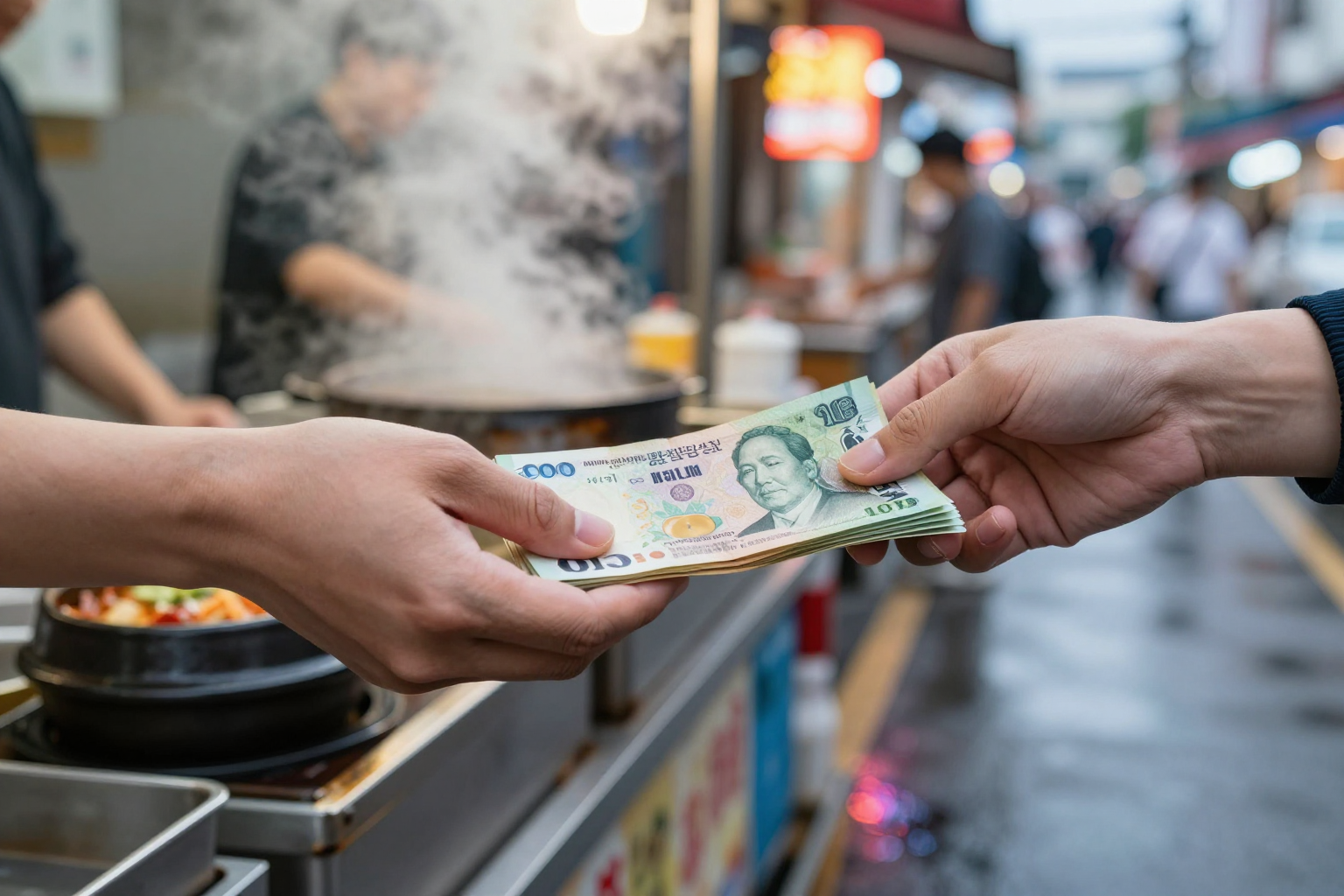
The USD to KRW rate is one of those numbers that only matters when it suddenly does. A trip to Seoul, a wire transfer to a supplier in Busan, an online order from a Korean brand, and a figure you never think about becomes the difference between a fair deal and an expensive one.
If you look up the rate and see 1,380, that means one US dollar buys 1,380 South Korean won. It's a direct quote, so the logic runs the way you'd expect: a higher number means a stronger dollar and a weaker won. Korean won is usually quoted to two decimal places, so you'll more often see something like 1,380.40 than a round figure.
That single number sets the price of a hotel room in Myeongdong, the cost of a bowl of naengmyeon, the amount your transfer lands as, and what you pay for a Korean-made product bought overseas. Get a rate 5% worse than the market and you've quietly paid a 5% tax on your entire trip. Not every currency is quoted the same way, either, and the yen has its own quirks that change how you read a rate.
Korea's currency is not the Swiss franc or the euro. It swings harder and faster, and three forces do most of the driving.
Semiconductors alone make up a huge slice of Korean exports, with Samsung and SK Hynix at the centre. Cars, ships and petrochemicals fill out most of the rest. When global demand for chips is strong, dollars flood in to pay for them and the won firms up. When memory prices fall or a large customer slows its orders, that flow thins out and the won weakens.
When the Federal Reserve pays more on dollar deposits than the Bank of Korea pays on won deposits, money drifts toward the dollar. That weakens the won without anything going wrong inside Korea. Reverse the gap and some of that money comes home.
The won behaves like a risk-on currency. In a calm market, investors are happy to hold it. In a panic they sell first and ask questions later, and the money runs to the dollar, the yen and the Swiss franc, which has held its value through far worse. This is why USD to KRW can jump 30 won in a day on news that has nothing to do with Korea.
A 100-won move sounds trivial. Run it against a real budget and it isn't.
You can't control where the rate goes. You can control how much of it you keep.
The gap between the best and worst place to convert is routinely 5% to 8%. On $2,000 that's $100 to $160. It's the same trap travellers hit with the Colombian peso, where the published rate and the rate you're actually offered are two different things.
The same maths applies whether you're buying won in Seoul or swapping dollars for dong at a Hanoi money counter: the posted rate is half the story, the spread and fees are the other half.
Say you need $1,000 in won and the mid-market rate is 1,380.
Sixty dollars is a night in a good guesthouse. It's also worth ten minutes of planning. If you're moving larger sums, the same principle applies to other major pairs, and beating the banks on a dollar conversion is mostly about avoiding the "no commission" headline that hides its cut inside the spread.
Cash is fine for a holiday. For anything bigger, such as supporting family, paying tuition or settling an invoice with a Korean supplier, a transfer is safer and often cheaper than it looks.
A traditional bank wire to Korea typically costs $20 to $45 to send, then passes through one or two correspondent banks that each take a slice, and the receiving bank may charge again. On a $2,000 transfer that can total 3%. Transfer services quoting the mid-market rate with a visible fee usually land under 1%. Recipients need a Korean bank account and the correct SWIFT details, and transfers generally arrive within one or two business days.
Korea is one of the most card-friendly countries on earth. You can tap a card for a 4,000-won coffee, a taxi and a subway ride. Very few places refuse cards, though some small market stalls and older neighbourhood restaurants still prefer cash.
One practical detail: Korean ATMs dispense 10,000-won notes, so a 100,000-won withdrawal is only ten notes. That disappears faster than you'd think.
Nobody reliably calls the top or bottom of USD to KRW, and the won can move several percent in a week. A few habits beat forecasting.
Before converting anything, note the mid-market rate from a search or a rate app. Then apply a simple test: within 1% of that number, take it. Between 1% and 3%, acceptable for convenience or a small amount. Above 5%, walk away unless you have no choice.
For a two-week trip, a rough budget helps as well. A mid-range hotel, meals, transport and a few entry fees run around 120,000 to 180,000 won per person per day, so $1,500 to $2,000 converted well covers a comfortable visit. Checking the USD to KRW rate before you book flights, again on the day you convert, and once more before you fly home is enough to stop the exchange rate quietly eating your holiday.
Slot ID: blog-post-bottom