
Loading article...
Slot ID: blog-post-top
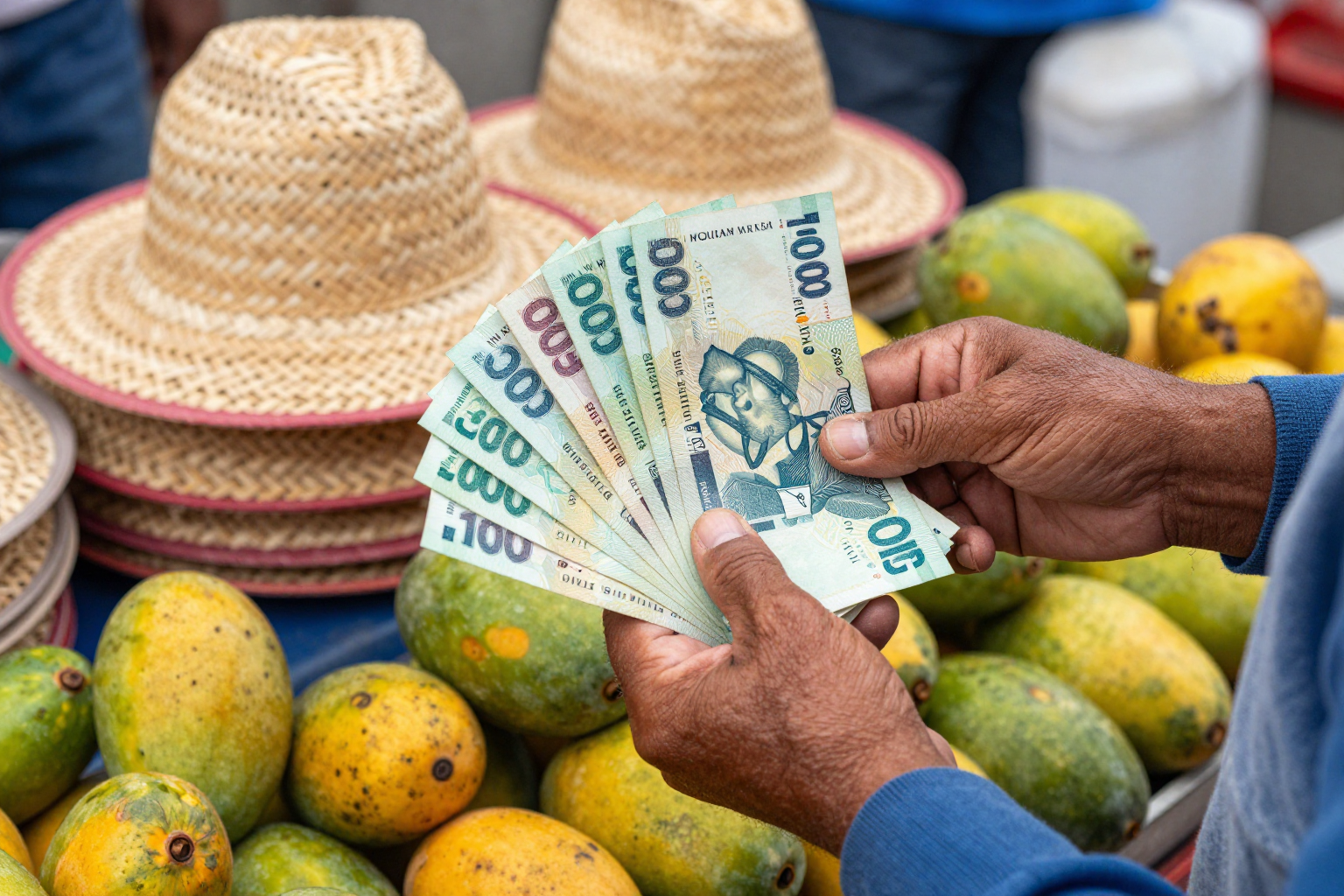
One dollar buys somewhere around 4,000 Colombian pesos, though the exact number changes hour by hour. That single figure decides how far your money stretches in Bogotá, Medellín, or Cartagena, and it moves more than most travellers and expats expect. Knowing what drives the US dollar to Colombian peso rate, and how to convert without quietly handing over a slice of it, is worth more than a few minutes of reading.
Currency pairs are quoted the same way everywhere. USD/COP is the price of one US dollar expressed in Colombian pesos. A quote of 4,150 means one dollar is worth 4,150 pesos, so a 300,000-peso hotel night costs about $72.
That part is simple. The complication is that the peso is one of the more volatile currencies in Latin America. Since 2020 the rate has traded below 3,500 and above 5,100 inside a two-year window. Someone who converted at the top of that range received roughly 45% more pesos for the same dollar than someone who converted at the bottom. You don't need perfect timing for it to matter.
Colombia exports oil, coal, coffee, gold, and cut flowers. Those sales are priced in dollars, and the dollars get converted into pesos to pay local wages, taxes, and suppliers. When oil is expensive, that flow of dollars is strong and the peso firms up. When crude slides, the supply of dollars shrinks and the peso weakens. Ecopetrol, the state oil company, functions as a proxy for the national currency in the eyes of foreign traders.
Elections, tax reform debates, and pension overhaul proposals all leave fingerprints on the chart. The peso slid past 5,000 in 2022 during a stretch of political uncertainty layered on top of aggressive US rate hikes. Banco de la República responds by adjusting interest rates, and higher local rates can pull foreign capital back in and lend the currency some support.
Half of this equation has nothing to do with Colombia. When the Federal Reserve raises rates, the dollar tends to strengthen against almost everything, and emerging-market currencies feel it first. The same dynamic plays out in the USD/CAD relationship, where the loonie's fate is tied tightly to its southern neighbour's monetary policy.
Four options cover almost every situation, and they are not remotely equal.
Assume the mid-market rate is 4,100 pesos per dollar, which is roughly the number Google will show you.
The gap between the worst and best option is 330,000 pesos, or close to $80. That is a serious dinner, a domestic flight, or two nights in a good hostel, lost purely on the mechanics of the exchange. The same fee arithmetic shows up in every currency pair, which is why it pays to avoid overpaying on dollar conversions wherever you happen to be spending.
A handful of small decisions add up faster than any rate-timing strategy.
If you are earning pesos and moving money the other direction, the logic simply flips. The COP to USD rate rewards the same discipline: compare the mid-market rate with what you are actually offered, and treat the difference as the real cost of the transaction.
For a holiday budget, no. Nobody reliably predicts where USD/COP lands next month, and a wire transfer you delay for three weeks to chase 2% is usually a losing bet once fees are counted. For a property purchase, a salary transfer, or a business payment, the maths changes. Those are large enough to justify converting in stages, moving a third of the sum at a time so no single day's rate decides your outcome.
Google, XE, and your banking app all display the mid-market rate, the midpoint between what banks pay to buy pesos and what they charge to sell them. No consumer ever gets that number. The spread is the business model, and it varies wildly between providers. A quote that looks 1% off is often 4% off once the margin is included. Reading the fine print on a currency like the Swiss franc conversion teaches the same lesson Colombian travellers learn: the headline rate is marketing, the final amount in your account is the truth.
Colombians watch the dollar rate the way people elsewhere watch petrol prices. A jump from 4,000 to 4,300 changes the cost of imported electronics, the price of a flight abroad, and how much a remittance from Miami is worth on arrival. When the peso weakens, exporters celebrate and importers wince. Understanding that tug-of-war makes you a smarter spender, whether you are visiting for two weeks or staying for two years.
Set a rate alert, know your two cheapest conversion routes before you need them, and check the mid-market number every time someone quotes you a price in dollars. Do that consistently and you will out-earn the people who simply accept whatever the first ATM hands them. The dollar to Colombian peso rate will keep moving. Your habits don't have to.
Slot ID: blog-post-bottom