
Loading article...
Slot ID: blog-post-top
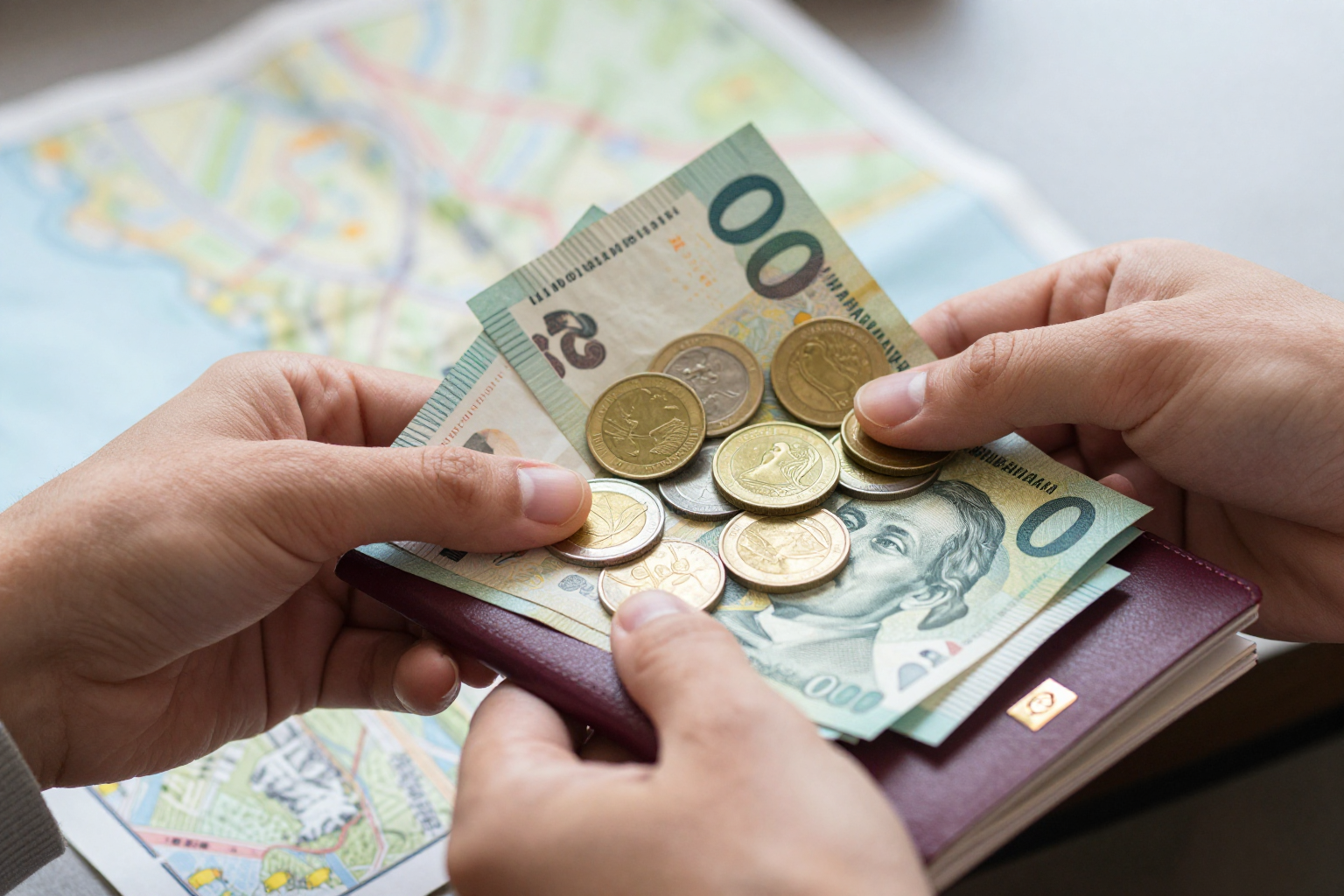
Typing “money exchange near me” into Google feels like a quick win. A map with a few red dots appears, all within a few minutes’ walk, and you assume any one of them will do. But that walk to the counter can cost you far more than the extra block you avoided. Currency exchange is not a standard product; the spread and fees vary dramatically from one door to the next. The closer you get to the enticing “near me” results, the more important it is to understand the hidden mistakes that quietly appear when you hand over your cash.
When you open the map, you see three or four exchange offices within a few hundred metres. That might seem like convenience, but the rates between them can differ by 4% or more. Tourist zones, transport hubs and hotel lobbies carry higher margins simply because they know you’re not going to walk ten minutes to save a couple of pounds. A side-street office with less foot traffic often offers a much fairer quote.
Take an example: if the mid-market rate is 1.14 EUR/GBP, one shop near your hotel might quote 1.09 while another a few streets away gives you 1.12. On £500 that’s the difference between €545 and €560. That €15 could cover a decent lunch, yet many people don’t bother to check because the shop already looks “good enough”.
Here’s another trap: many currency exchange desks are independently run franchises. The same name over the door doesn’t guarantee the same rate, margin or even fee structure. One branch may advertise a 2% margin; another in a train station may quietly take 5%. That hidden branch-level difference is one of the money exchange myths and mistakes that keep your wallet lighter without you realising.
Most people look at the rate displayed on the board and think that’s the whole story. But those boards are not live market rates; they are a deliberately wide buy-sell spread. Some offices add a separate “processing fee”, others hide the cost by adjusting the rate. The only number that matters is the amount of foreign currency you’ll actually receive in your hand.
Instead of asking “What’s your rate?”, ask “If I give you £500, how many euros will I get?” Get that quote over the phone before you visit. Then compare it with the total from another place. It sounds obvious, but very few people do it.
Here are a few important checks before committing:
A big sign reading “0% commission” sounds unbeatable, but it just means the office will take its profit elsewhere. Exchange services have to cover rent and staff, so a “no fee” offer almost always comes with a wider spread on the rate.
Example: Shop A offers no commission but gives you 1.10 EUR/GBP while the mid-market is 1.14. Shop B charges a 1% fee but gives you 1.13. On £500, Shop A hands over €550. Shop B gives you €565 minus around €5.65 fee, leaving €559.35. You get almost €10 more from the shop that charges a fee. Those are the kinds of sneaky traps that cost you money when you’re too focused on the sign in the window.
If you’re searching for money exchange near me on a Sunday afternoon, you’re already starting from a weak position. The global foreign exchange market is closed over the weekend, so currency exchange offices set their rates without a live reference. They typically widen the spread to protect themselves from any news that might appear before Monday morning. That can add an extra 1–3% to your costs.
The same applies to late-evening exchanges at the airport. Desk operators know you have no other option, so they bake that convenience into the rate. If you must get cash at the airport, pre-order it online and pick it up at one of the collection counters. That usually gives you a far better rate than a walk-up transaction.
If you’ve ever had a trip derailed by poor planning, you’ll recognise the pattern in this guide on the seven mistakes that make your travel money vanish. The lesson is simple: give yourself enough time to compare, especially before a long weekend.
Nobody likes returning home with a pocket full of unfamiliar notes. But changing them back before you fly is one of the worst moves you can make. When you buy foreign currency, you pay the spread; when you sell it back, you pay the spread again.
Suppose you exchange £500 into euros at a place charging a 3% spread. If you have €100 left over at the end of the trip and exchange it back at the same office, you’ll lose roughly another 3% on that €100. That means you only recoup about €97 of the original buying power — so about 6% of that leftover amount has simply disappeared.
Avoid this by:
Sometimes the smartest move is not to use a money exchange at all. A good prepaid travel card or a multi-currency bank account lets you load money at the interbank rate and spend it abroad with no foreign transaction fee. That often beats even the best high-street currency desk.
But cards come with their own traps. At an overseas ATM, you may be offered “dynamic currency conversion” — the machine will show the amount in pounds and tempt you to accept it. Don’t. Always choose to be charged in the local currency, otherwise you’ll get an artificially bad exchange rate and likely an extra fee.
And if you’re thinking about transferring a larger sum to a foreign bank account rather than carrying cash, make sure you’re not repeating the international money transfer myths and mistakes that cost people more than they need to pay.
Here’s how to turn your next “money exchange near me” search into a genuinely good deal:
Currency exchange is a business built on inattention. Almost every costly mistake boils down to people who assume the nearest option is also the fairest. A little preparation ahead of your trip can save enough to pay for a decent airport meal — and that’s a far better use of your money than handing it over as a quiet surcharge.
Slot ID: blog-post-bottom