
Loading article...
Slot ID: blog-post-top
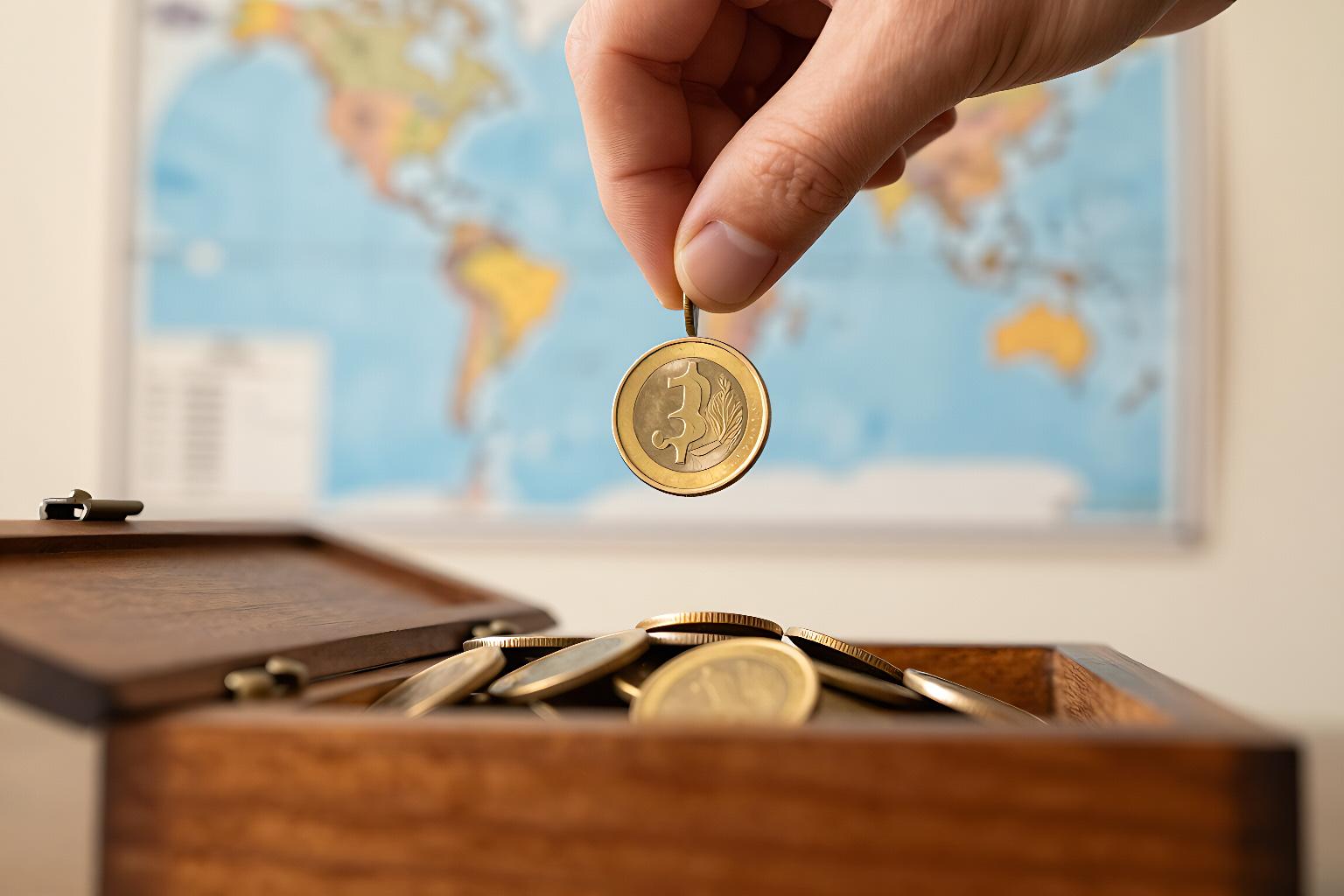
A couple of years ago, I watched a woman in London compare exchange rates on her phone for ten minutes, then walk into a high-street bureau de change and hand over £100 because the board showed "0% commission." She didn't look at the actual rate. She didn't ask how many euros she would get for her pounds. The commission was an illusion. The rate was terrible.
The real cost of foreign currency exchange is rarely labelled. It's tucked into the exchange rate itself, in the spread between the interbank rate and what you actually receive. There are quieter traps too, the ones you might not notice until you're back home and your bank statement arrives. In this article, we'll look at eight common mistakes and myths that cost travellers and remote workers money. And more importantly, how to avoid them.
Let's start with the "zero commission" fiction, because it's the gateway to several other traps. A 0% commission sign just means the provider is making their profit in the exchange spread instead. The rate you see on the board might be 3% worse than the true market rate. You'd be better off checking a comparison of foreign exchange options to see what the same amount costs elsewhere.
When you pay with a card in another country, the terminal might ask: "Do you want to pay in pounds or in euros?" That seems polite. But paying in your home currency is usually a scam. Dynamic currency conversion (DCC) lets the merchant or ATM choose the exchange rate, and it's almost always far worse than the one your bank would use.
Here's the rule: always choose the local currency. If you're using a card in Paris, choose euros. Your bank's rate may still include a foreign transaction fee, but you'll avoid the extra 3% to 6% that DCC tacks on. This one simple choice can save you a meaningful chunk of money on every meal, hotel and taxi ride.
Foreign exchange markets close on weekends, so many providers quietly widen their margins. A mid-week rate of 1.5% above the interbank rate can become 3.5% when you exchange on a Saturday. The provider isn't taking more risk; they're taking advantage of your convenience.
If your trip starts on a Monday, don't buy currency on Sunday "just to be ready." You'll often get a worse rate for no reason. Instead, use a card for the first day or two and exchange cash when the market opens. It's a small change in timing that makes a surprisingly big difference.
Some online transfer services advertise "free transfers" to lure you in. But free can mean an exchange rate that's 2% off the mid-market rate. If you're moving £5,000 to a US bank account, a 2% markup costs £100. That's not free.
When comparing providers, look at the total cost in the destination currency, not the stated fee. Let's say Bank A charges £5 upfront and gives a 0.5% markup, while Bank B charges £0 but gives a 2% markup. On £5,000, Bank A puts roughly $100 more into your recipient's account. That sounds backwards, but it's true. I made this mistake once and it cost me; now I always check the actual rate before I send. If you're prone to the same error, you'll want to read about myths and mistakes in international money transfers before your next big transfer.
ATMs abroad might charge you three different fees: the ATM operator's fee, your bank's foreign transaction fee, and occasionally a "convenience fee" for using a non-affiliated machine. Together, these can add up to 4% or more on a single withdrawal.
Here's how to keep it under control. Use your own bank's partner ATMs, withdraw larger amounts less frequently, and always decline the ATM's offer to convert the transaction into your home currency (that's DCC again). If you're using a travel-specific prepaid card, check the fee structure before you go. Many of these cards have "free" withdrawals for the first few transactions, then hit you with charges.
When you're about to travel, there's a strong urge to buy all your currency at once, right before your flight. That's a mistake. You'll be in a rush, which almost guarantees you'll accept a bad rate, and you're likely to overbuy, leaving you stuck with cash you'll then need to convert back at another loss.
Instead, bring a little cash for the first day, use a credit card for larger purchases, and withdraw local currency from a reputable ATM when you arrive. This gives you day-by-day flexibility and a much better rate. If you end up with leftover cash, don't assume you have to sell it. Keep it for your next trip, or at least compare rates before you visit a money exchange near me at home. Convenience is nice, but it's rarely free.
Some traps are so intuitive that we walk into them without noticing. Here are the ones I see most often:
If any of those feel familiar, you're in good company. The fix isn't about being an expert; it's about being aware that currency exchange mistakes quietly cost you money even when you think you're doing it right.
So what does good foreign currency exchange actually look like? It starts with a few habits you can build today.
The best approach is to treat foreign currency exchange like any other financial product. You wouldn't buy a used car without checking the price; you shouldn't buy euros without checking the rate against the mid-market benchmark. The traps are everywhere, but they're also predictable. Once you learn to spot them, they stop costing you money.
Slot ID: blog-post-bottom