
Loading article...
Slot ID: blog-post-top
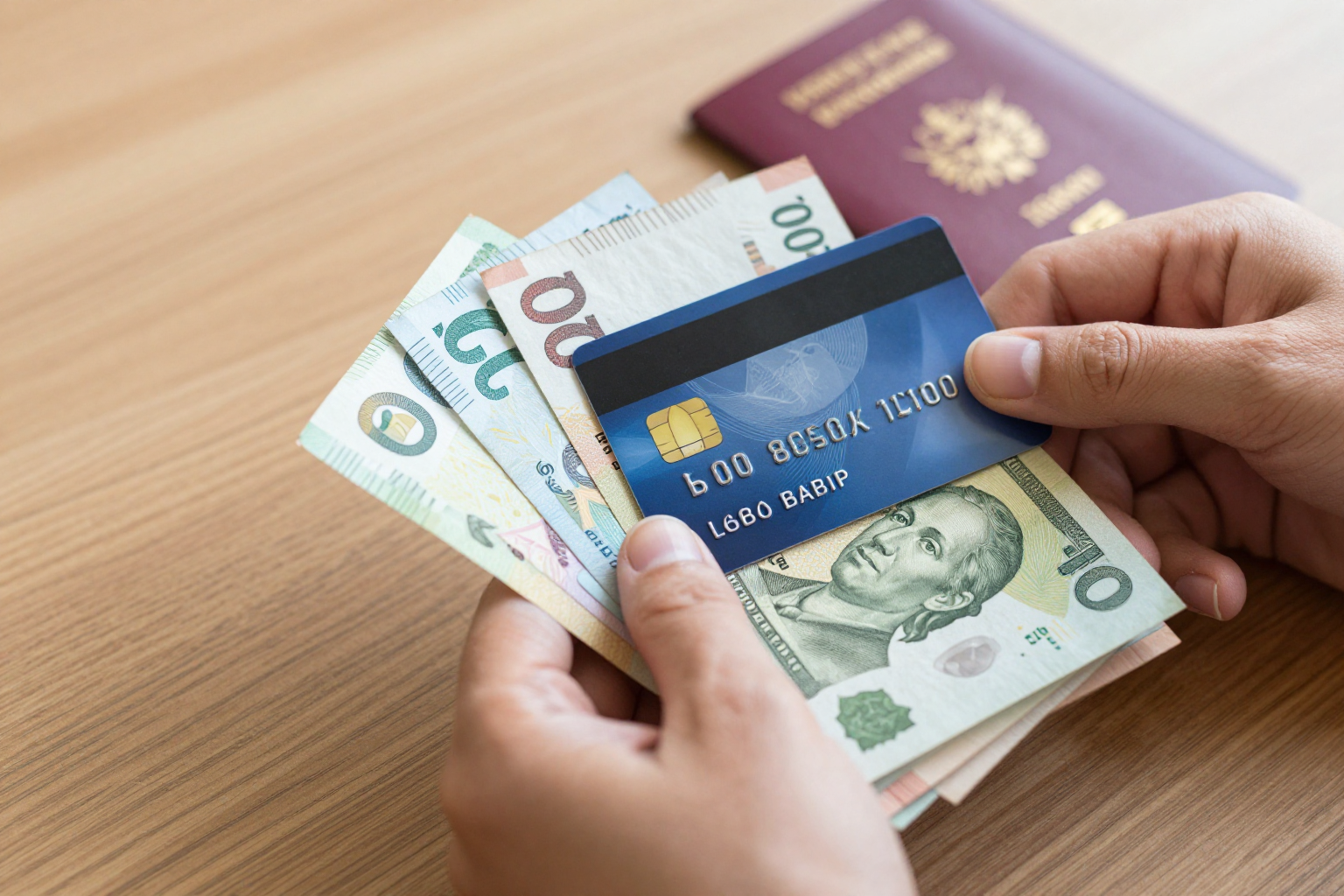
You're about to travel, or maybe you need to send money overseas. The first thing you ask is: "How do I get the best foreign exchange rate?" But the answer is rarely straightforward. The same amount of money can cost you 1% or 6% depending on whether you walk into a bank branch, pull cash from an ATM, use an app, or pay with a card.
The real problem is that the cheapest option for one situation can be the most expensive for another. That's why we've compared the main foreign exchange channels side by side. We'll look at the rate margins, fees, convenience, and the times when each option makes sense.
Before we get into the trade-offs, here are the main ways people buy or move foreign currency:
Every one of these has a different cost structure. Some charge a flat fee, some make money on the exchange rate spread, and some combine both. To make a smart choice, you need to understand the difference between the mid-market rate (the real exchange rate you see on Google) and the rate you're actually quoted.
If you need physical cash before you leave, your instinct might be to go to your local bank branch. It's secure, familiar, and you can talk to a person. But banks are rarely the best deal. A typical bank will add 2% to 4% to the mid-market rate on top of any explicit commission. For example, if the EUR/USD mid-market rate is 0.95, your bank might sell you euros at 0.92, which is a 3% mark-up.
Online specialist apps, on the other hand, usually work with the real mid-market rate and add a transparent fee of 0.3% to 1%, depending on the currency and payment method. That's why for larger amounts, apps can save you a significant chunk of money. You can see the difference in our real cost comparison between Wise and traditional banks.
The trade-off is convenience and speed. Bank branches may have the advantage if you need cash instantly and aren't comfortable with digital apps. But if you're willing to plan a few days ahead, ordering foreign currency online or using a digital wallet often gets you a much better rate. Banks also tend to have arbitrary limits on how much you can buy, while apps let you exchange larger amounts with the same fee structure.
If you've ever exchanged money at an airport, you've probably seen the signs: "No commission!" But those kiosks embed their profit into the exchange rate, and it's often 5% to 8% worse than the mid-market rate. For a $500 exchange that's $25 to $40 lost before you even start your trip. Unless you have no other choice, avoid them completely.
Many travelers assume that withdrawing cash from an ATM in your destination country is always a rip-off. That's not entirely true. Local ATMs often give you a rate that's much closer to the mid-market than the one you'd get at an airport kiosk. But the fees can pile up: your own bank may charge a withdrawal fee ($2 to $5), the foreign bank may charge its own fee, and you'll usually face a foreign transaction fee of 1% to 3% of the withdrawn amount.
The biggest trap is dynamic currency conversion. When you're about to withdraw, the ATM might ask if you'd like to be charged in your home currency instead of the local currency. It sounds harmless, but the rate they use is usually 4% to 6% worse than the mid-market rate. Always choose to be charged in the local currency.
If you prefer to bring cash from home, you have two options: your bank or a currency exchange outlet near you. The rates and fees vary wildly, which is why we compared them in our guide to banks, ATMs, cards, and kiosks. And if you need to find a competitive local shop, you can check our analysis of currency exchange near you to see which type of provider typically offers better rates.
The short version: airport exchange kiosks are almost always the worst. Do not use them unless you have absolutely no other choice. A local ATM is usually better, but only if you decline dynamic currency conversion and your bank's fees aren't outrageous. If you're heading somewhere with reliable cash machines, bringing a small amount from home and the rest in your bank account is often the most efficient approach.
Cards are interesting. If you have a credit card that doesn't charge foreign transaction fees, it often gives you the best possible exchange rate, actually close to the mid-market rate plus a small markup from Visa or Mastercard, which is hidden but tiny (usually 0% to 0.5%). On top of that, you get interest-free credit if you pay off the balance. The catch is that many cards charge a 1.5% to 3% fee on every foreign purchase. Over a long trip, that adds up.
Prepaid travel cards seem like a good compromise: you load them with a foreign currency in advance, lock in the rate, and use them like a debit card. But there are sneaky costs. Some cards have a setup fee, a reload fee, and another fee when you convert back to your home currency. If you don't spend the full balance, the money left on the card can sit there losing value, or you might have to convert it back at an unfavorable rate. We break down the entire landscape of options in our currency exchange showdown to see which option keeps more cash in your pocket.
The ideal scenario is a credit card with no foreign transaction fee and that lets you pay in the local currency. This works for most overseas spending, especially in places where card acceptance is common. But you still need some cash for small purchases, tips, or markets. So cards alone aren't a complete solution; they're one part of a broader strategy.
The foreign exchange game changes entirely when you're not traveling but sending money to someone else. A bank wire is the traditional option, but it's slow and expensive: a $25 to $40 flat fee on each side, plus a poor exchange rate (often 3% above the mid-market). Online specialists like Wise or Revolut offer a different model: mid-market rates with a small transparent fee. For a $1,000 transfer, you might pay $5 to $10 in total, compared to $60 or more with a bank.
On the other hand, cash pickup services like Western Union or MoneyGram are quick but their exchange rates are notoriously bad, sometimes 5% worse than the mid-market. They're useful when the recipient has no bank account and needs cash instantly, but you should expect to pay for that convenience. Our deeper breakdown of international money transfer: banks vs. apps vs. cash pickup can help you decide based on your specific needs.
If you're transferring money frequently, say a monthly remittance or a business payment, an app-based service is almost always the most cost-effective. The only downside is that transfers can take a few days from a bank account, and there may be limits on how much you can send per transaction. But for most people, the savings are worth it.
So which option should you actually use? Here's a practical framework that takes into account what you're doing and how much you're exchanging:
The common theme is that convenience and foreign exchange rates are negatively correlated. The more you want to do things immediately (the airport kiosk, the cash pickup, the "just charge it" attitude), the more you'll pay in hidden margins and fees. On the other hand, if you plan ahead and use the right tool for the job, you can often keep your total cost under 1% of the amount you're exchanging. And that's a real win, no matter which side of the transaction you're on.
If you'd like to see how these trade-offs play out with real numbers, take a look at our earlier article on money exchange and the trade-offs that decide how much cash you actually get. It'll give you a clearer idea of the price differences you can expect.
Slot ID: blog-post-bottom