
Loading article...
Slot ID: blog-post-top
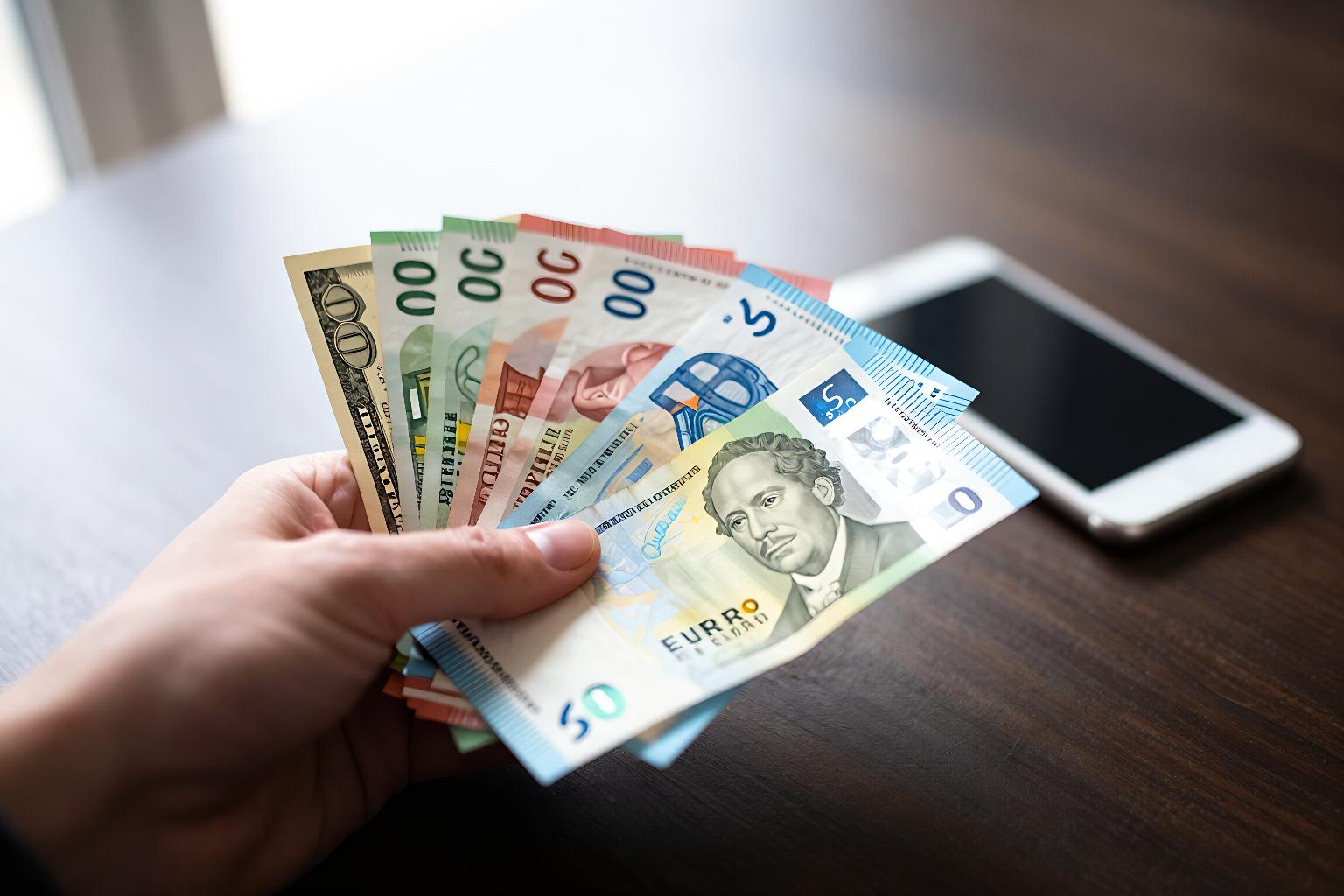
Picture this: you need to send €1,000 to a contractor in Poland. Your local bank quotes you a 2.8% exchange rate margin, plus a $35 wire fee. A dedicated money transfer app might charge just 0.45% above the mid-market rate, with no flat fee. That's a difference of about $60 on a single transfer. Run two transfers a year and you've lost the price of a nice dinner.
This isn't a made-up comparison. It's the everyday reality of international money transfer. But the lowest fee doesn't always mean the best choice. Speed, convenience, security, and the receiver's access can matter just as much as the headline number. Here's how the main options stack up.
Most people understand how a bank transfer works. You log in, add a beneficiary, confirm a fee and a rate, and wait. Banks are secure, regulated, and easy to use if you already have an account with them.
The problem is the spread. Banks make money on the difference between the rate they give you and the market rate. On a $3,000 transfer, a 3% spread costs you $90. Add a $25 to $50 outgoing wire fee, and many banks simply can't compete on price.
Banks also tend to be slow. You'll often wait three to five business days for the money to arrive, and the rate is locked at the moment of execution, not when you submit the request. If the market moves against you in the meantime, you get even less. They work best for very large sums, or when you need a physical branch and a paper trail. We've written a detailed foreign exchange playbook that explains how to move money across borders without losing a fortune on these very costs.
Services like Wise, OFX, and Revolut have quietly transformed the industry. Instead of hiding a markup in the exchange rate, they give you the mid-market rate and then charge a transparent fee. That fee is often between 0.4% and 1%. On a $1,000 transfer, it could be as little as $4.
These apps are also faster. Many currency pairs arrive within hours, sometimes minutes, thanks to smart routing between local accounts. You do need to verify your identity and link a sending account, which takes ten minutes. And if the recipient needs cash in hand, these services won't help you unless they have a bank account.
Wise is a natural entry point. If you're considering it, you can follow our Wise money transfer guide which walks through the full process, from sign-up to the moment the money lands.
PayPal is everywhere, which makes it tempting. You can send a payment using just an email address, and it feels instant. But convenience has a price. PayPal charges a cross-border fee that is typically around 5% of the transaction amount, plus a fixed fee. On top of that, the exchange rate tends to include a spread of 3–4% above the market.
So a $500 transfer can cost you $40–$50 in fees and markups. That's roughly four times what a specialist would charge. It's not just PayPal; many digital wallets with international transfer features use similar pricing.
There is a place for PayPal. If you're paying a seller who only accepts it, or you need the money to be instantly available in their PayPal balance, it gets the job done. But for a direct bank deposit elsewhere, it's hard to justify on cost alone. We've compared the true cost of each option in our currency exchange showdown, and PayPal rarely comes out ahead.
When the recipient doesn't have a bank account, or can't access one easily, cash pickup services like Western Union and MoneyGram become the practical choice. You pay online or at an agent location, and the recipient collects local currency in cash within minutes, often at a branch just down the street.
The trade-off is transparency. Fees can range from $5 to $30 depending on the destination and speed, and the exchange rate is often marked up by 2% to 5%. Some companies advertise “zero fee” promotions, but you lose money on the rate instead.
Still, for places with weak banking infrastructure, cash pickup is sometimes the only reliable way to get money into someone's hands. If you're the traveler who needs cash before a trip, the considerations are different. Our guide to finding a local money exchange shows you how to compare booths and avoid inflated rates when you're standing in a foreign city.
If you're moving more than $10,000, conventional wisdom shifts. Currency brokers like OFX and Currencies Direct offer dedicated account managers and access to forward contracts. A forward contract lets you lock in today's exchange rate for a transfer that will happen months from now. That's invaluable if you're buying property abroad or paying a supplier in stages.
Brokers also tend to give better rates than banks for large sums, because they're actively trading on the interbank market. The downsides are higher minimums, more paperwork, and a compliance process that can feel intrusive. But if you're moving a serious amount of money, the savings can run into thousands.
Before you commit to a broker, it's worth reading through a step-by-step guide on avoiding overpayment, which explains the quotes, jargon, and documentation you'll need to compare fairly.
Start by asking three questions. What does the recipient actually need? A bank deposit or physical cash? How quickly does the money need to arrive? And how much are you sending?
For most people sending under $5,000 to friends or family, an online transfer specialist like Wise is the sweet spot. It's cheap, fast, and easy to track. If your transfer is over $10,000, or you need to fix an exchange rate for a big upcoming payment, a broker is worth the extra setup time.
If the recipient can only collect cash, an agent like Western Union or MoneyGram is the practical answer, but don't just pick the first agent you see. Compare the total cost in your own currency, because the exchange rate fluctuations between different agents can be surprisingly large.
There's also the middle ground: a bank-to-bank transfer with your existing bank can make sense if the recipient holds an account at the same bank or if you're moving money to yourself in another country. But the onus is on you to check whether the quoted fee and rate beat a specialist. In our experience, they rarely do.
One final tip: always calculate the total cost in the currency the recipient receives, not just the fee you see upfront. A low fee with a bad rate can easily cost you more than a higher fee with a fair rate. That single habit will save you more money than any switching loyalty to one provider will.
Slot ID: blog-post-bottom