
Loading article...
Slot ID: blog-post-top
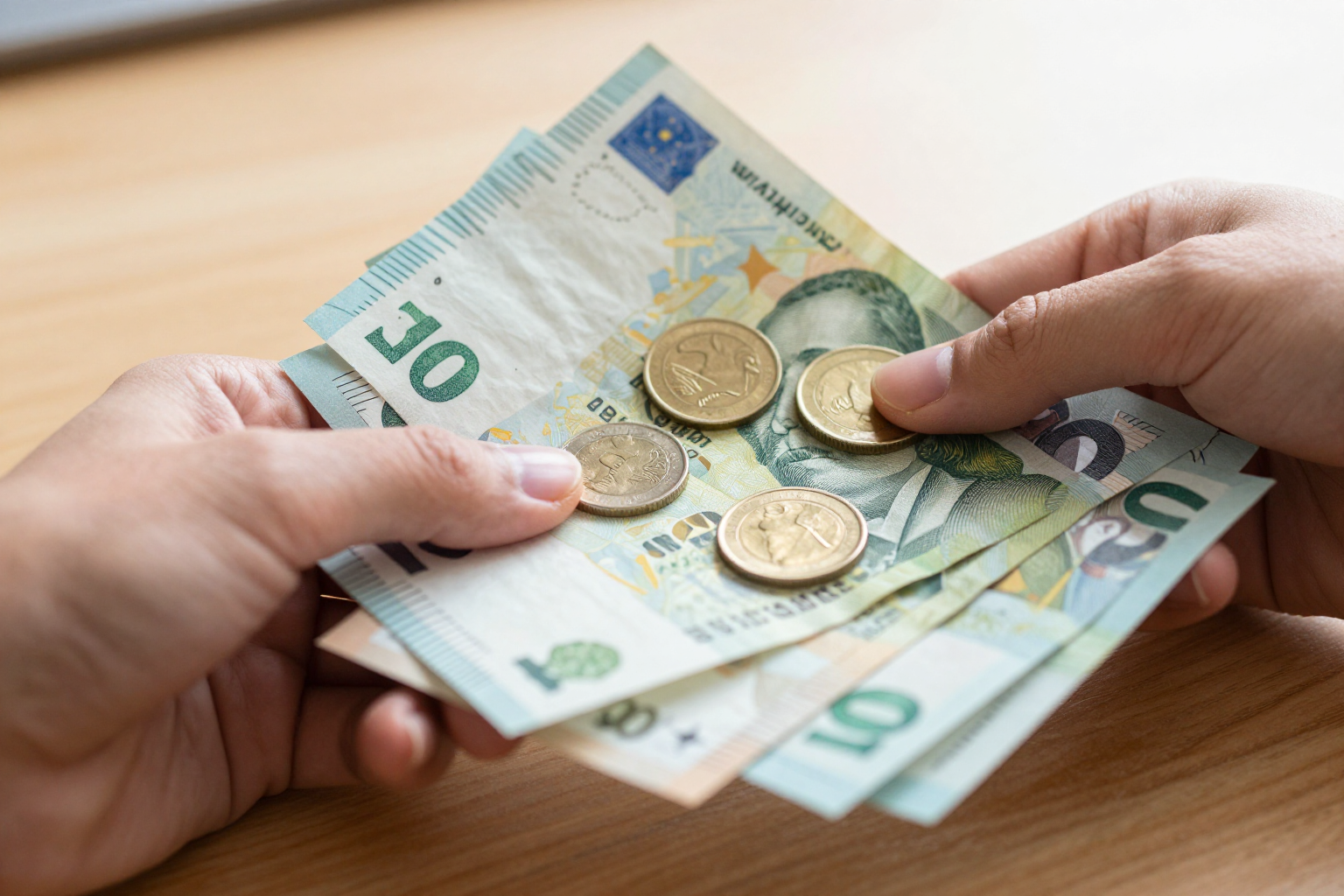
You've got the flights booked, the Airbnb confirmed, and a vague plan involving five cities in ten days. Then it hits you: you need actual, physical cash in a currency that isn't your own.
The good news is foreign currency exchange is easy to get right. The bad news? Most travellers overpay because they follow the same lazy path: airport kiosk, tourist-area booth, or hotel desk. Those are the worst places to convert cash. This guide walks you through the process in concrete steps, with real numbers, so you know exactly what you're saving—and what you're leaving on the counter.
The mid-market rate is the benchmark exchange rate that banks use when they trade with each other. It's the true 'real' rate at any given moment. When you Google 'EUR to USD' or 'GBP to JPY', that number is the mid-market rate.
Let's use a concrete example. Say the current mid-market rate for EUR/USD is 1.10. That means one euro costs $1.10. That number is your baseline. If anyone quotes you a rate that's better than the mid-market rate, they're lying or you've misread the direction of the quote. In practice, you'll always get a slightly worse rate because the exchange provider needs to make money. The question is how much worse.
The spread is the difference between the mid-market rate and the rate you're actually offered. It's how every currency exchange business makes its money. A fair spread is usually around 1–2% of the transaction. Anything more than that is a ripoff.
Let's put some numbers on this. You're converting $600 into euros, and the mid-market rate is 1.10. A fair offer might be 1.08. A typical tourist-trap billboard might advertise 1.02, or even worse, plus a 'commission' fee. At 1.08, you'd get €555.56. At 1.02, you'd get €588.24. That sounds like more euros, but here's the trick: that 1.02 is the rate for selling euros, not buying them. Read the sign carefully—it always says 'We sell euros at 1.02' and 'We buy euros at 0.98'.
To avoid the confusion, just ask for the final rate in writing, including any fees. Take a screenshot. Do the math yourself. If you want a deeper look at how spreads work in different scenarios, check out this step-by-step playbook to beat the spread and keep your cash.
You wouldn't buy the first plane ticket you see without comparing. The same logic applies to currency. You have several options: your local bank, a dedicated currency exchange shop, an online provider that ships cash to your door, or a prepaid travel card. Each has different rates and fees.
Spend 15 minutes before your trip checking online exchange rate calculators. One useful trick is to look for online reviews and rate comparisons. For a detailed look at typical markups in different locations, the smart shopper's guide to fair rates covers exactly what to expect from high-street shops versus local banks.
Another underrated move: call your bank and ask for the rate they offer for currency conversion. Many banks will match online rates if you're a long-time customer. But they also have minimums and might charge a delivery fee, so factor that into the total.
Airport exchange desks have one goal: catch people who forgot to plan. They know you're a captive audience. Their rates are often 8–12% worse than the mid-market rate, and sometimes they stack an extra fee on top of that.
Let's test this with our earlier example. Mid-market of 1.10, a typical airport desk sells euros at 1.22, and charges a 'service fee' of €5. You want $500 worth of euros. At 1.22, you get €409.84. Subtract the €5 fee, you're at €404.84. At a fair rate of 1.08, you'd get €555.56. That's a loss of €150.72—more than $150 down the drain.
If you're already stuck at the airport and need emergency cash, don't grab the first counter. Walk to the far end of the terminal. Rates vary by counter. Take a photo of the rate board and read the conditions. Want a systematic way to compare options even after you land? This step-by-step walkthrough to getting the best rate will show you how to find a fair exchange point in any city.
Most guides cover buying currency, but few mention what happens when you sell it back. The buy-back rate is the rate at which the exchange office will purchase euros from you. You'll always get a worse price than the sell rate. That's normal—but the gap should be narrow.
Here's a common mistake: you exchange $300 for €272.73 at a fair rate of 1.10. You spent $280 and end up with €40 left over. You go back to the same shop to convert those €40 back to dollars. They quote you 0.95 (the buy rate). You get $38.00 instead of $44.00 if they'd used the mid-market rate. That small difference might not seem like much, but it's a 13% loss on the leftover amount.
To avoid this, you have three options: spend the coins before you leave the country, keep a small amount for a future trip, or convert only as much as you think you'll use. And when you do have leftovers, look for a local bank rather than a currency shop. The buy-back spread is usually tighter.
If you're moving more than a few hundred dollars, physically exchanging cash is rarely the best strategy. Your own bank's debit card can often get you a better effective rate when used at an overseas ATM—but only if you have a bank that doesn't charge foreign transaction fees. Look for a card with no ATM fees and no foreign exchange fee. Many online banks and neobanks already include this in their offer.
Example: you withdraw €500 from an ATM in Madrid. Your bank uses the Visa or Mastercard exchange rate, which is typically within 0.5% of the mid-market rate. They might add a flat fee of $2.50, or 1%. Compare that to the 8% you'd lose at an airport counter. The ATM actually beats most cash exchange companies.
For bigger transfers—say, paying a contractor abroad or moving money between your own accounts—an international money transfer service is usually the cheapest route. They operate online and use the mid-market rate with a small fixed fee. Here's a step-by-step guide to sending money abroad without overpaying. If you want a broader explanation of how banks and transfer providers make money, the foreign exchange explained guide covers it neatly.
Here's the whole process condensed into a checklist you can run through before your next trip:
Exchanging currency doesn't have to be a gamble. Once you've seen the math, it feels less like a maze and more like a simple routine. The next time you're standing at a counter, you'll know exactly which rate to look for—and how much you're actually saving.
Slot ID: blog-post-bottom