
Loading article...
Slot ID: blog-post-top
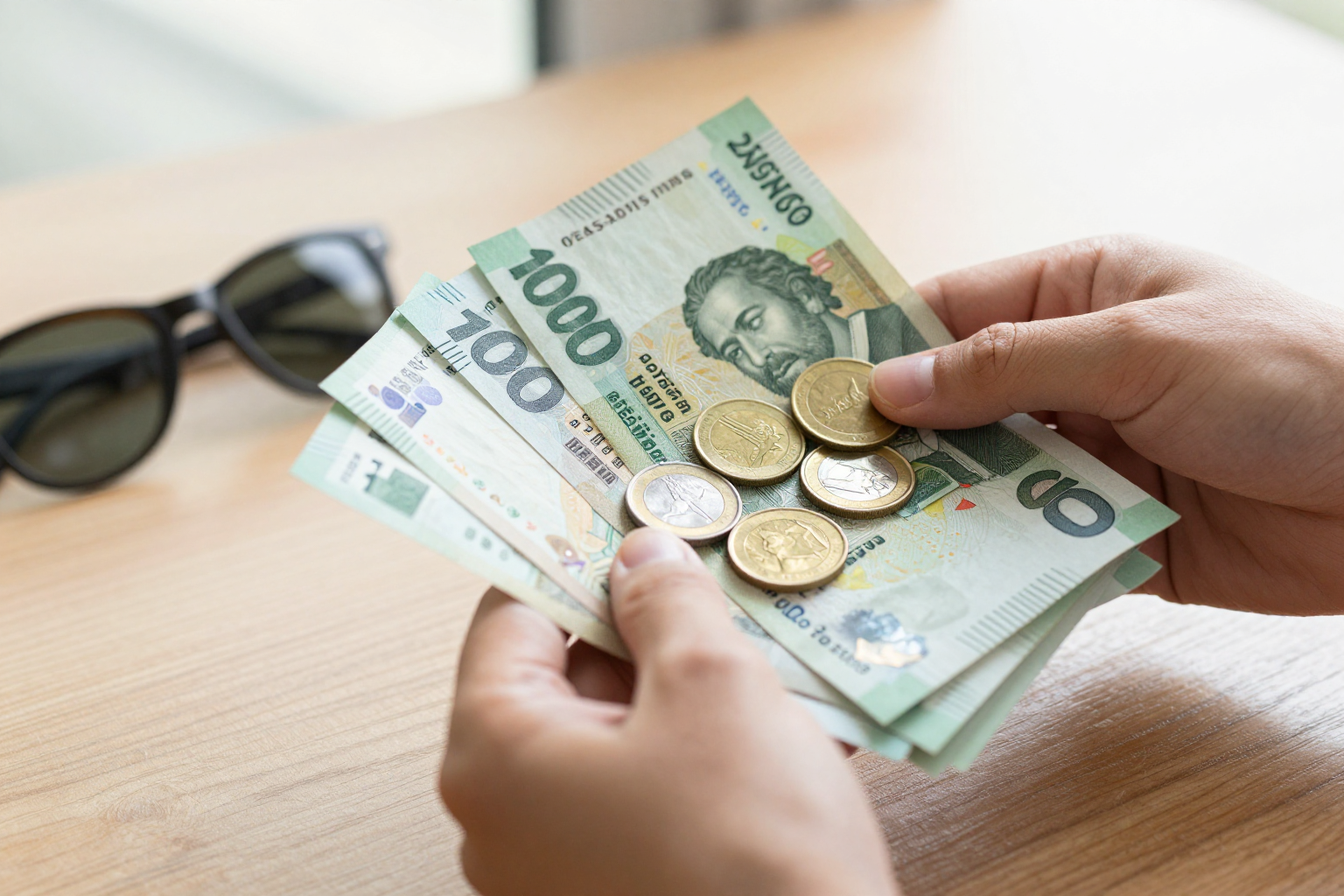
When you type "money exchange near me" into your search bar, you're likely looking for a quick way to get your hands on foreign cash. Maybe you're heading to Europe next week, or you've returned from Tokyo with leftover yen to convert back. The challenge is that the closest option is rarely the most affordable one. This guide walks you through the places that actually give you a fair deal, the traps to avoid, and a few simple calculations that can save you a surprising amount of money.
Airports are the most expensive place to exchange money. If you're in a rush, you'll pay for it. According to a 2023 survey by Which?, airport exchange kiosks in the UK offered rates up to 5% worse than the interbank rate. On a €500 exchange, that means €25 is just gone. It's the same story for exchange booths on busy tourist streets and in hotel lobbies. They're not expensive because they have to be – they're expensive because they know you have few alternatives. If you've already landed without local cash, you're stuck paying their markup.
The worst part is that these kiosks rarely advertise the fees properly. Instead, you see a "0% commission" sign, but the exchange rates themselves are several percentage points off the real market rate. In the end, you're still paying a hidden fee. For a deeper explanation, read our article on avoiding the airport markup and getting a fair rate. It's a worthwhile read before your next trip.
Hotels are another place you might search for "money exchange near me" because they're in every travel district. Front desks often convert money as a courtesy, but the rates are usually poor. They set their own rates, often 3-7% worse than the interbank rate, because they know guests are in a bind. If you absolutely must exchange money at your hotel, keep it to a small amount – enough for a taxi and a coffee – and save the bulk of your exchange for when you're near a bank.
If you look at a map, the results for "money exchange near me" are a mix of bank branches, credit unions, and independent exchange bureaus. Here's what each option typically offers.
Your own bank is the first place to check, and it's usually the best place to exchange currency. Many major banks offer foreign currency ordering for account holders, and the exchange rates are typically within 1-2% of the mid-market rate. Some banks do this for free if you're in a premium account, others charge a flat fee of £5-10. The catch is that they don't always keep foreign cash in the branch. You'll need to order it in advance, often 2-3 working days before you need it. Credit unions work similarly and often have better rates, but you'll need to be a member.
When you visit a bank, always ask for a quote in the currency you want. Ask them to show you the exchange rate and the fee separately. That way you can compare apples to apples.
Dedicated exchange shops can be a good option in a pinch. They're everywhere, especially in financial districts or near train stations. The good ones display their rates on a board outside. You'll notice they might have a "buy" and "sell" price for each currency – the difference, known as the spread, is how they make money. A fair spread is usually 1-2% of the mid-market rate. If you see a spread of 5% or more, you're better off going to a bank.
A useful trick: before you go, look up the current mid-market rate on your phone. Then divide the advertised rate by the mid-market rate to see the percentage markup. If it's more than 2%, that's a bad deal. When you walk in, ask for the "total cost in pounds" for a specific amount, and don't be afraid to ask if they have any room to negotiate. Independent shops sometimes are willing to give a slightly better rate if you're exchanging a large amount.
A better alternative has emerged in the last decade: online currency exchange services. You order cash on a website, pay with your bank transfer, and either pick it up at a local branch or have it delivered to your home. Because they don't have the overhead of a physical shop in a tourist area, their rates are often excellent.
To give you an idea: on a recent check, a leading online service was offering €1.125 per pound for 1,000 euros, while a nearby airport kiosk was offering €1.08. On a £900 order, that's a difference of roughly £30. The process is simple: you pay via bank transfer or card, and the cash shows up in a plain envelope. Delivery takes 2-3 days, so you have to plan a little. But if you're already packing, that's not a big ask.
If you're sending money abroad rather than traveling with cash, the same logic applies. The rates matter more than the convenience. Our article on saving money on every transfer explains how this works, whether you're exchanging for travel or a business payment.
Now let's talk about what actually matters when comparing rates. You might see a bureau advertise a "0% commission", but that right there is the trap. They make money from the exchange rate.
Here's a simple three-step process:
For example, suppose you want to convert £500 to euros. Kiosk A offers a rate of 1.10 but charges a £5 fee. So you hand over £505 and get €550. Kiosk B offers 1.09 with no fee, so you get €545 for £500. To compare fairly, look at the effective rate. For A: £505 buys €550, so you get 1.089 per pound. For B: £500 buys €545, so you get 1.09 per pound. B is the better deal. The difference is small on £500, but it grows quickly on larger amounts.
The other thing to watch for is dynamic currency conversion. When you pay with a card in a foreign country, the terminal may offer to charge you in your home currency. Always decline it. You'll receive a terrible conversion rate, often 7-8% worse than your credit card's rate. Instead, always choose to pay in the local currency.
Here are a few things to keep in mind the next time you need foreign cash:
The key is to treat currency exchange like a product, not a convenience. The "money exchange near me" that's a 20-minute bus ride away might save you €30 compared to the kiosk in your departure lounge. That's a worthwhile detour.
If you want to go deeper into the mechanics of bank-to-bank transfers and how to avoid the most common mistakes, check out this practical guide to international money transfer rates and fees. And for a more complete picture of how foreign currency exchange works, including when to use cash versus card, our free guide on keeping your money whole when exchanging currency covers it all.
Slot ID: blog-post-bottom