
Loading article...
Slot ID: blog-post-top
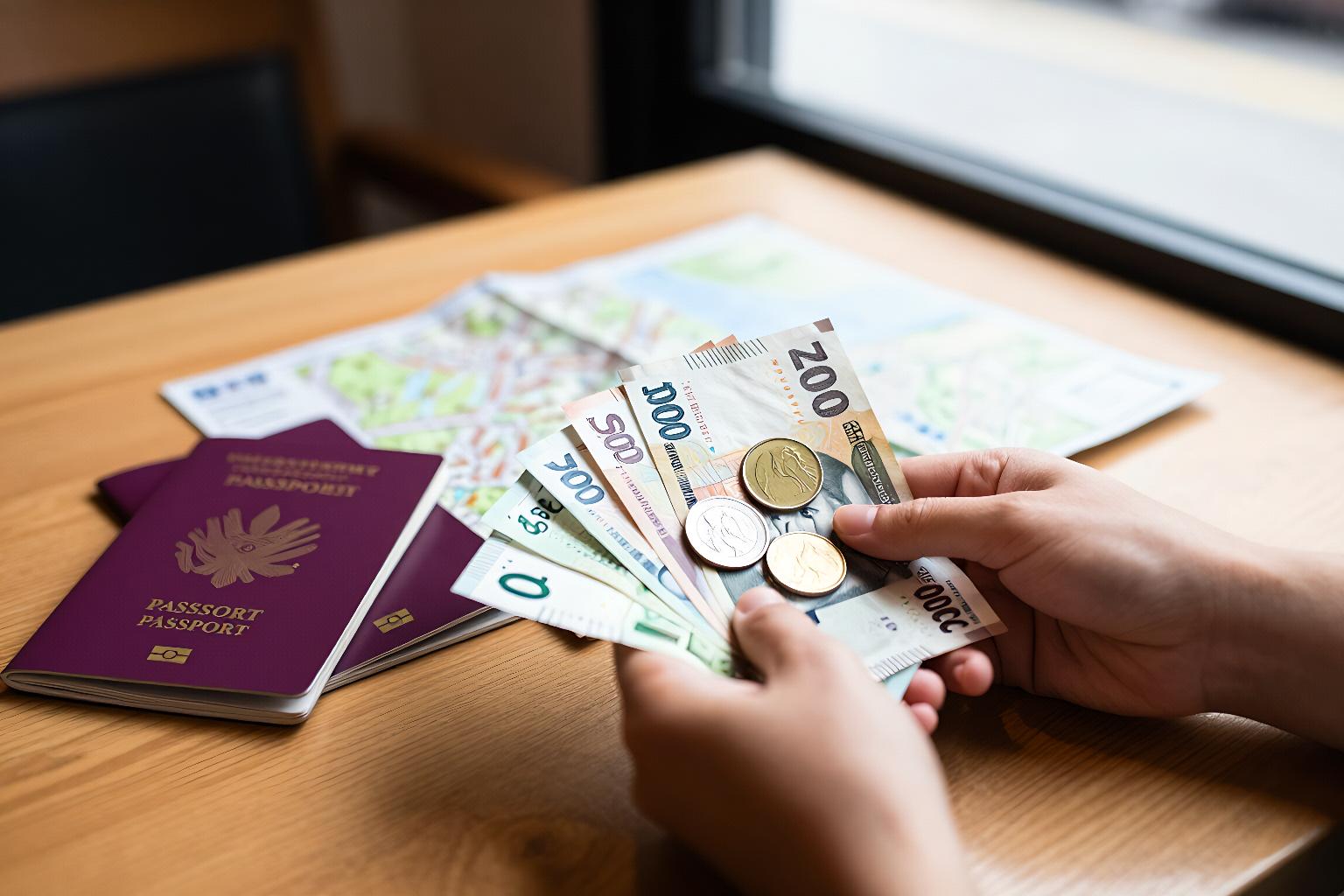
When you type "currency exchange near me" into Google, you're probably not just looking for the nearest kiosk. You're looking for a place that won't quietly take a chunk of your travel money in hidden fees and bloated exchange rates. The good news is that a better deal is often just a short walk or a quick phone call away, and you don't need to be a finance expert to spot it.
This guide walks you through how to find a trustworthy exchange service, what questions to ask, and when it's actually smarter to skip the physical store altogether.
Convenience has a price. The exchange booths in airports, train stations, and tourist hubs are famous for offering some of the worst rates in any city. They know you're stuck, and they play on that. A bank branch might offer a better deal, but you'll often need to be an account holder. Independent exchange shops in city centres are usually your best bet for a decent rate, but they vary wildly in how they calculate their margins.
Let's put some numbers on it. Imagine the mid-market rate for US dollars to euros is 1.10. An airport kiosk might quote you 1.04, while a local exchange shop a few blocks away quotes 1.08. If you're exchanging $500, that's a difference of about €20. It might not sound like much, but it pays for a couple of nice dinners.
You don't need to physically walk into every shop to compare rates. A quick online search can give you a solid baseline. Start by checking the real mid-market rate, which is the rate you see on financial sites and the one banks use between themselves. Two excellent tools for this are Google and XE.com, but the most reliable way is to use a proper currency converter that shows the live interbank rate rather than a rounded-up guess.
Once you know the honest rate, you can start calling or visiting local exchange services armed with that number. Here's what to look for:
If you're exchanging a common currency like US dollars, euros, or pounds, you'll usually find competitive rates. But if you need something more exotic, you may need to plan ahead or look online.
Different currency pairs have very different markets. For example, converting US dollars to Indian rupees is extremely common, and the difference between a good and a bad rate can be significant. If you're sending money to India or travelling there, take a moment to understand how to convert dollars to rupees and get a fair rate. The same logic applies to Europeans heading to India. The euro-to-INR rate is one that many travellers overpay on simply because they don't check the mid-market rate first.
Knowing the fair rate doesn't just help you negotiate; it also helps you understand whether the exchange service is being reasonable. If the shop's quote is more than 2-3% above the interbank rate, you're probably better off walking away.
Many people compare only the headline rate and miss the extra fees. A shop might advertise "no commission" but slip the cost into a wider spread. Another might give you a great rate but charge a maintenance or service fee that you only discover after your passport has been photocopied.
Ask these three questions before handing over your money:
1. Is this the all-in rate? Confirm that the rate displayed includes any commissions or fees. If it doesn't, ask what the final amount you'll receive is for a specific sum.
2. Can I lock this rate in? Exchange rates move constantly. Some shops will let you reserve a rate for 24-48 hours, which is incredibly useful if you're planning a big transaction.
3. Do you have enough of the currency I want? This might sound basic, but there's no bigger waste of time than walking to a shop only to find they don't carry smaller denominations or have strict limits on how much you can buy.
Sometimes the best "currency exchange near me" isn't a storefront at all. For larger amounts, online international money transfer services often beat local shops by a wide margin. If you're sending money abroad to family or paying for a big expense, services like Wise, OFX, or your bank's international transfer offering can be far cheaper. Before you settle on a local kiosk, read up on international money transfer rates and fees to see if you'd save money by transferring directly instead of carrying cash.
What about crypto? If you're already dealing in digital currencies, you might be wondering if you can convert them into cash locally. It's possible, but the convenience isn't there yet for most travellers. If you're curious, there's a practical guide to converting digital money that explains the options and the pitfalls.
Of course, cash still matters. For small purchases, tipping, or when you land in a destination before finding an ATM, having some local currency in your pocket is essential. That's not a reason to overpay, though. Use a local ATM that reimburses fees, or bring a no-foreign-transaction-fee credit card for most purchases. Then, treat your visit to the exchange shop as a last resort rather than your first move.
You've already done the hard work of understanding rates. Now here are some final, field-tested tips to make sure everything goes smoothly:
The next time you search for currency exchange services in your area, go in with a number in mind. A quick online lookup of the live rate, a few phone calls, and a list of simple questions will save you money and stress. And if the difference between the best and worst offer is only a few dollars, remember that your time is valuable too. The goal isn't to squeeze out every last cent, it's to avoid giving away more than you need to.
Slot ID: blog-post-bottom