
Loading article...
Slot ID: blog-post-top
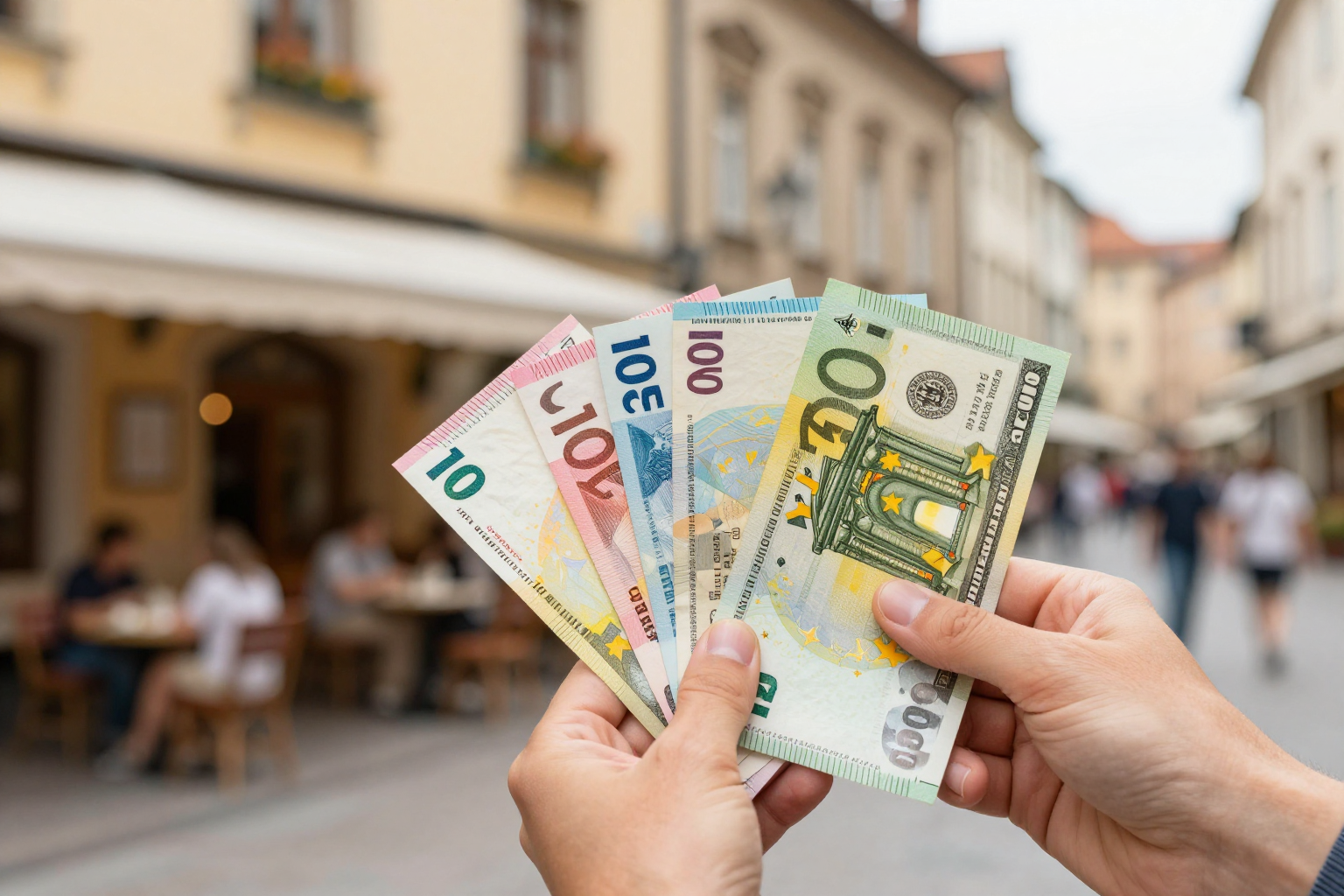
Picture this: you're at the airport, heading off for two weeks in Spain. You've packed everything, but you forgot to get euros. So you walk up to the currency exchange counter and pay an 8% fee to convert $500. That's $40 gone before you've even left the terminal. For a lot of people, foreign currency exchange means expensive counters, confusing rates, and losing a surprising amount of money.
At its core, foreign currency exchange is simply buying one country's money with another's. The rate you're quoted is the price of one currency expressed in another, and it moves constantly. When you see EUR/USD 1.09, it means one euro costs 1.09 US dollars. Because that rate changes by the second, the price you pay at 9am could be different by lunchtime.
Retail exchange services, including banks, online companies, and bureaux de change, don't trade at the 'clean' interbank rate you see on the news. They mark it up. That's how they make money. The difference between the rate they buy at and the rate they sell at is called the spread, and it's the most common cost you'll encounter.
Airport currency exchange counters have the worst rates in the industry. They know you need cash before boarding, and they charge accordingly. In a 2024 snapshot by MoneySavingExpert, airport kiosks in the UK were quoting up to 12% above the mid-market rate for euros. Compare that with 0.5% to 2% at a high-street bank or an online specialist.
If you're in a hurry and need cash today, don't assume your nearest tourist shop is better. You need to compare the actual price per unit of currency. Here's a practical guide to getting a fair rate without the airport markup.
The spread is baked into the rate. A dealer might show you the daily high on a screen, then quote you a rate 3% lower when you actually exchange. That's their margin, and it's not illegal or even unfair, but you should know it's there.
Some providers charge a flat fee per transaction. The word 'commission' is less common than it used to be, but it hasn't disappeared. Any sign that says '0% commission' is usually just moving the cost into the exchange rate.
Travel credit cards and prepaid cards often advertise no fee on foreign currency exchange, but check the small print. You'll still pay a conversion surcharge of 1% to 3% when you use the card abroad, or a fee when you load it.
Ordering physical cash online can be cheaper, but delivery isn't always free. Make sure the final price, including postage, is genuinely less than the local boutique counter up the road.
If you want to spot exactly where each of these costs hides, our practical guide to rates, fees, and timing covers them in detail.
The honest answer to 'where should I exchange foreign currency?' is 'it depends'. The best choice for a one-off $200 port exchange is different from the best choice for a $5,000 transfer. To keep it simple, here's a general ranking from cheapest to most expensive:
Anyone who tells you they know exactly when to buy is guessing. Currencies fluctuate because of central banks, elections, inflation stats, and countless other variables. Instead of trying to time it to the minute, try this: set a target rate with your provider and ask for a limit order. If the market reaches your number, the exchange goes through automatically. You stop watching the charts and get on with your day.
For larger transfers, like paying tuition or buying property abroad, you should consider speaking to a specialist broker. They can often negotiate a margin that's closer to the wholesale rate. Our guide to international money transfer breaks down exactly how to compare brokers and banks.
Here's the uncomfortable truth: you don't need to spend hours tracking the market to get a decent deal. You just need to think about how much cash you actually need.
First, make a list of what you'll pay for with cash. In most European cities, you might use cash for a croissant, a market stall, or a tip. Everything else, the hotel and restaurant, you'll pay with a card. That's usually impossible to avoid, and it involves a currency conversion of its own. Visa and Mastercard set the day's wholesale rate, and your bank adds its own margin. That's typical, but always disable dynamic currency conversion (DCC) at the ATM or card terminal, because that lets the merchant set the rate and usually costs you extra.
Second, open a travel account or credit card that has zero transaction fees and no foreign loading. There are plenty of options. Load the currency when you think the rate is reasonable, not at a once-in-a-decade high. If you're buying cash, order it online a few days before you fly.
Third, compare three quotes. It takes five minutes. Look at the total amount of currency you'll get, not the stated 'rate'. Some providers add a fee on top of a good rate. Some quote a poor rate and no fee. The total is what matters.
Use this list each time you need foreign currency:
Once you learn to read what 'foreign currency exchange' really costs, you'll stop losing money on the parts of the process you can control. The exchange rate itself will always move, but it's not the enemy. The unawareness of hidden fees is.
Slot ID: blog-post-bottom