
Loading article...
Slot ID: blog-post-top
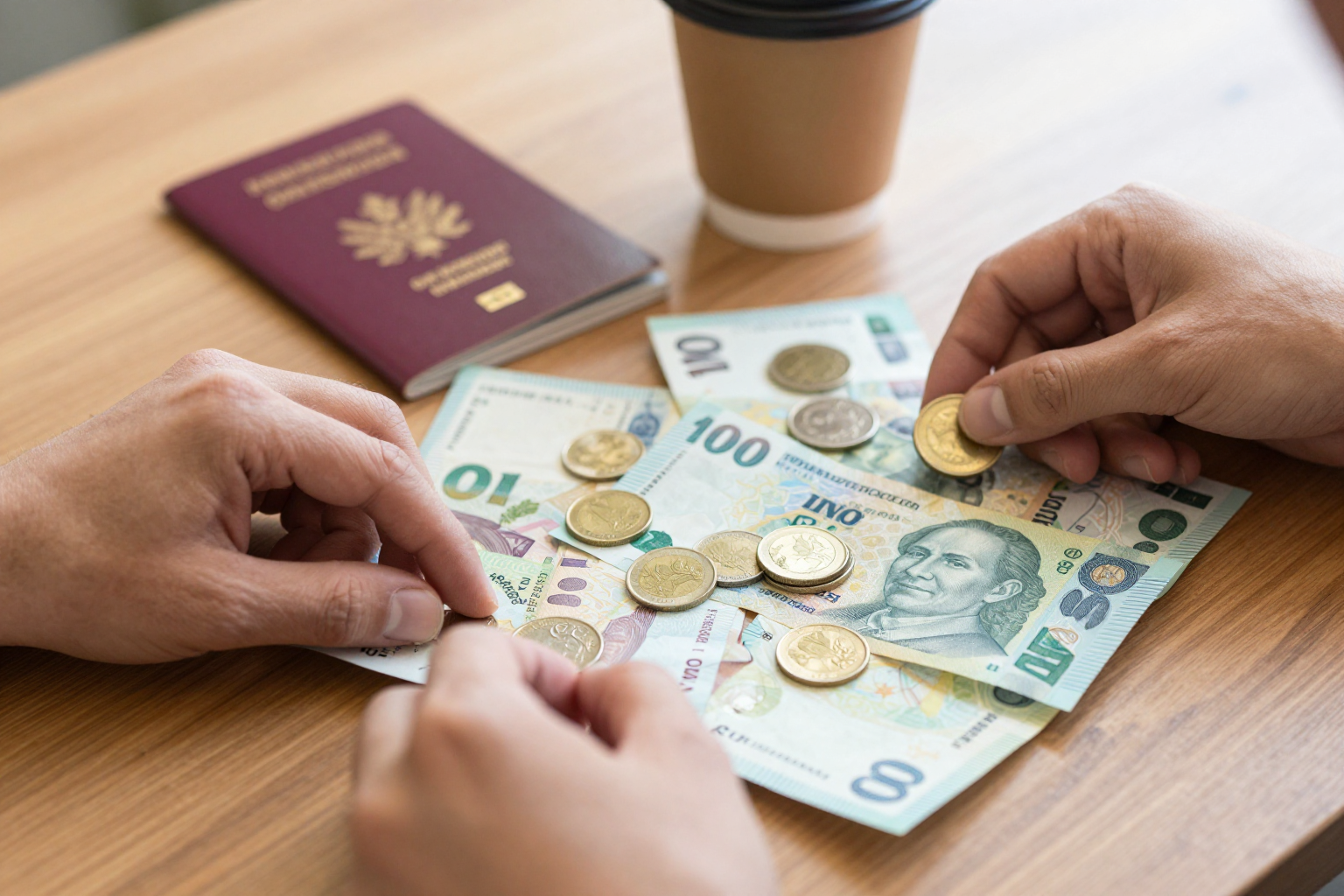
Every trip abroad starts with the same small problem: you need local currency, and the first exchange option you see is usually the worst one. Airport kiosks charge hefty margins, your home bank adds a quiet spread, and online services hide their fees in the exchange rate. On a single exchange, the difference between the best and worst foreign currency exchange option can be more than 6%.
So how do you choose? This guide compares the main methods you'll actually use, including cash desks, ATMs, cards, and online specialists, and breaks down the speed, security, and real cost of each.
Before we dig into the details, here are the options most travellers compare:
Each of these works differently depending on whether you need cash in hand, how far ahead you plan, and how much money you're moving.
Airport exchange counters have one huge advantage: they're there when you are. If you land without a single note of the local currency, you can sort out cash in five minutes. What you pay for that convenience is a poor exchange rate, often 5–8% above the mid-market price. Plus some desks add a flat fee or a "no commission" sticker that hides the cost inside the spread.
If you only need $50 to get from the airport to the hotel, go ahead and pay for convenience. But for larger amounts, the few dollars you save by using a different method are worth the planning. It's also worth checking if there are better local currency exchange options near your accommodation or an ATM just outside the arrivals hall.
Ordering euros or yen from your current account feels safe. You know the money is in the branch before you travel, and you don't need to hand over any personal data to a third party. But banks are rarely competitive on smaller sums. A major British bank, for example, quoted a rate 3.4% worse than the mid-market for €500, plus a £2.50 fee if ordered online.
If you're exchanging a few hundred pounds, that's acceptable. For large amounts, the same bank might offer a better rate, but you have to call or visit and negotiate. Not everyone has time for that. To see how the numbers stack up against independent desks, look at a step-by-step guide with real money examples that compares branch and bureau quotes side by side.
In most big cities you'll find exchange shops that buy and sell cash all day. Their margins are usually better than airport desks and often better than high-street banks. The catch is variability. A bureau near a popular tourist spot will charge more than one used by local business owners. The solution is to check rates online before you walk in.
Independent exchanges thrive when the local currency is a currency that banks don't hold, like Thai baht or Czech koruna. This is where the comparison of which method keeps more cash in your pocket gets interesting: for cash-only travel, a well-reviewed bureau can beat ATMs when your bank adds heavy foreign transaction fees.
Using an ATM abroad is a form of foreign currency exchange that most people don't think about twice. You insert your card, choose the amount, and the local bank charges you in your home currency according to your bank's rate. In many cases, this rate is very close to the interbank rate, which is the same number you see on Google.
But there are three layers of fees. Your home bank charges a non-sterling transaction fee of 1.5–3%. The ATM operator may add a withdrawal fee from $2 to $6. And crucially, the ATM may ask if you want to pay in your home currency. This is dynamic currency conversion, and it's almost always a terrible deal. Always pick the local currency option.
If you have a debit card that refunds ATM fees, foreign ATM withdrawals can be the cheapest way to get cash, especially for amounts under $500. If you don't, then the cost creeps up to around 4% once you include the fees. For a lot of travellers, a credit card is still better for daily spending.
Credit and debit cards handle foreign currency exchange in real time, but the fees are different from cash exchange. Visa and Mastercard use the wholesale rate, which is excellent. The issuer then adds a foreign transaction fee of 0–3%. A card with no foreign transaction fee is effectively converting at the mid-market rate, with no extra markup.
For a week in Spain, a zero-foreign-fee card covers your meals, groceries, and train tickets with no planning at all. That's why travel cards and fee-free credit cards have become the default travel tool.
One trap remains: cash advances. If you use a credit card to withdraw cash, you'll be charged a cash advance fee plus interest from day one. Debit cards avoid that, but might still charge a withdrawal fee. If you need cash, use a debit card or a dedicated travel card.
If you know exactly how much money you need before you fly, an online currency exchange service can save you a lot. Companies like Travelex, Sainsbury's Bank, and smaller forex brokers let you lock in a rate up to several days ahead, then deliver the cash to your door or let you pick it up at a depot.
The advantages are lower margins and the ability to preorder notes you can't easily find elsewhere. The disadvantages are delivery costs, minimum order amounts, and the need to plan ahead. I once ordered euros online for a trip and got a rate 1.1% above mid-market, against 3.2% at my bank. The shipping fee was £4.95, so the saving was still meaningful for a €1,000 order.
For anyone sending money to a bank account abroad, whether it's rent, tuition, or a property deposit, a currency transfer service does the same job without the cash delivery. The mechanics are similar, but the pricing model is different. Our guide to international money transfer banks vs apps vs cash pickup explains that distinction in detail.
To make this comparison less theoretical, here are rough numbers for converting US dollars to euros when the mid-market rate is 1.08 USD/EUR. For a €1,000 exchange (or $1,080 at mid-market), you might end up paying:
These figures assume average rates and fees. Your own numbers will vary, but the order is usually the same. The worst option can be four times more expensive than the best, and the best option requires paying attention to a card's terms before you leave.
You don't need a single "best" method. You need the right mix for the trip you're taking.
Use a zero-foreign-transaction-fee credit card for everything. Withdraw $150–$200 in local cash from an ATM on the first day, selecting the local currency when prompted. Avoid currency exchange kiosks entirely.
Order a mix of small notes online before you leave. Plan for about two-thirds of your spending in cash, and keep a card as backup for big purchases. Local ATMs may be scarce, so stock up in a nearby town rather than the airport.
At this scale, the cost of exchange on a few hundred euros becomes irrelevant. You're dealing with foreign exchange in the thousands. It's time to use a transfer specialist rather than a cash desk. Our Foreign Exchange Playbook explains how to move money across borders without losing a fortune, including the difference between spot and forward contracts.
Whatever you choose, keep one rule in mind: never accept an exchange rate you haven't compared against the mid-market rate. A two-minute check on Google or your banking app can save you $30 on a typical withdrawal. The right approach might not be dramatic, but it will keep more money in your pocket, and that's what foreign currency exchange should do.
Slot ID: blog-post-bottom