
Loading article...
Slot ID: blog-post-top
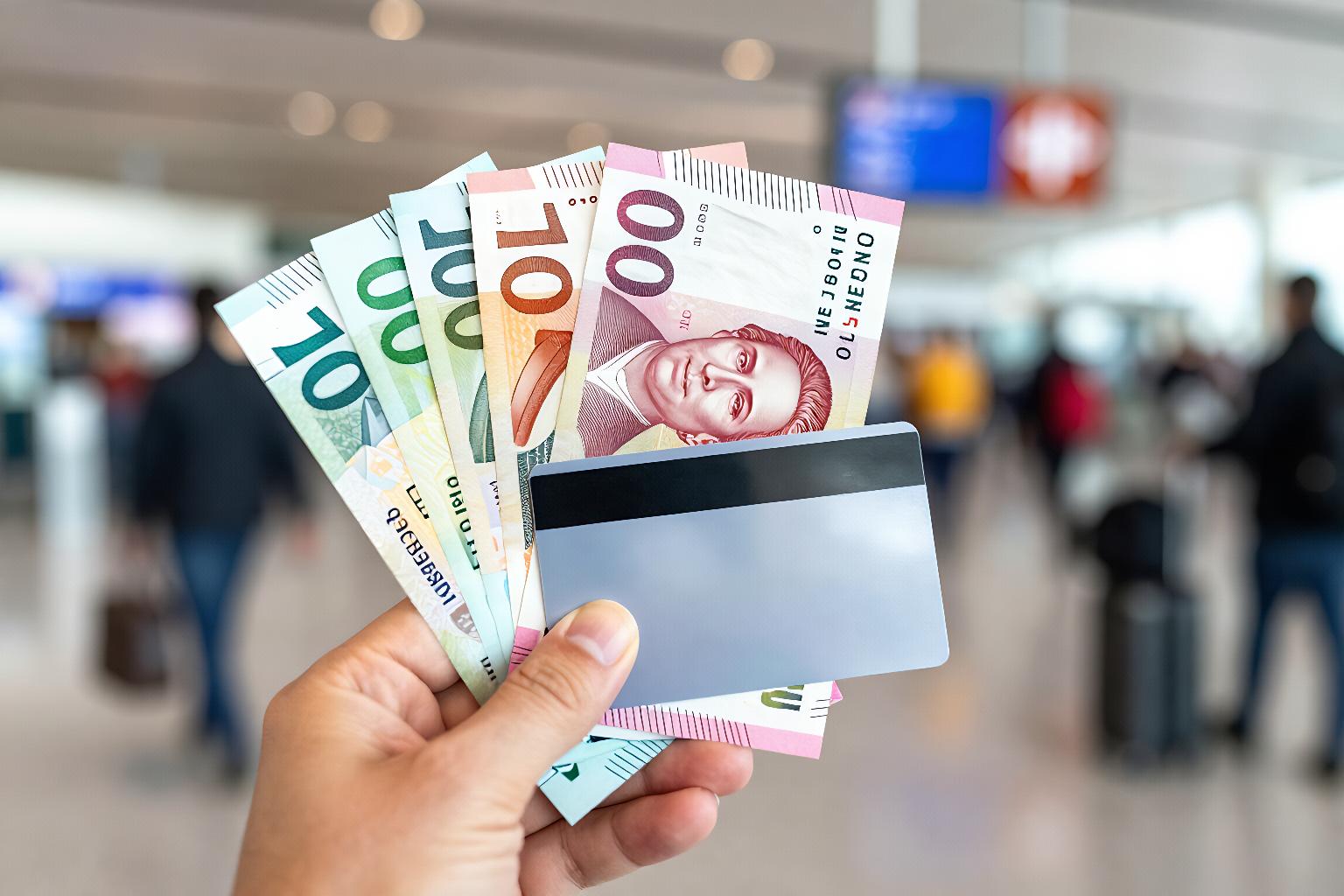
You're two hours from boarding and the only thing in your wallet is a debit card that might work abroad. You open your phone, type "money exchange near me", and the map lights up with options. The nearest one is a booth in the terminal with a sign that promises "No commission!" – but you both know that's not the whole story. The truth is, when you search for money exchange nearby, you're typically choosing between four very different ways to get foreign cash, and each one has a built-in cost that isn't always obvious at first glance.
Local exchange kiosks and bureaus rely on one thing: urgency. They're placed in airports, train stations, and tourist spots where you're least likely to compare rates. Airport exchange counters are notorious for margins of 5–12% above the mid-market rate, depending on the currency. That means on a $500 exchange, you could be losing $25 to $60. For small amounts, that might be acceptable, but it's a big markup for simply being close by. The trade-offs that decide how much cash you actually receive go beyond the headline rate, which is why it's worth understanding how exchange rates really work before you commit.
Forget a single "best" way to exchange money. Your choice depends on how much cash you need, how much notice you have, and whether you're comfortable using cards. Let's break down the four main contenders.
Pros: instant cash, no bank account required, and they often accept multiple currencies. Cons: the worst exchange rates and frequently hidden fees, especially if you pay with a card or want leftover pesos converted back.
If you're changing less than $100 for a taxi or a snack, the convenience can outweigh the cost. But for anything over $300, the difference between a kiosk rate and the market rate starts to feel like real money.
Your local bank might have a foreign currency counter, and for account holders, the rates are often far fairer than a kiosk. The catch? You generally need to order the currency at least a few days ahead, and smaller branches don't always stock obscure currencies. Some banks also charge a flat fee for ordering, which can eat into the savings if you're only changing a small amount.
Using an ATM once you land is a middle ground that many experienced travelers swear by. You get the near-market exchange rate from your bank, but only if you account for foreign transaction fees (often 1-3%) and ATM operator charges at the machine. The bigger trap is dynamic currency conversion, where the ATM offers to convert the amount into your home currency. That sounds helpful, but the rate is always worse—sometimes by 5% or more. Always choose to be charged in the local currency. This is a classic example of why comparing banks, ATMs, cards, and kiosks side-by-side matters.
Apps like Wise, Revolut, and CurrencyFair have turned the foreign exchange model on its head. They give you a card that converts your home currency at the real mid-market rate plus a tiny fee. The rates are consistently close to what you'd see on Google Finance, and there are no hidden margins. The downside is that you need to plan ahead, load funds onto the card, and have a phone with mobile data. Also, if you keep the card in a foreign currency, you're exposed to exchange rate movements. For a detailed breakdown, see this real cost comparison of Wise vs. banks, PayPal, and Western Union.
Enough theory. Here's what a typical trip to Japan looks like when you need ¥50,000. The mid-market rate is, say, 110 yen to the dollar, so ¥50,000 would cost $454.55 at the true rate.
That's a spread of over $25 between the cheapest and most expensive option. For two weeks of noodle lunches and metro passes, that's not nothing.
Before you tap the first result for "money exchange near me", ask yourself three quick questions:
For a more granular look at local options, there's a detailed guide to local currency exchange near you that digs into the specific trade-offs at street level.
When you do walk into any exchange counter, don't just look at the big number on the screen. Ask for the mid-market rate and the margin applied. Ask if there's a flat commission, and if they'll give you a better rate for larger amounts. Also, carry your passport—many countries require it by law. And never sign anything that says "you have been informed of the exchange rate" without reading it, because that's just a way to confirm a worse rate.
The next time your search history shows "money exchange near me", you'll know that the nearest option isn't necessarily the worst, but it usually is the priciest. Take 60 seconds to run the numbers through your head. If you're exchanging a couple of hundred dollars, the extra $20 might be the price of convenience. If it's thousands, that's a different story. Whether you're planning from your couch or standing in the airport, understanding what you pay for convenience is the most valuable currency you'll carry. For a deeper dive into how all these options stack up, check out this comparison of foreign exchange options and their real costs.
Slot ID: blog-post-bottom