
Loading article...
Slot ID: blog-post-top
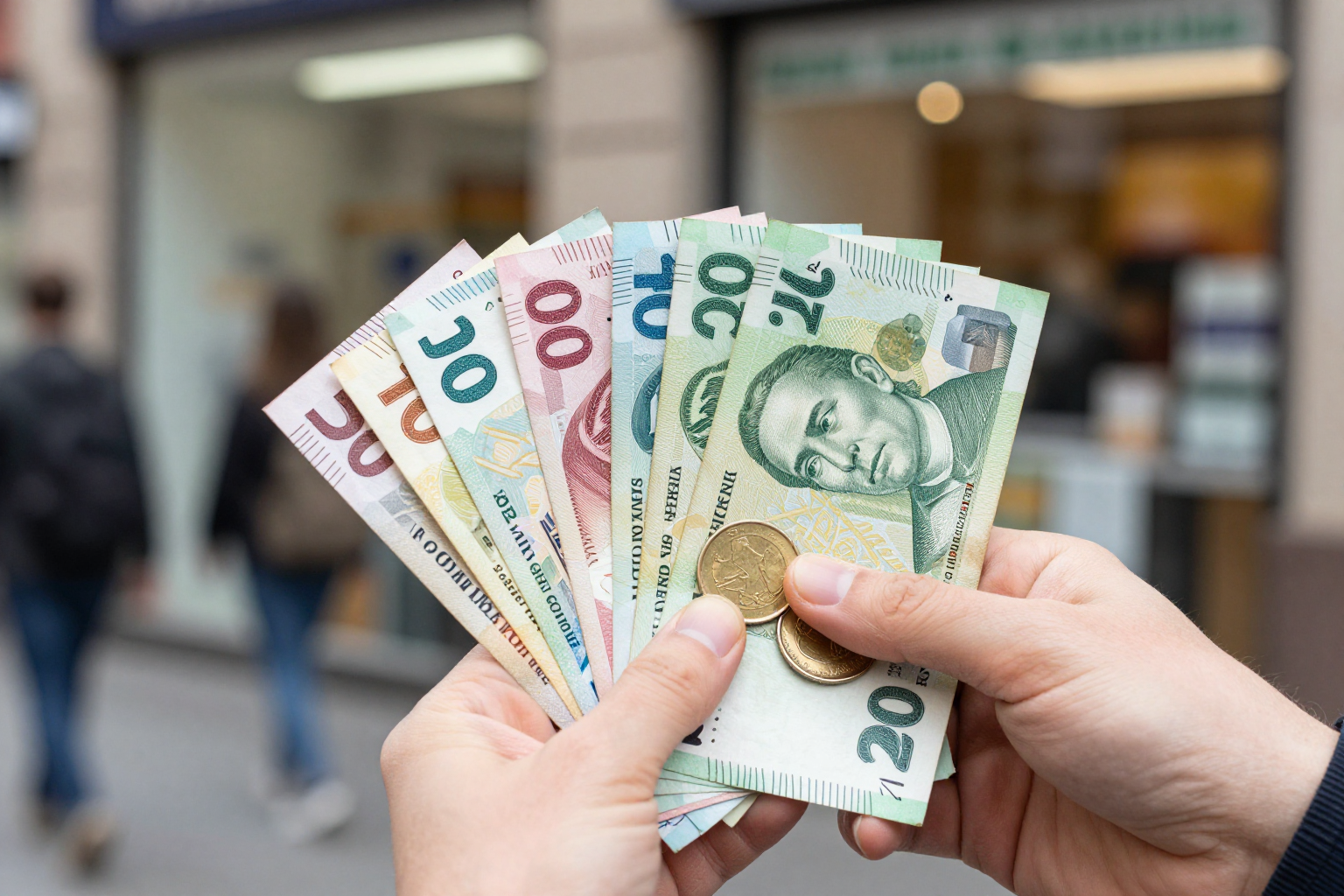
Picture this: you land in a new city, bag in hand, and your wallet is empty. Your phone is on 3% battery. The first thing you do is type “currency exchange near me” into Google. Within minutes, you’re at a shiny exchange counter, and before you know it, you’ve handed over a wad of notes and walked away with a stack of local bills.
It feels done. But here’s the thing: that five-minute transaction could have cost you anywhere from 2% to 15% of your money. How? Through a series of common pitfalls that most travellers don’t see coming. In this guide, we’ll break down the biggest mistakes people make when searching for a currency exchange near me, and exactly how to avoid them.
Convenience is a real benefit, but too many people assume the nearest exchange is the best. The reality is that exchange rates vary wildly from counter to counter, even within the same street. A tourist-heavy spot can easily offer a rate that’s 5% worse than a bank a few blocks away.
Before you settle for the first exchange you find, take a moment to compare. Your goal is the best net return, not the shortest walk. We’ve already looked at whether a money exchange near you is actually your best deal, and the numbers show you need to be selective.
Walk past any exchange counter and you’ll see a sign screaming “0% COMMISSION!” It sounds like a deal, but it’s often the opposite. The commission is just hidden inside the exchange rate they apply.
Say the mid-market rate for EUR/USD is 1.10. If the counter offers 1.05, then for every $100 you get €95.24 instead of €90.91. That’s a 4.5% loss. Every single time. And there’s no way around it, because the spread is built in.
This is one of the classic currency exchange mistakes that quietly lose you money. Always ask what the effective rate is and compare it to the live mid-market rate you see on your phone.
Related to the commission trick is the buy/sell spread. Every currency pair has two rates: one the exchange uses when buying from you, and one it uses when selling to you. The difference is how they make a profit.
A typical retail exchange might list Thai Baht at 34.80 buy and 35.20 sell, while the mid-market is 35.00. That might look tiny, but on a $500 transaction, you lose about $6. For a currency with a volatile rate or a less liquid market, the spread can be 10% or more.
Your best defence is to check the spread before you commit. If a provider’s spread is wider than 2% or 3%, you’re probably paying too much.
Airport exchange counters are a classic trap. They know you’re short on cash and short on time, so they inflate their margins. The result? You might be paying a 10% to 15% markup just for the privilege of landing with usable money.
Of course, you might need a little cash for a cab or a coffee, but you don’t need to exchange your entire travel budget there. Exchange a small amount to get you through the first day, and sort out the bigger sum in the city centre.
It’s also worth looking at how your card options stack up. We’ve compared foreign exchange options to show what you actually pay for convenience, and cards often beat the airport rates.
Cash exchange is only one side of the coin. Many travellers never consider what their own bank charges for overseas cards and ATM withdrawals. Some cards have no foreign transaction fees, while others pile on a 3% surcharge plus a flat ATM fee.
If your card charges 3% and you withdraw cash at an ATM abroad, you might actually be doing better than the airport exchange, but worse than a good local exchange. The trick is knowing your card’s terms ahead of time.
And if you’re planning to fund your trip with an international transfer, you might be hitting some of the same myths and mistakes that cost people on larger transfers. Read up before you wire money.
Everyone’s been there: you’re at the airport on the way home with a pocket full of foreign notes. You’re tired, you just want to get rid of them, so you convert them back to your home currency without thinking.
That’s a double conversion. You paid a spread to buy the currency, then paid another spread to sell it back. In total, you might have lost 8% to 10% of that money for no reason.
The fix is to plan ahead. Spend down your local currency before you leave, keep a small amount for your next trip, or give it to someone who’s headed there. And if you’re using a multi-currency card, you can often keep the balance in the foreign currency without converting back.
Not all banknotes are equal. Some countries quietly demonetise older note series, and exchange desks or local vendors might refuse torn, stamped, or worn notes. If you’re handed a big bundle of 1,000-rupee notes, you’ll struggle to break them for a bus ticket.
Always ask for a mix of denominations, especially small ones. In many places, 20s and 50s are the sweet spot for daily purchases. And do a quick check of the notes you’re given before you walk away, to make sure they’re current and undamaged.
This isn’t just about convenience. It’s about avoiding the heartbreak of discovering your carefully obtained cash is unusable.
Companies that promise “free delivery” or “0% markup” on online exchanged cash often make up the difference in other ways. They might give you a terrible rate, charge a minimum commission, or slip in a hidden fee for weekend orders.
We’ve looked at the trade-offs that decide how much cash you actually get, and the key is comparing the total cost, not just the fees. A deal that looks free can be more expensive than your local bank branch.
You don’t need to be a finance expert to avoid these mistakes. Just keep a mental checklist in mind:
A minute of research can save you a surprising amount of money. The next time you type “currency exchange near me” into your search bar, remember that the nearest counter is rarely the cheapest. Step back, compare, and keep more of your cash in your pocket.
Slot ID: blog-post-bottom