
Loading article...
Slot ID: blog-post-top
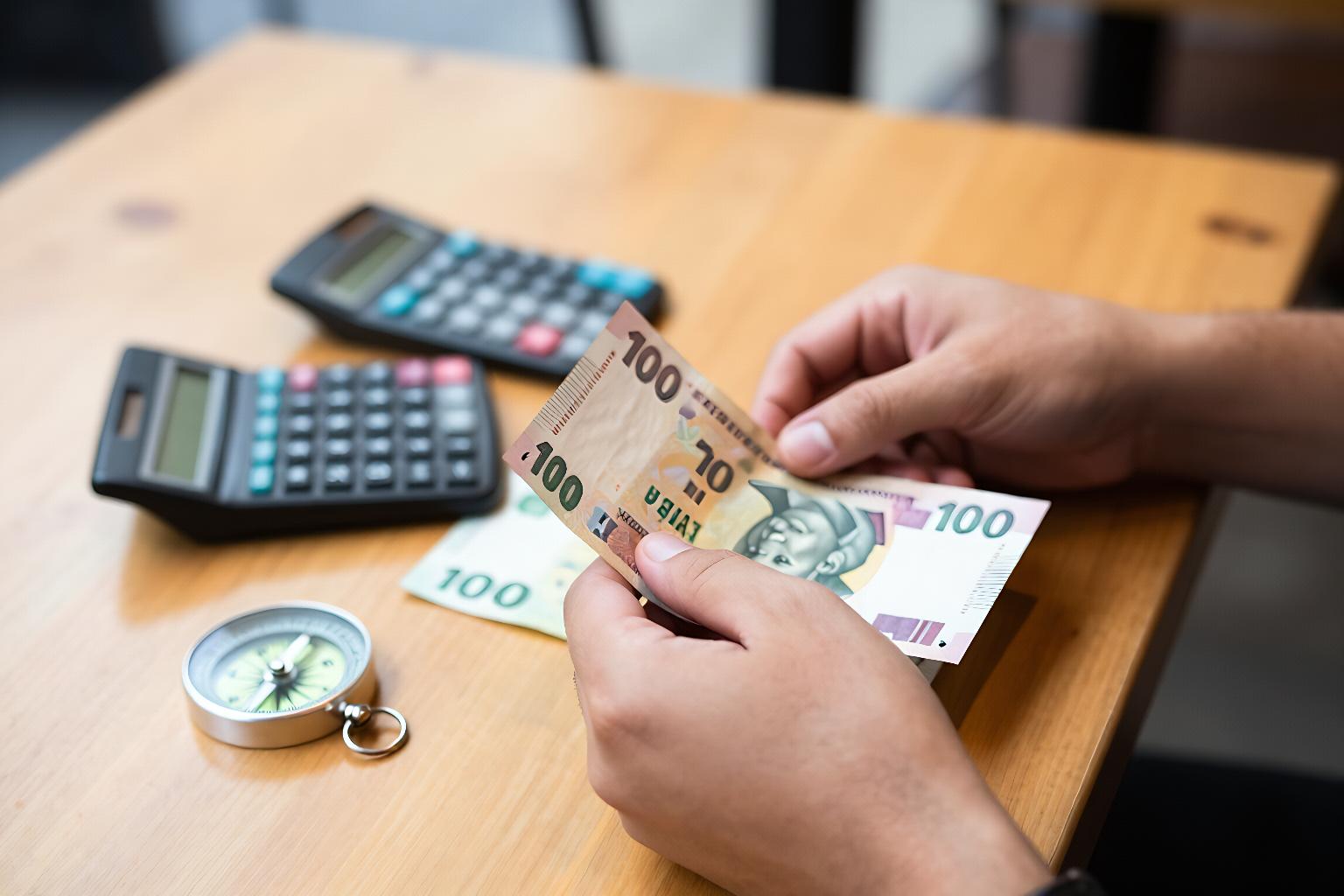
Currency converters are supposed to make life easier. You type in an amount, see the equivalent in another currency, and plan your budget accordingly. That is the theory. Then you walk into a bank, an exchange kiosk, or open your money transfer app, and the rate you actually get looks nothing like the one you saw on your phone ten minutes ago. It is infuriating.
More often than not, the problem is not the exchange market. It is how we use those tools. A currency converter is exactly that: a converter. It is not a quote. It is not a guarantee. And if you treat it like one, you are going to end up paying more than you planned.
Let's break down the most common currency converter traps, and how to sidestep them.
Open any search engine, type "EUR to USD", and you will get an instant number. It looks official, almost authoritative. But that figure is the mid-market rate, the theoretical midpoint between the buying and selling prices on the global forex market. No individual actually gets that rate. Not you, not me, not your bank.
Here is a concrete example: the mid-market rate for EUR/USD is, let's say, 1.0850. You will see that on Google. Your bank, however, might offer you 1.0770 when you buy dollars, and 1.0940 when you want to sell them back. That is not a rip-off. That is how banks and legitimate exchange services make money, by charging a spread.
Your currency converter is showing you the middle of the road. You are travelling on one of the lanes. This is exactly why the rate you see today is often not the real number, as explained in a detailed look at which source actually gives you the real rate.
Most free currency converters show you the base exchange rate and nothing else. There are no fees, no commissions, no service charges. So when you convert $500 into euros, the screen says you will get, say, €461.25. It does not tell you that the airport kiosk charges a 4% margin, which drops that to around €443. That is an €18 difference, enough for a couple of coffees or one decent museum ticket.
The real cost of exchanging money is not the rate alone. It is the combination of the spread, the transaction fee, and sometimes a delivery charge if you are using an online money transfer. A detailed comparison of money converter apps, banks, and kiosks shows that the actual cost difference between them can be over 8% for the same amount. So do not just look at the headline rate. Look at the all-in price.
Currency converters refresh their rates at different intervals. Some update every few seconds, others every minute, and a surprising number hide a 15-minute delay. In a volatile market, that is plenty of time for the rate to move against you.
I remember watching USD/CAD during a central bank announcement. The rate jumped 0.4% in under a minute. If you had based your transfer on a rate from a converter that updates every 60 seconds, you might have missed the movement entirely. More dangerously, you might have assumed a rate that no longer existed and calculated backwards from it.
For any serious transfer, use your provider's real-time quote, not a third-party converter. Third-party tools are for direction, not precision.
Open three currency converter apps side by side. I will bet they do not all show the same figure. One might show the interbank rate, another the rate from a major commercial bank, and another might include a commission adjustment of its own. That is because there is no single "official" exchange rate. The forex market is decentralised, and each data provider draws from its own sources.
If you are comparing quotes from different providers, do not panic if they differ by 0.1% or even 0.3%. That is normal. The key is to pick one reliable reference and stick to it, so you can compare like with like. But even then, remember that your actual transaction will happen at a rate set by your specific bank or broker. Understanding these differences is the core of comparing currency exchange rates and why the trade-offs matter.
The global currency market is closed on weekends. That does not stop currency converter apps from showing you a rate. Most of them simply freeze Friday's closing price, or in some cases, they keep updating using speculative data from less liquid venues. As a result, the rate you see on Saturday morning might be completely unachievable on Monday.
Why does this matter? Because if you are planning to make a payment on Monday, you might be holding onto a number that is already 24 hours old. If the market reopened suddenly on a news event, the Monday opening rate could be significantly different. I have seen weekend moves of 1% or more on smaller currency pairs. For a €5,000 transfer, that is €50 down the drain if you budgeted loosely.
People use currency converters to create travel budgets, quote for freelance clients, or estimate a property purchase. The converter gives you a clean number, and you build your plan around it. The problem is that your final exchange rate will almost certainly be worse than the one on the screen. Let us say the converter shows 1.0820, but the actual rate you get is 1.0750. That is a 0.65% difference. If you are only exchanging $100, the mistake costs less than a dollar. If you are invoicing a client for $5,000 and your costs are in euros, a 0.65% error is €32.50. Multiply that by several transactions over the year, and you have effectively lost a nice dinner out.
Reducing this error is not about finding a magical converter that shows the "true" rate. It is about acknowledging that the displayed rate is a midpoint and then adding a realistic buffer. I would suggest adding at least 1.5% to 2% to your budget to account for the spread and any fees. These are the kind of common mistakes that quietly add up, and there are more of them hidden in these exchange rate myths that are worth knowing before your next transfer.
None of this means you should stop using currency converters. They are excellent for getting a general sense of what a transaction will cost. The trick is to use them as a compass, not a map. Here is a quick checklist I follow:
One more thing: if you are exchanging a significant amount, do not look at the converter and then walk into a bank expecting the same number. Compare actual quotes from a few services. For example, when exchanging euros, you might find that specialized brokers consistently beat the big banks. An analysis of bank, ATM, and broker rates for euros shows the difference can be substantial for sums above €1,000.
Eventually, you will develop a feel for what a fair rate is. Your currency converter is a great starting point, but it is not the final word. Treat it like an engine temperature gauge, not a promise of a smooth ride. Check your actual quote, compare your options, and always know exactly what you are paying.
Slot ID: blog-post-bottom