
Loading article...
Slot ID: blog-post-top
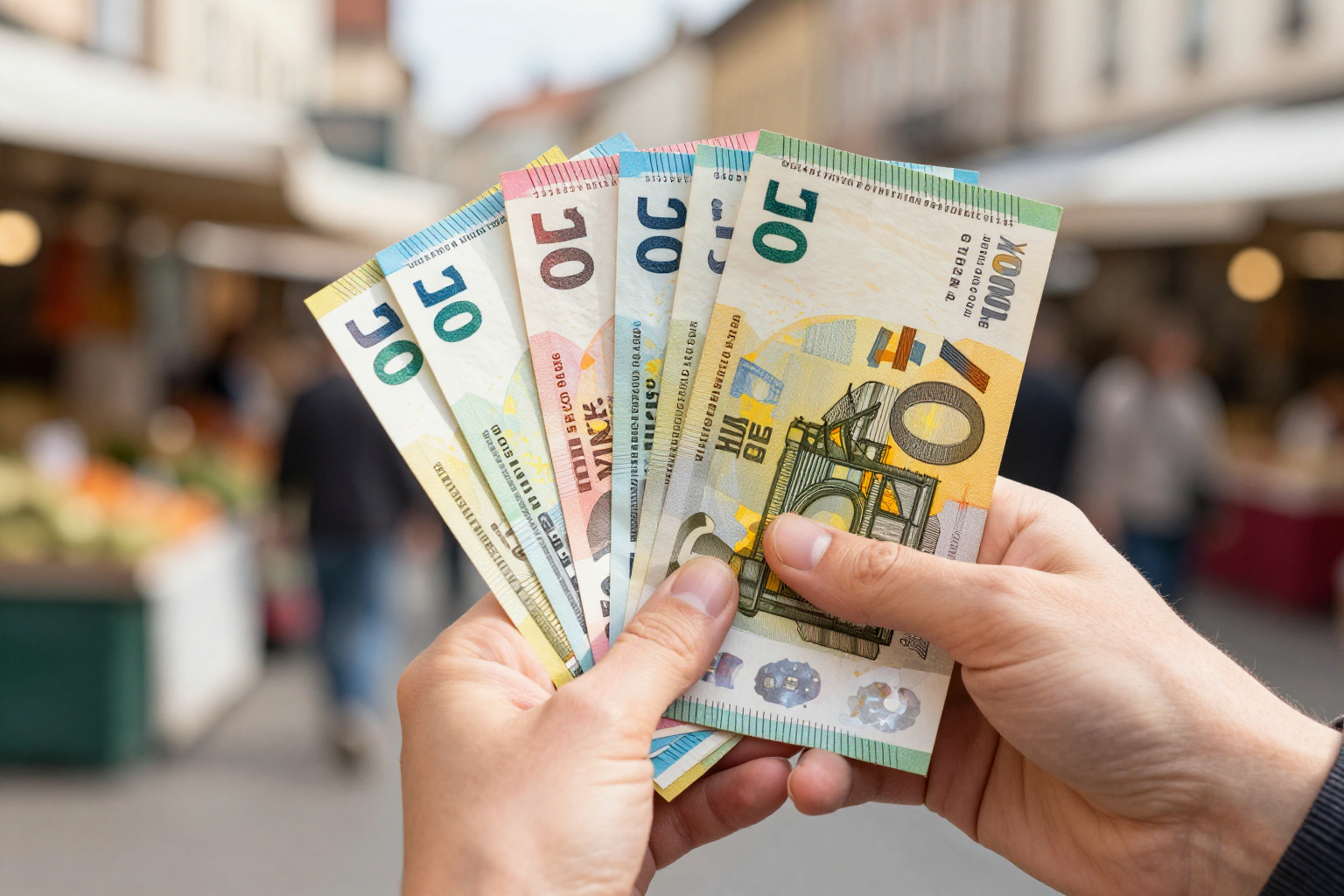
Look up 'exchange rate today' and you'll get one number from Google, another from your bank, and something quite different from the currency exchange at the airport. All three claim to show today's rate. How is that possible? Because there is no single 'true' exchange rate – only the rate you can actually get at the moment you trade. That's a crucial distinction. This article compares the main ways people check rates, and shows you exactly what each option is really giving you.
Before you compare anything, you need to know what the baseline is. The mid-market rate, also known as the interbank rate, is the wholesale rate at which large banks trade currencies with each other. It's the number you see on financial news websites and most online converters. But here's the critical detail: no individual buyer gets that rate. When you exchange money, the provider adds a margin – either a markup on the rate, a fixed fee, or both. To understand the gap between the quoted mid-market rate and the final payout, you need to look at the process step by step. We walked through exactly how that works in this guide to moving from mid-market to payout.
Start by searching 'EUR to USD exchange rate today' and Google will show you a number in a widget near the top. It's instant, free, and fine for getting a rough idea. But that number is a mid-market rate, pulled from a data provider, and it can lag anywhere from a few seconds to several minutes. What's more, when you look at Google's rate, you're not seeing the price your bank would actually offer you. The difference can be 1% to 4% for cash and even more for certain currencies. So, while a quick search is a practical first step, it's not the rate you'll get.
When you walk into a bank branch or a dedicated currency exchange office, you're looking at a rate board. These rates are set daily by the institution, and they include a clear spread. For example, if the mid-market rate for EUR/USD is 1.0850, a bank might buy dollars from you at 1.0720 and sell them at 1.0980. That's a roughly 2.4% difference between the buy and sell price. Plus, many exchange counters add a commission, sometimes wrapped into the rate. The trade-off here is simple: you get physical cash immediately, but you pay a premium for it. If you're exchanging a small amount, that's often acceptable. But if you're moving serious money, the costs add up quickly. The real trade-offs between banks, brokers, and apps matter here, and we've broken them down in detail.
Apps like XE, OANDA, and Currency Converter Plus are many people's go-to for 'exchange rate today.' They usually provide live or near-live mid-market rates, along with historical charts and alert features. For analyzing market trends, that's great. But the rate you see in the app is still not the rate you'll receive on a transaction, unless the app is connected to a transfer service. A classic example is OANDA's own converter, which is popular for its accuracy and long history of data. Yet, there are practical drawbacks and some better alternatives when you're actually making a transfer. We've covered those in a separate review of the OANDA converter.
Many apps default to an 'interbank' rate. It's a useful benchmark, but it's not a retail rate. Some apps have been criticized for showing the interbank rate front and center, making it look like you can exchange at that number. You can't. If you're day-trading currencies, you might get close to it on a professional platform, but for everyday transfers, the actual rate will be worse. Understanding this distinction is the key to comparing options.
Here's where the phrase 'exchange rate today' gets a lot more honest. Dedicated money transfer services like Wise (formerly TransferWise), Revolut, and OFX typically show you the mid-market rate right when you create a transfer, plus a transparent conversion fee. For instance, at the time of writing, Wise shows the live mid-market rate for EUR to USD and then charges a small, clearly stated percentage on the transaction. So when they tell you 'today's rate,' that's the actual rate you'll get – not a theoretical one. The downside is that you need to open an account and go through verification. Also, for a single small exchange, the fee might be higher than a simple cash exchange. But for anything above a few hundred dollars, the savings are often substantial. If you're wondering which approach saves you the most money, our no-nonsense comparison of which exchange rate option actually saves you money comes down hard on this point.
Another source you might come across is the official reference rate from a central bank, like the European Central Bank's daily published rate for 17 currencies. These rates are used for accounting, corporate reporting, and economic analysis. They are set once a day and are more stable than real-time market rates. But they are deliberately not transaction rates. You can't go to the ECB and exchange money at that price. So, while it's an 'official exchange rate today,' it's not the rate your bank uses. This is especially important if you're following unusual currencies. For example, people who follow Iraqi dinar rates sometimes rely on websites claiming 'today's rate' that are ridiculously far from the official reference rate. A good guide to why that's risky is this examination of Dinar Guru predictions versus actual exchange rates.
Ultimately, the best way to get 'exchange rate today' depends on what you plan to do with it.
The trade-off is always between convenience, speed, and cost. A bank offers familiarity but charges a wide margin. A broker offers a better rate but adds onboarding friction. A converter app offers information, but information isn't the same as execution.
Do this next time you need today's exchange rate: check the mid-market rate on an independent tool, then get a quote from your chosen provider, and finally calculate what you'll actually receive after all fees. If the provider can't show you a clear all-in number, that's an immediate red flag. The real exchange rate today is not the number on your screen; it's the number you get in your pocket or bank account. Compare at least three sources, and you'll quickly see who's giving you a fair deal and who's wrapping a bad rate in a fancy app.
Slot ID: blog-post-bottom