
Loading article...
Slot ID: blog-post-top
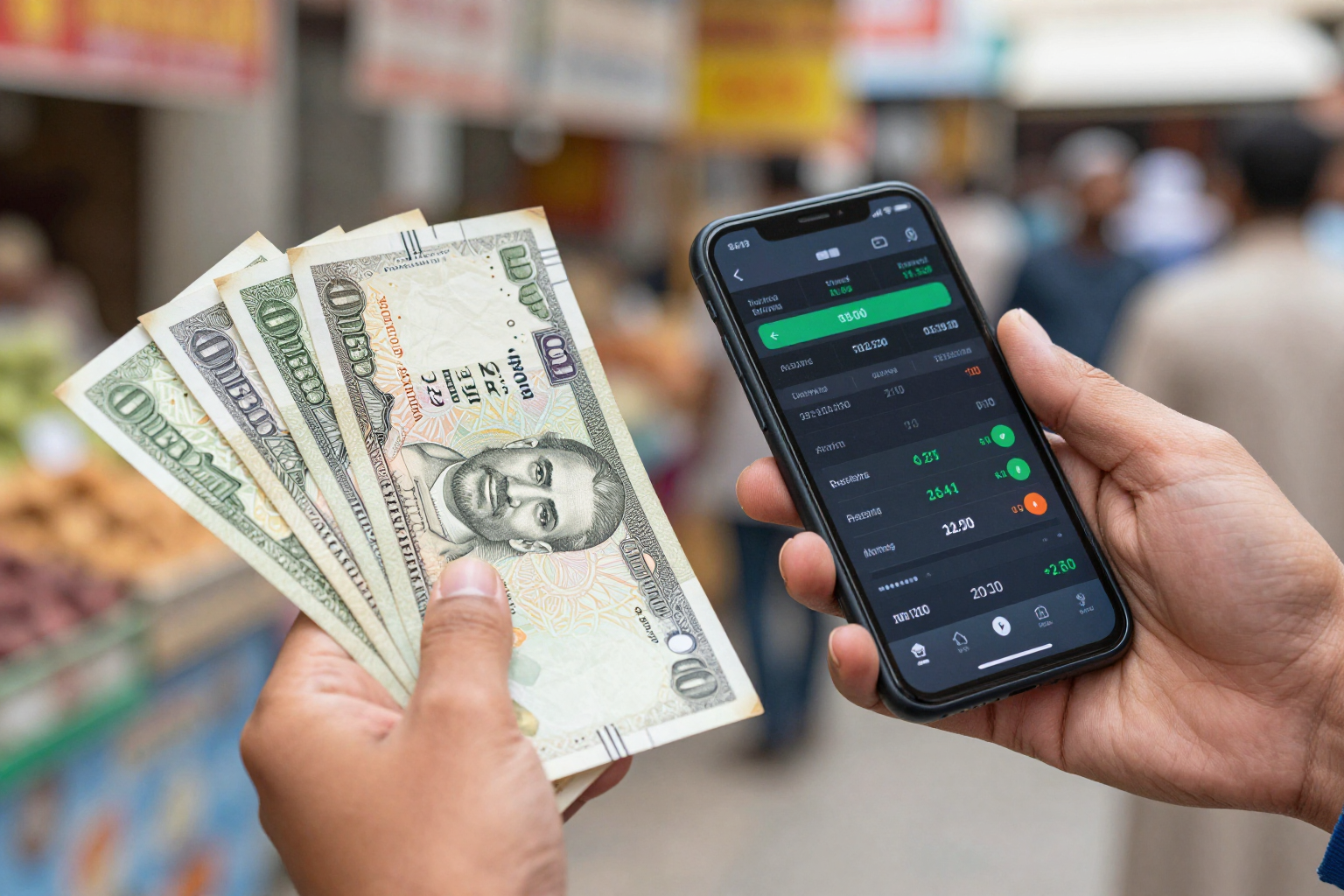
If you've spent any time researching the Iraqi dinar, you've likely crossed paths with the term 'dinar guru.' A dinar guru is someone—often on YouTube, Facebook, or a paid forum—who claims to know exactly when the dinar will 'revalue' and how rich you'll become. The problem is that their predictions rarely match the actual exchange rate data. This article compares the main ways people get dinar information, what each one costs, and how to separate hype from hard data.
The typical dinar guru story goes like this: the Iraqi dinar is undervalued, the government is about to revalue it at a much higher rate, and early investors will see a massive return. They might cite vague 'intel from inside Baghdad' or point to a supposed 'RV date' the way you'd check a weather forecast.
Some of this is just plain hope. But the gurus are also good at persuasion. They create urgency, use economic jargon, and make it sound like they're letting you in on a secret that banks don't want you to know. The end result is that thousands of people are waiting for a shift in the rate that may never come.
An RV, or revaluation of the dinar, would mean the Iraqi Central Bank (CBI) suddenly increases the currency's value. The CBI has kept the exchange rate roughly stable around 1,310 IQD per USD for years. That stability isn't accidental—it's tied to Iraq's oil exports, inflation targets, and the budget. Gurus often dismiss these fundamentals, but if you want to understand the odds, the central bank's official statements and actual market data matter far more than any influencer's promise.
Investors typically get their dinar news from one of three places. Each has its own perks and serious drawbacks, and the trade-offs are worth weighing before you act on anything.
These are the most visible dinar gurus. They post daily updates, sometimes with graphs that don't mean much, and often have a community of followers who cheer them on.
Dedicated dinar forums and private Telegram or Discord groups are where the 'intel' really gets shared. You'll see screenshots of bank conversations, claims about international wire transfers, and people reposting the same rumor with different dates.
Some dinar gurus charge monthly or one-time fees for 'insider access' to their highest-level predictions. They promise exclusive intel, webinars, and personal coaching.
The CBI's official rate has stayed close to 1,310 IQD per USD for a long time. On the street in Baghdad or Erbil, you might get a slightly different rate, but it's not a world away. The mid-market rate, which you can check on any reliable currency tool, is the baseline used by banks and financial institutions.
To put that in perspective, if you spend $1,000 on dinars today, you get around 1.31 million IQD. A guru tells you it will jump to $3.22 per dinar—a figure that would make your $1,000 worth over $4.2 million. The potential profit is so huge that people cling to the story, but there's no evidence in the CBI's monetary policy or Iraq's political reality that a move like that is on the table.
You can verify this yourself in a few seconds. Tools like the Oanda currency converter show live mid-market rates, though you should also read about its limitations. For a broader view, our currency converter showdown tests several popular tools to see which one gives you the fairest rate.
If you're still torn between following a guru or sticking to official sources, here's a quick breakdown of what you're really weighing.
Rather than relying on someone else's interpretation, you can look at the numbers yourself. Start with the mid-market rate—the average of buy and sell rates globally. That gives you a fair baseline. Then look at how much your bank or a currency exchange service charges on top of that rate. The difference between the mid-market rate and what you actually get is the spread, and it's where businesses make their money.
This is exactly where a lot of dinar investors get confused. The exchange rate comparison between banks, brokers, and apps is rarely as simple as the number on the screen, and fees can eat into any potential profit. Take a close look at the real trade-offs between banks, brokers, and apps to see which one suits your situation.
Once you have a rate in hand, you also need to know what you'll actually receive when you exchange money. The journey from mid-market to the final payout involves several steps, and knowing how to trace them will save you from ugly surprises. Our guide on moving from mid-market to payout walks through the process in detail.
Not every person online is a deliberate scammer, but many are willfully ignorant or just caught up in the same delusion. Look for these red flags, and you'll save yourself a lot of hope that leads nowhere.
If you're buying dinars, think of it as a speculative bet, not a sure thing. The only reliable information you have is the current exchange rate and the country's economic fundamentals. Gurus can tell you a great story, but your money is safer when you believe the numbers.
Slot ID: blog-post-bottom