
Loading article...
Slot ID: blog-post-top
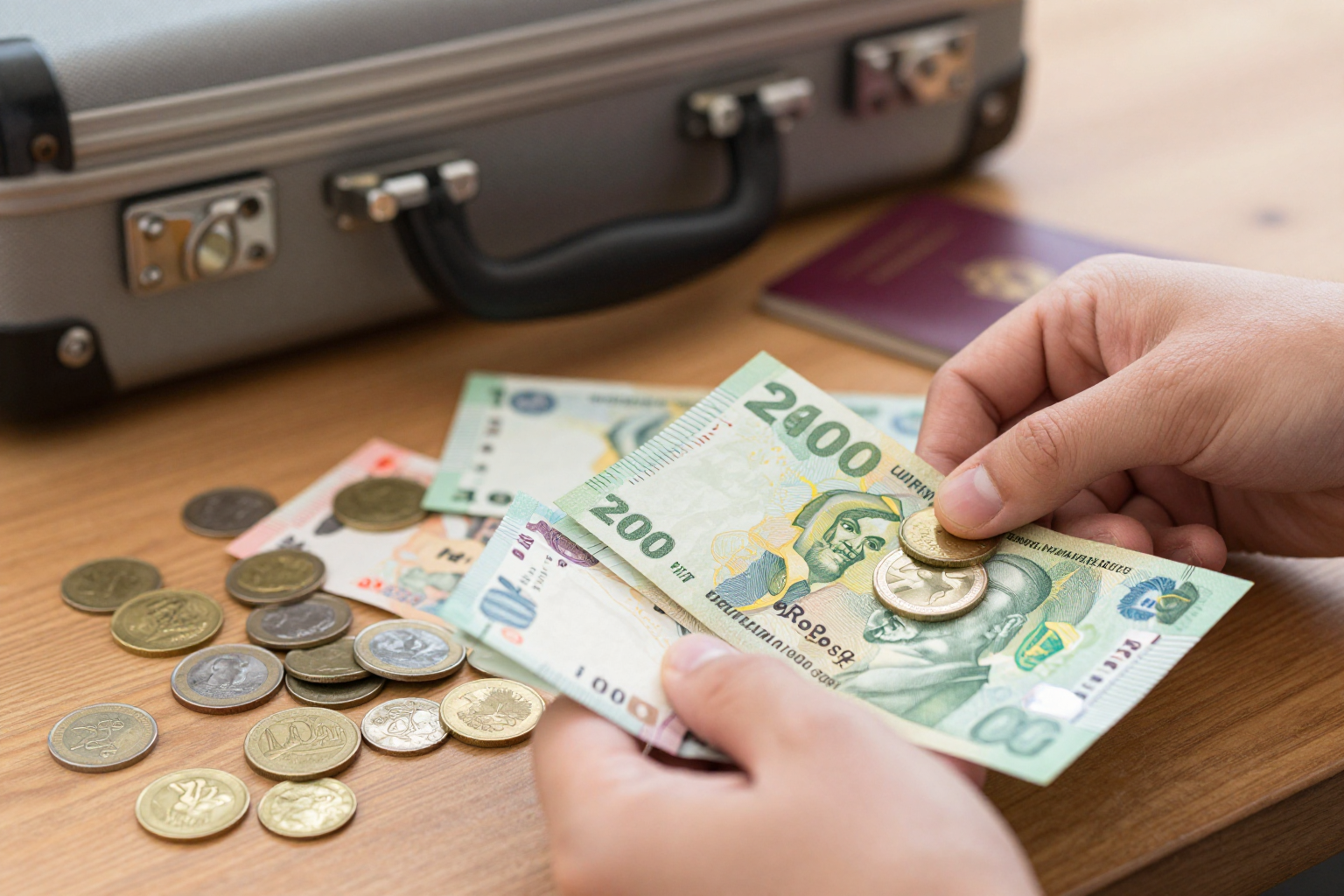
Whenever you travel, send money abroad, or pay a foreign supplier, the exchange rate decides how far your money goes. It looks like a simple number in a search engine, but the rate you actually get almost always differs from the one you saw. The gap between expectation and reality isn't the result of evil geniuses in suits. It's caused by a few persistent myths that people unknowingly fall for again and again.
Here are the most common exchange rate misconceptions, the ways they cost you money, and the habit that will keep you from getting stung in the future.
Open any search engine, type "exchange rate", and you'll see what looks like an official number. It's usually the interbank rate, the price at which large banks trade currency among themselves in amounts of a million dollars or more. Consumers and small businesses never trade at those levels, so they don't get that price.
Retail exchange services add a margin, often between 1% and 4%, and that's how they make money. If the interbank rate is 1.10 for EUR/USD, a kiosk might quote you 1.08. That's not a typo. It's a deliberate spread.
The key is to know the difference between the mid-market rate and the retail rate before you exchange. You can't avoid the margin entirely, but you can pick a provider that keeps it as low as possible. For a closer look at why the "real" rate is never one single number, this guide on exchange rate today goes deep into which sources actually give you an accurate picture.
This is the oldest trick in the currency exchange world. A storefront advertises no commission, so travellers assume they're getting a good deal. In reality, the profit is baked into the exchange rate itself. The business simply quotes a worse rate and calls it commission-free.
Here's how it works in practice. The interbank rate is 1.10. One exchange office charges 2% commission and gives you 1.08. Another promotes "no commission" but gives you 1.06. The second one looks cheaper but actually costs you more. Always compare the total cost in your own currency, not just the fee column.
If you want to see how this plays out with real money, the numbers in this comparison of money converter apps, banks, and kiosks are genuinely eye-opening. You'll notice that a "free" service can be the most expensive one once you look at the effective rate.
It's understandable to trust the institution you already bank with. Unfortunately, banks are rarely the cheapest option for currency exchange. Many add a percentage margin on top of the interbank rate, then also charge a flat transaction fee. The combination can be significantly more expensive than a specialist broker or a well-chosen money transfer app.
Here's a concrete example. Exchanging €2,000 (or its equivalent) at a bank with a 1.5% margin and a €5 fee costs about €35. A broker charging 0.5% with no fixed fee costs only €10. That's a saving of €25, which is more than enough to cover your airport transfer.
I'm not saying banks are always a bad choice. They can be convenient, especially for small amounts. But it's a mistake to assume "my bank" automatically equals "lowest cost." For a head-to-head comparison of how each option stacks up, this guide to the real trade-offs between banks, brokers, and apps is a great starting point.
Withdrawing foreign currency directly from an ATM often beats the counter rate at a bank branch, but only if your card issuer doesn't slap on hefty foreign transaction fees. Some cards charge up to 3% plus a fixed fee per withdrawal. Check your card's terms before you travel, because a "free" ATM abroad can still cost you if your home bank adds its own charges.
The foreign exchange market is the largest and most liquid in the world. Trillions of dollars change hands every day. Thousands of professional traders spend their entire careers trying to predict short-term movements, and most still struggle to beat the market consistently. An individual who reads a few headlines and waits for the "perfect" rate is usually just gambling.
Consider this. You need to transfer $5,000 to a European bank account. The rate drops slightly, so you decide to wait a week. In that week, the rate drops further instead of recovering. By the time you finally convert, you have $120 less than if you had just made the exchange on day one. That's the real cost of trying to time the market.
It's especially dangerous to listen to online pundits or communities that promise rate predictions based on "insider knowledge." The gap between what these sources claim and what actually happens is huge, as this analysis of Dinar Guru predictions and real exchange rates demonstrates. If you need currency for a specific expense, the right time to buy it is usually now, not when a stranger online says the price is moving.
When you land in a new country and you need cash immediately, an airport currency exchange is right there. That convenience is a huge part of the cost. Airport kiosks routinely charge margins that are four to eight percentage points higher than what you'd get through a bank, broker, or better card. On a withdrawal of $500, that's as much as $40 evaporated for nothing.
There are better ways to make sure you're not stuck. Order a small amount of foreign currency before you leave home, use a travel debit card with no foreign transaction fees, or plan your first ATM stop outside the terminal. Many airports now have ATMs that offer reasonable rates, though you should still check the card fees that apply to you.
The good news is you don't need to predict the market or have a finance degree to avoid the common traps. You just need a reliable process. Here are five habits that will save you money every time you exchange currency.
The exchange rate is never just one number. It's the result of the service you choose, the timing you pick, and the fees you're willing to pay. The people who get the best rates are the ones who stop believing the easy myths and start comparing the real numbers. That habit alone will do more for your travel budget than any speculative currency play ever will.
Slot ID: blog-post-bottom