
Loading article...
Slot ID: blog-post-top
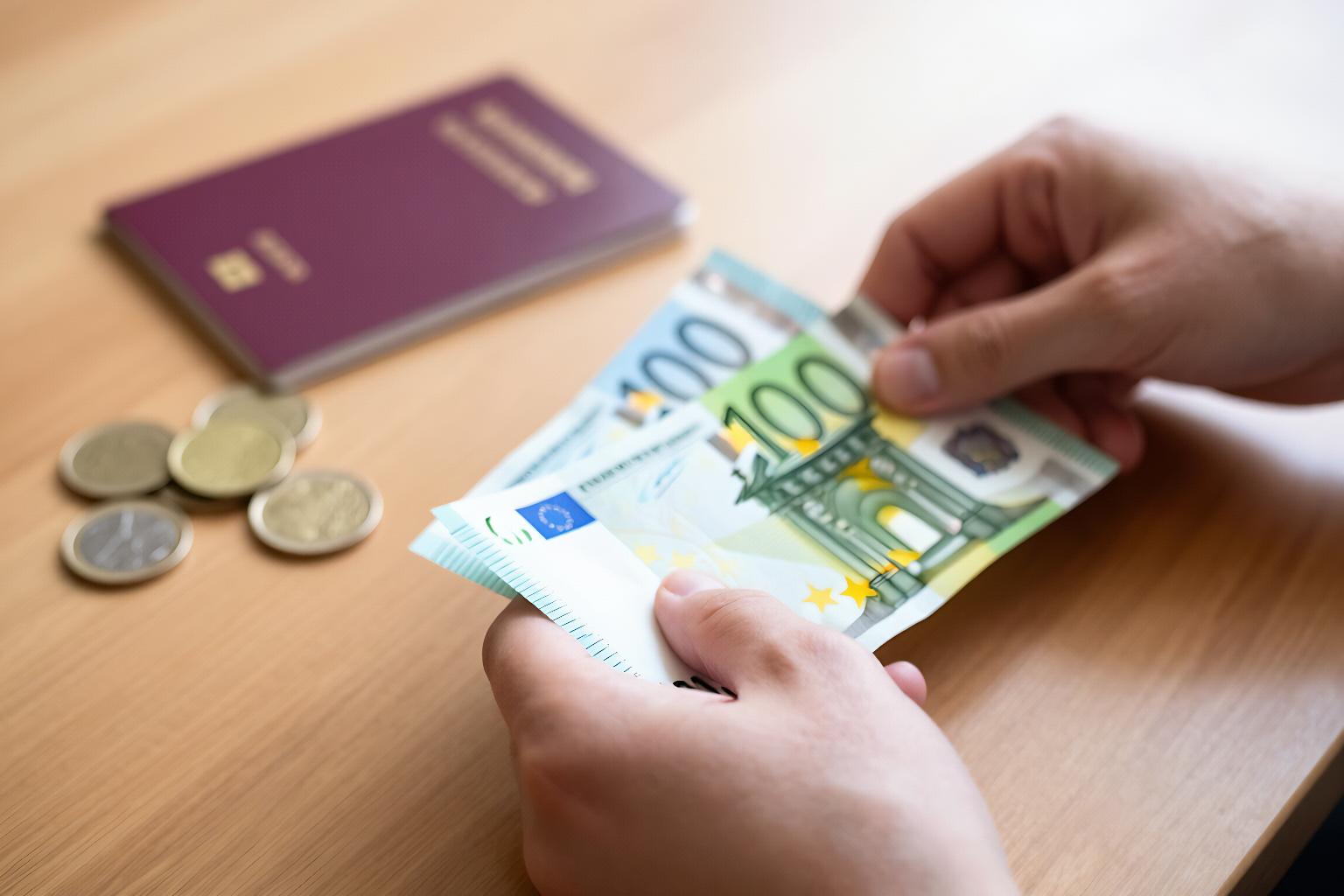
You’ve just landed in a new country, or you’re about to fly out tomorrow, and it hits you: you need some cash in a currency you don’t use every day. So you pull out your phone and search “money exchange near me.” The results look promising, but the signs in the windows are confusing. “No commission,” “We buy,” “We sell,” and rates that seem to change every few minutes. If it’s your first time doing this, it can feel like a puzzle. But the basics are actually simpler than they look. This primer will walk you through what happens when you exchange money, how to compare offers, and why the rate you see online never matches what a physical shop will give you.
At its simplest, a money exchange near you is a shop that buys one currency and sells another. You walk in with pounds, dollars, or euros, and you walk out with the local currency of wherever you’re heading. The business makes money by charging you more than it costs them to provide that foreign currency. That difference is called the spread, and it’s the core of how almost every exchange service works.
If you’re exchanging cash at a physical counter, the process is usually quick. You show your passport (most countries require ID), hand over your money, and receive the foreign notes plus a receipt. But the simplicity ends there. The rate you’re offered depends on the spread, the shop’s location, and your bargaining power. The good news is you don’t need to be a currency analyst to avoid being overcharged.
Open any finance app and you’ll see something called the mid-market rate, which is the midpoint between what banks pay each other when they trade currencies in huge amounts. That rate exists for institutional trading, not for tourists. When a blog or an app says “the current exchange rate is 1.27 dollars to the pound,” it’s almost always referring to this wholesale level.
Physical exchange shops and banks do not give you that mid-market rate. They set their own buy and sell rates, which include a margin for their costs and profit. The difference can be as narrow as 1% at a high-volume urban exchange or as wide as 10% or more at an airport kiosk. A rate like that may not look bad until you do the math on a few hundred pounds.
For a deeper dive into how currencies get priced and where the spread really comes from, our guide to foreign exchange explained from scratch is worth a read before you queue up at a counter.
When you find a money exchange near you, you’ll usually see a digital board with two columns: “We buy” and “We sell.” That phrasing is from the shop’s perspective, not yours. “We buy” means the rate they’ll give you when they purchase foreign currency from you. “We sell” means the rate they’ll charge you when they sell foreign currency to you.
Here’s the trap: the two rates can be very far apart. Say the mid-market rate between pounds and US dollars is GBP/USD 1.27. A shop in a train station might buy dollars at 1.18 and sell them at 1.34. That means on a £500 purchase of dollars at 1.34, you get $670. At the mid-market rate, £500 should buy you $635? Wait, let’s do the math properly. Actually, if GBP/USD 1.27, buying dollars means each pound gives you 1.27 dollars. So £500 gives about $635. If they sell at 1.34, that means they give you more dollars per pound, which sounds better for you, but it’s not right. For a retail customer, the rate to buy foreign currency should be lower than mid-market, not higher. Let me adjust: if the market rate is 1.27, a shop might sell dollars to you at 1.22 and buy them back at 1.32. That’s a wide spread. On a £500 purchase, you’d get $610 instead of $635. The difference is $25, or about 3.9% of the transaction.
Always ask: “What is the rate I will actually get if I buy this currency with my pounds?” If that rate is close to the mid-market rate you can see on your phone, you’re in a decent place. If not, the shop is taking a larger margin. You’ll find more practical warning signs in our article on currency exchange near me 101.
Some exchange services charge a separate fee on top of the spread. It can be a flat amount like £3 per transaction, or a percentage of the amount you’re exchanging. Others shout “No commission” in bright letters. That doesn’t mean they’re giving you a fair rate: they simply hide their profit in the spread. For instance, a no-commission shop might give you a rate that is 6% worse than the mid-market rate. A shop that charges 2% commission but offers a rate only 1% off market would be cheaper overall.
To compare two places fairly, you have to calculate the total cost in your home currency. Suppose you want to buy €500 for a holiday. The mid-market rate is 1 GBP = 1.18 EUR, so £423.73 would be the pure exchange value. Shop A offers a rate of 1.16 and no commission. That gives you €500 for £431.03. Shop B offers 1.17 but charges a flat £5. At 1.17, €500 costs £427.35 plus £5, so £432.35. In this case, Shop A is slightly cheaper despite the worse rate, because the flat fee at Shop B tips the balance. In reality, rates and fees change constantly, but doing this kind of quick maths on your phone will help you choose the right counter.
Also be clear on what “money exchange near me” often means in a tourist area. Shops in airports, hotel lobbies, and busy high streets tend to have the widest spreads because they know you need the cash right away and might not have time to compare. That doesn’t make them scams, just expensive convenience.
The storefront exchange plays a necessary role. They keep a float of foreign notes, pay rent and staff, insure against counterfeits, and take on the risk that a currency will drop in value overnight. All of that costs money, and they recover it mostly through the spread, not a visible fee.
If you’ve ever wondered why the quote on the board changes while you’re standing there, it’s because the shop is adjusting to wholesale currency movements. When global markets shift, they update their rates, often several times a day. A volatile day can mean you get a noticeably different quote at 9 AM than at 4 PM. You can learn more about that gap between the real market and your quote in our piece on why the rate you see isn’t the rate you get.
You don’t need a special financial terminal to know if a quote is fair. A quick search on Google or any currency converter app gives you the mid-market rate in seconds. Write it down, then compare it to the shop’s offer. If the offer is within 1% to 2% of the mid-market rate, that’s competitive. If it’s 5% or more away from the market rate, you’re paying a hefty premium.
But there’s more to understand about which currency counts. Some exchange shops display a rate for “US dollars” but it’s the rate for banknotes, not traveller’s cheques or prepaid cards. Also, large denomination bills like €100 or €200 and US $100 notes often get a slightly better rate because they’re easier for the shop to resell. If you’re exchanging cash, bring clean, undamaged notes. Worn-out or ripped bills are often rejected or get a much lower rate.
Not always. For spending money overseas, a travel debit card might give you a better effective rate, and you won’t need to carry a thick wad of bills. Many digital money services use the mid-market rate and charge a transparent fee, which can work out cheaper than a currency exchange counter for larger amounts. If you already use Wise, for example, you’ll want to read our beginner-friendly guide to Wise money transfer fees and rates to see whether it suits your trip. Similarly, if you need to send money to a bank account abroad rather than get cash in hand, a direct international transfer is a different process from a storefront exchange, and we break that down in our plain-English guide to sending money abroad.
Walk in with a clear plan. Know the mid-market rate, know how much you want to exchange, and know what the maximum acceptable cost is for you. You can also politely ask if the rate is negotiable, especially for larger amounts, because some shops have discretionary margins and will improve the offer if you’re exchanging £500 or more. Ask whether there are any minimum amounts or fees for small transactions, and confirm the total you’ll receive in the foreign currency before you hand over your cash.
Finally, always count the notes you receive in front of the teller and keep your receipt. It sounds basic, but it saves you from discovering an error when you’re already walking down the street. And while it’s tempting to change everything you’ll need for a two-week stay, remember that you can often exchange smaller amounts multiple times to catch a better rate, and you can always use a credit card for larger purchases if the shop refuses to give you a fair deal. Understanding these fundamentals turns a confusing errand into a simple, informed decision.
Slot ID: blog-post-bottom