 Currencies
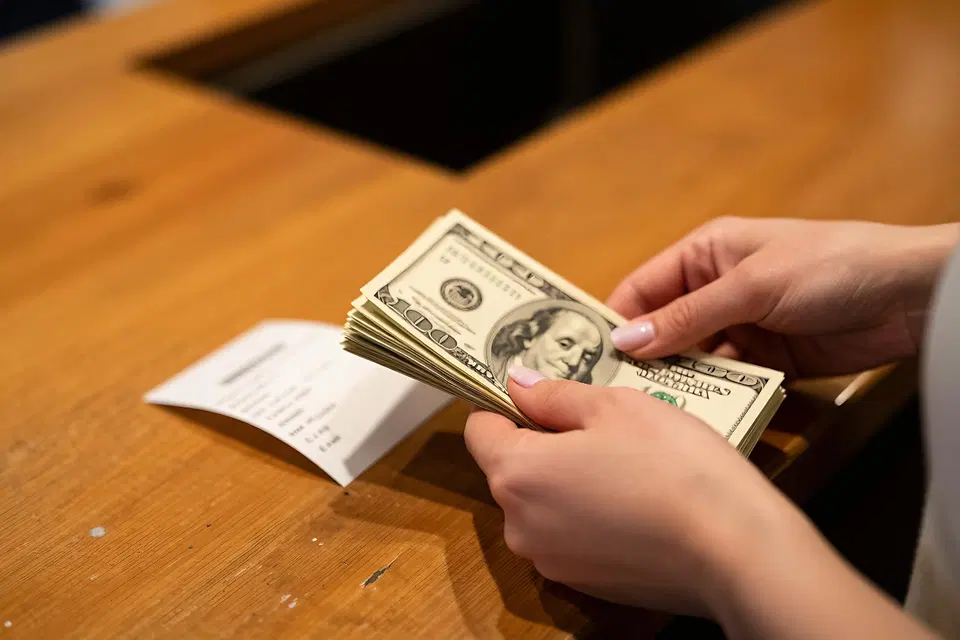
A MoneyGram international transfer is one of the fastest ways to move cash across a border without a bank account on either end. You hand over money in Ohio, someone in Manila or Accra or Guatemala City picks it up in cash, usually within minutes. That convenience has a price, and the price is rarely the number printed on the receipt.
Here's what actually happens when you send, where the costs hide, and how to work out whether MoneyGram is the right tool for the particular transfer in front of you.
What You're Really Buying
MoneyGram is not a bank and it doesn't move money through the SWIFT network. It runs a settlement network of agent locations, roughly 350,000 of them spread across more than 200 countries, in pharmacies, supermarkets, corner shops and post offices. When you send $300 to Kenya, the agent in Nairobi pays out from local funds. The actual cross-border settlement of dollars and shillings happens later, between institutions, out of sight.
That model explains both the strength and the weakness. Strength: the recipient doesn't need a bank account, a smartphone, or even an address. Weakness: you're paying for a physical network, and the exchange rate you get is set by MoneyGram, not by the interbank market.
If you want the full mechanics of fees, payout options and step-by-step sending, our breakdown of how a MoneyGram money transfer works and what it costs goes deeper into the walk-in process.
Four Ways to Start a Transfer, and Why the Route Changes the Price
Online or in the app
Paying by debit card online is usually the cheapest route. MoneyGram frequently runs $0 fee promotions for first transfers, and even the standard online fee for a card-funded send often sits between $0 and $5 on amounts under $1,000. You'll need to verify your identity, which means uploading a photo of a government ID and sometimes a selfie.
Cash at an agent location
Walk-in cash sends carry the highest fees, typically $8 to $15 for a mid-sized transfer, partly because the agent takes a cut. The upside is that cash is instant, no card declines, no bank holds.
Bank account funding
Some corridors let you fund a transfer directly from a bank account. It's cheaper than card but slower to initiate, and it's not available in every country.
Whichever route you take, bring or have ready:
- Government-issued photo ID (passport, driving licence, national ID card)
- The recipient's full legal name exactly as it appears on their ID
- Their country, city and, for bank deposit, the account number and bank name
- Your own address and phone number, which agents do ask for
- Cash or a card in your own name, since third-party funding is usually refused
The Fee Isn't the Whole Fee
A $4.99 transfer fee on a $500 send feels trivial. Then you notice the recipient got 480 currency units when the mid-market rate said 490. That gap is the real revenue line, and it's usually larger than the fee itself. On mainstream corridors the markup is often somewhere between 2% and 4%. On a $500 transfer to the Philippines that can easily be $12 to $20 that never shows up as a charge.
This pattern isn't unique to MoneyGram. The same mechanics apply across the industry, as we showed in our breakdown of where transfer fees hide behind the headline price. Once you know to look for it, you can't unsee it.
Rates move during the day
Exchange rates aren't fixed at a company. They shift with volume, corridor demand and the time of day. Two identical $500 sends made on different days, or even through two different channels, can produce noticeably different amounts on the receiving end. We documented this in detail with the same $500 costing two different amounts, and the logic transfers directly to MoneyGram.
How Fast the Money Actually Moves
Speed depends entirely on the payout method, not on how much you paid.
- Cash pickup: typically available within 10 to 30 minutes once the send is approved, sometimes longer if the corridor is under review.
- Bank account deposit: usually same day or the next business day, occasionally up to three days for smaller banks or remote regions.
- Mobile wallet: often near-instant where supported, for example to GCash, M-Pesa or similar services, though coverage varies by country.
- Card deposit: growing but still patchy, mostly available in a handful of markets.
Compliance checks are the wildcard. A first-time sender, a large amount, or a corridor flagged for fraud risk can add hours. If you need the money there by a specific time, the practical answer is to send earlier than you think you need to. There's a useful side-by-side on how long international transfers take in practice that maps the same delivery variables.
Payout Method Changes the Math Too
Cash pickup is the most flexible option and often the most expensive, since you're paying for the agent network on both ends. Bank deposit is usually cheaper on fees but requires the recipient to have an account in their own name. Mobile wallet sits in between: cheap, fast, but limited to supported providers.
Ask your recipient how they'd actually prefer to receive the money before you choose. Sending to a bank account the person rarely uses, because it saved you $3 in fees, is a false economy if they then pay $6 to withdraw it.
Limits, ID Checks and the Paperwork Nobody Warns You About
MoneyGram sets send limits that vary by country, channel and your verification level. An unverified new account might cap out around $1,000 per transfer and a few thousand per month. Uploading ID and proof of address can raise that considerably. High-value sends sometimes require a phone call to confirm details.
Receiving limits exist too, and they're often stricter than people expect. A recipient in a country with tight currency controls may hit a monthly cap set by local regulators rather than by MoneyGram.
One more thing worth knowing: transfers just under a reporting threshold attract attention, not less of it. Splitting a $3,000 send into six $500 transfers to avoid showing ID is exactly the pattern compliance systems are built to catch, and it can get an account frozen. If you need to send a large sum, do it once, bring the documentation, and expect a few questions.
Where MoneyGram Fits Against the Alternatives
For small, fast, cash-to-cash sends to a recipient without a bank account, MoneyGram and its main high-street rival are hard to beat. For anything recurring, or where the recipient has a bank account or mobile wallet, app-based services tend to undercut both on the total cost, because they run on cheaper rails and pass through a rate much closer to the mid-market one. Our comparison of where your money goes further between traditional and app-based providers shows the gap widening as transfer sizes grow.
A rough rule of thumb: under $200 to a cash-pickup country, use the agent network. Above about $1,000, or for anything you send monthly, compare properly, because a 2% rate difference on $2,000 is $40 a send.
Small Habits That Keep More Money With Your Family
The single most useful habit is to stop comparing fees and start comparing the number your recipient will actually receive. Every provider, MoneyGram included, will show you that figure before you confirm. Write it down for three providers on the same day and the cheapest option becomes obvious, even when the headline fee looks higher.
Beyond that:
- Send in larger batches less often. A 3% rate spread costs the same per transfer whether you send $100 or $600, so the fee bites harder on small amounts.
- Fund with a debit card or bank account where possible, and never send with a credit card unless you're happy paying a cash advance charge on top.
- Cancel and re-send if the rate has moved badly between quote and confirmation, which you usually can before the recipient picks up.
- Keep the reference number. It's the only thing that resolves a payout dispute quickly.
- Check the receiving country's public holidays. A send that lands on a bank holiday can sit for two extra days.
Run the numbers before you commit, not after. The rate quote screen is the only place where the real cost of a MoneyGram international transfer is visible, and it's available to anyone willing to look at it for thirty seconds instead of glancing at the fee and pressing send.