 Currencies
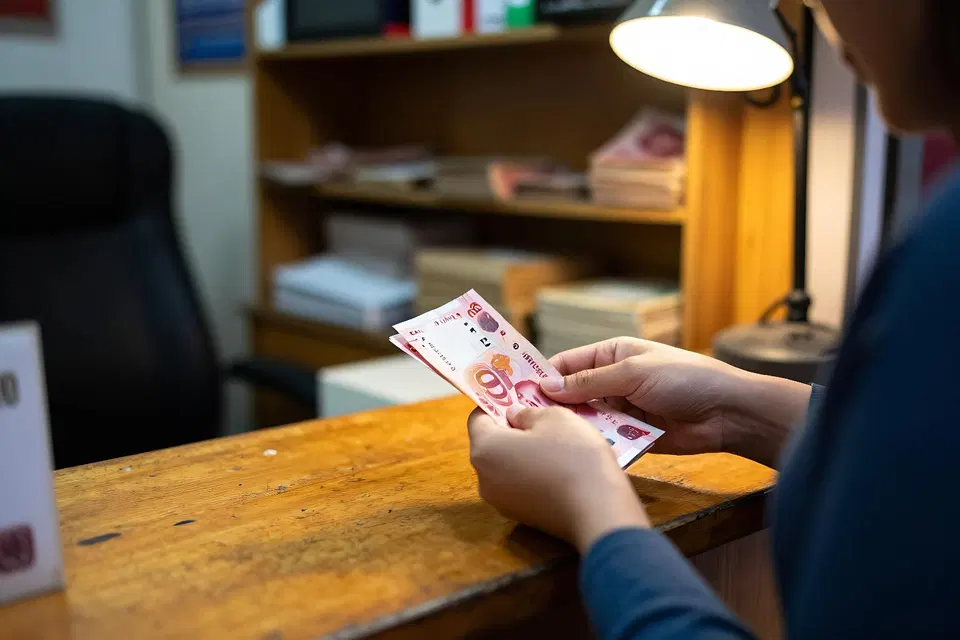
You've got 400 dollars to get to a cousin in Cebu by Friday, or a landlord in Lisbon who doesn't take cards. You've heard Western Union is the default answer, so you walk into the pharmacy on the corner and join the queue. Ten minutes later you're staring at a screen asking whether you want cash pickup, bank deposit, or mobile wallet, and the fee seems to change depending on which button you press.
That's the part nobody explains properly. Here's the version that does.
How a Western Union international transfer actually moves
Western Union doesn't ship dollars across an ocean. The company runs a network of roughly half a million agent locations across more than 200 countries, and most transfers settle on its own internal ledger. Money goes in at one end of the network; a matching payout comes out of a Western Union account at the other. Your recipient isn't waiting for a wire to clear a correspondent bank — they're collecting from a float that's already sitting there.
That's why a transfer to Manila can land in minutes while a bank wire takes three business days.
Three ways to send
- In person at an agent — Walmart, CVS, grocery chains, standalone branches. Cash or debit card at the counter.
- Online or in the app, funded by debit card, credit card, or a bank account link. Bank funding is almost always the cheapest option.
- Over the phone, which is mostly used by people sending the same amount to the same person every month.
Three ways to receive
- Cash pickup at an agent, using photo ID and the ten-digit tracking number (the MTCN) that the sender gets. No bank account needed.
- Direct deposit into a recipient's bank account, usually a day slower and sometimes a few dollars cheaper.
- Mobile wallet credit in markets where that's the norm — M-Pesa in Kenya, GCash in the Philippines, bKash in Bangladesh.
The combination you choose changes the price more than the amount you're sending does. Cash funded by credit card at an airport kiosk is the most expensive path through the entire system; bank-funded online to a mobile wallet is the cheapest.
What a Western Union international transfer really costs
Two charges sit on every transfer: the upfront fee and the exchange rate. Most people only notice the first one.
The fee is corridor-specific and moves around. A $400 transfer from the US to the Philippines funded by bank account might cost around $5. The same $400 sent to Cuba or much of Africa, or paid for with a credit card, can cost three or four times that. Sending to a country with thin competition and lots of regulatory friction is simply more expensive to service.
The exchange rate is the quieter charge. Western Union publishes a rate that includes a margin — typically somewhere between 1% and 4% depending on the corridor and how you pay. On $400, a 2.5% margin is $10 that never appears as a line item. Compare the quoted rate against a live mid-market rate before you send, and you'll see the gap instantly. There's a fuller breakdown of how these numbers stack up in this analysis of Western Union's real costs and speeds.
A worked example
Say the mid-market rate is 57.5 pesos to the dollar and Western Union quotes 56.2. On $400 that's 22,480 pesos instead of 23,000 — a shortfall of about 520 pesos, roughly $9. Add the $5 fee and your total cost is $14, or 3.5% of the transfer. Not catastrophic. But if you send $400 every month, that's $168 a year.
How fast does the money arrive?
Cash pickup is the fast lane. Most transfers to major corridors land within minutes, and Western Union advertises "in minutes" for a reason — the payout float is pre-positioned. Expect up to a few hours if the transfer is flagged for a routine review, or if you're sending to a smaller town where the agent has limited cash on hand.
Bank deposit runs slower. In practice, one to three business days depending on the receiving bank and the country's clearing system. Mobile wallet sits somewhere in between, usually under an hour in Kenya or the Philippines.
Timing also depends on when you send. A transfer initiated at 11pm on a Saturday to a rural agent may not be collectable until Monday morning when that agent opens.
Limits and the ID you'll need
Western Union applies tiered verification. First-time senders typically face a lower cap — often a few thousand dollars per transfer — and the ceiling rises as you build history and complete identity checks. Verification usually means a government photo ID, sometimes a proof of address, and for larger sums, questions about the source of funds.
On the receiving end, cash pickup almost always requires photo ID. That trips people up when they're sending to someone who doesn't have a passport or driver's licence. Check what the destination country accepts before you commit. If you're running into ceiling problems on the sending side more broadly, the same logic applies to other providers — Wise's transfer limits work on similar tiered rules and the fixes are comparable.
When Western Union is genuinely the right tool
The network is the product. There are places where nothing else works as cleanly:
- The recipient has no bank account and no smartphone — cash pickup is the only realistic route.
- They live somewhere a digital-only provider won't touch, or where the last mile is a two-hour bus ride to the nearest agent.
- You need money to arrive today, and a same-day bank transfer isn't available.
- You're sending under $100, where fixed fees on cheaper services can eat the advantage.
- You don't have a bank account yourself and need to hand over cash.
For emergencies — a hospital bill, a stranded relative, a funeral — the convenience is worth the premium. Nobody haggling over a 2% margin at 3am.
Where a cheaper route usually wins
If your recipient has a bank account and you're sending a few hundred dollars a month, the arithmetic changes. Digital-first services tend to quote the mid-market rate with a transparent percentage fee on top, which frequently lands 1–3% cheaper overall. On $400 monthly that's $50 to $140 back in your pocket each year.
The comparison isn't always obvious, though, because fee structures differ so wildly. Some services advertise low fees and bury the cost in the rate; others do the reverse. A side-by-side of Wise and Western Union shows how the totals shake out once you include both charges, and this line-by-line breakdown of Wise's fees is useful if you want to model a specific amount.
One rule of thumb: under $200, fixed fees dominate and Western Union often holds up fine. Above $1,000, percentage-based pricing starts to matter a lot and the gap widens fast.
Before you press send
Five things worth doing, every time:
- Compare the quoted rate to a live mid-market rate so you can see the margin.
- Check whether bank funding is available — it's usually cheaper than card.
- Confirm the recipient's name exactly as it appears on their ID. A middle name mismatch is the single most common reason a cash pickup gets refused.
- Ask which payout method is fastest and cheapest in their specific city, not just their country.
- Save the MTCN. Without it, nobody at Western Union can find your transfer.
If the transfer goes sideways
Delays and errors happen. If the money hasn't arrived when promised, the first step is tracking it with the MTCN online — that tells you whether it's available for pickup, still processing, or held for verification. Held transfers usually need the sender to call in with additional ID. Wrong recipient name means a correction request, which can take anywhere from an hour to a couple of days depending on the country.
Refunds go back to the original payment method. Cash-funded transfers are refunded at an agent, and if you paid by card, expect five to ten business days for the money to reappear. Keep the receipt until you've had confirmation from the recipient that they've collected — it's the only document that carries the MTCN, the amount, the fee, and the rate in one place.