 Currencies
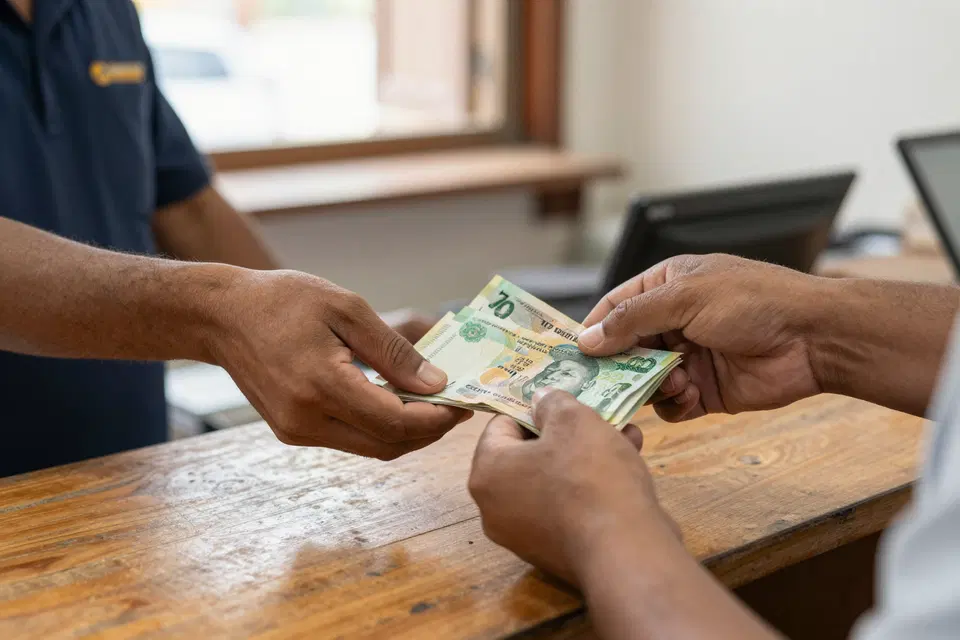
Western Union leans hard on the phrase "in minutes," and for a cash pickup in Nairobi or Manila that's often honest. What the ads skip is that the same $400 sent to a bank account in the Philippines on a Friday evening can take until Tuesday to clear. Neither outcome is random. Transfer time comes down to the delivery method you pick, the corridor you're sending to, and a handful of timing rules that never appear in the marketing.
Here's how the clock actually works.
Typical Western Union transfer times by delivery method
The payout option is the single biggest factor. Two transfers of identical amounts, sent to the same country, minutes apart, can land days apart purely because one goes to a cashier's desk and the other to a savings account.
- Cash pickup at an agent location: usually within minutes, occasionally 10–30 minutes if the receiving agent is busy or short-staffed.
- Mobile wallet (M-Pesa, GCash, bKash and similar): typically minutes, stretching to a few hours during peak periods or when the wallet provider runs batch updates.
- Bank account deposit: one to four business days. This is where most "late" transfers actually live.
- Debit or credit card delivery: often minutes to two business days, depending on the receiving bank's card processing schedule.
- Home delivery, where it's offered: one to three days, tied to local postal or courier rounds.
One thing worth internalising: the countdown doesn't start when you hand over the cash. It starts once the transfer is processed and released into the payout system. That distinction matters enormously on weekends.
Cash pickup is fast until something breaks the chain
Cash wins on speed because there's no bank in the middle. Your money is available against a reference number, and the recipient needs ID and the ten-digit tracking code to collect. No account, no routing number, no clearing cycle.
The friction shows up in smaller ways. Rural agent locations can run short of local currency on busy market days. Some corridors route payouts through a central hub, adding a few hours. And if your recipient arrives after the agent's cut-off — often 4 or 5pm local time, earlier on Saturdays — they're waiting until morning even if the funds are technically ready.
Bank deposits follow banking hours, not Western Union's
Direct-to-account transfers move in batches. In many markets, the local partner bank pulls a payment file once or twice a day, which is why a transfer sent at 9am often credits the same afternoon while one sent at 3pm sits until the next morning.
Name mismatches cause real delays. If the recipient's name doesn't match the account exactly — a missing middle name, a maiden name, a spelling difference — the bank can bounce the deposit back and the whole thing restarts. Ask for the name exactly as it appears on the bank statement before you send, not the name on the ID.
Why your transfer is sitting in review
Compliance is the other reason a transfer stalls, and it's the one senders least expect. Western Union is regulated in nearly every country it operates in, which means automated checks on almost every transaction.
Common triggers include a first-time sender, an amount that's large relative to your history, a corridor with elevated risk ratings, or details that don't quite line up between sender and recipient records. If a review is triggered, Western Union may ask for ID, proof of address, or a short explanation of the transfer's purpose. That can add anywhere from a few hours to a couple of days.
Being flagged isn't an accusation. It's a filter doing its job. If you regularly send larger amounts, it helps to know how Western Union's transfer limits work and what verification tier you're on, because unverified accounts get stopped far more often.
The corridor can matter more than the clock
Sending to a country with deep Western Union infrastructure — Mexico, the Philippines, India, Nigeria — is generally fast because there are thousands of payout points and established banking rails. Sending to a smaller market, or one with currency controls or limited banking hours, adds days before you even talk about your choice of delivery method.
Corridors also carry different rules about who can receive, what documents are needed, and whether mobile wallet payouts exist at all. If you're sending somewhere unfamiliar, it's worth understanding how international transfers behave across different countries before you assume next-day delivery.
Weekends, holidays and the cut-off nobody mentions
Cash pickups are largely immune to weekends, which is why they're popular for urgent sends on a Saturday. Bank deposits are not. A transfer initiated Friday evening in London is Saturday morning in Manila, and the receiving bank won't move anything until Monday. Add a public holiday on either end and you've lost two days without a single error being made.
Time zones create their own confusion. A sender in California wiring money at 6pm is effectively sending at 9am the next business day in Vietnam. The transfer isn't slow — it simply arrived before anyone was at a desk.
What speed actually costs you
Fast delivery isn't free. The gap between a card-funded transfer that lands in minutes and a bank-funded one that takes two days is often a few dollars in fees plus a currency conversion charge you may not have noticed. Western Union's stated fee is only half the story; the rest hides in the rate applied at checkout, which can run 2–4% above the mid-market rate on some corridors.
It's worth looking at where Western Union's fees really come from and what the exchange rate is quietly costing you before you pay extra for a one-day improvement. On a $1,000 transfer, a poor rate can easily outweigh the value of arriving 24 hours sooner.
When the extra day isn't worth paying for
If the recipient isn't in a hurry, the cheapest option is usually the slowest one. Bank-to-bank funding with a standard deposit lands in two to four days and costs less than card-funded instant delivery. Sending mid-week, early in the day, avoids both the weekend gap and the end-of-day batch.
For routine transfers — monthly support for family, recurring bill payments abroad — a specialist provider can be both cheaper and reasonably quick. A straight comparison of Wise and Western Union on cost and delivery speed usually shows Western Union winning on cash pickup and losing on exchange rates for bank deposits.
If the money hasn't arrived when it should
Check the tracking number first. Every transfer gets a ten-digit MTCN, and the online tracker shows whether funds are available for pickup, held for review, or already deposited. If the status says available but your recipient can't collect, the problem is usually ID — many agents require a government-issued photo document matching the receiver name exactly.
If the transfer is stuck in review, call rather than wait it out; the hold often needs a document uploaded before anyone looks at it again. And if the money hasn't been collected within the validity window — typically 45 to 90 days depending on the corridor — it gets refunded to the sender, minus the fee. Keep the receipt. The estimated arrival time printed on it is the figure to hold Western Union to, not whatever the website promised.