 Currencies
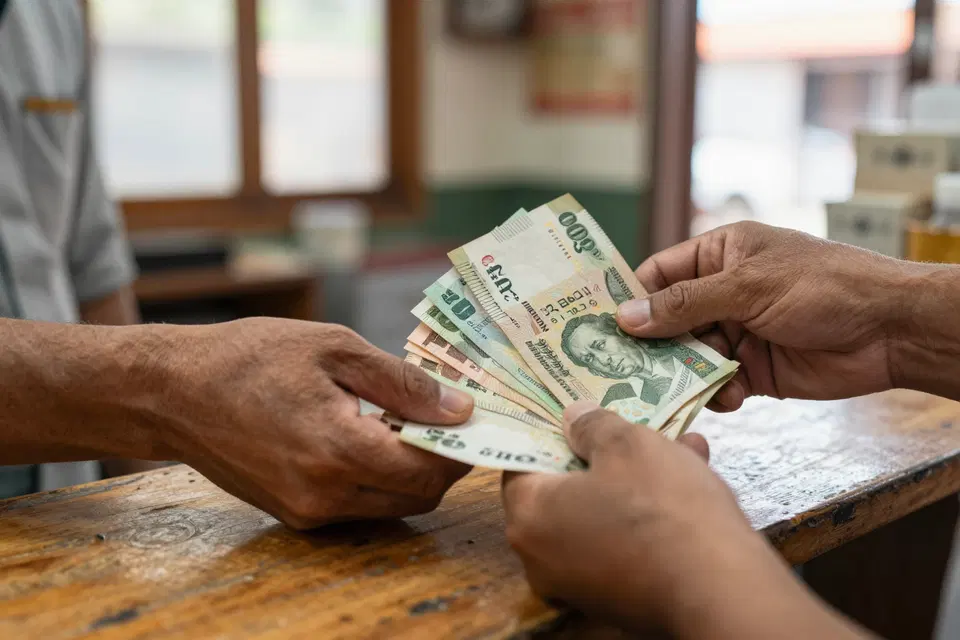
A Western Union money transfer is one of the few ways to push cash across a border in ten minutes with no bank account at either end. That's the genuine selling point, and it's why the network still moves hundreds of millions of transactions a year across more than 200 countries.
It's also where the pricing gets murky. Two charges are baked into every send, and only one of them appears on the receipt. Here's how the whole thing works, what it costs in practice, and where the service stops being the sensible option.
What you're actually buying
Western Union isn't a bank. It's an agent network. Around half a million locations worldwide, ranging from dedicated branches to post offices, corner shops, supermarket service desks and mobile money kiosks. You pay in cash or by card, and your recipient collects cash, or receives funds into a bank account or mobile wallet.
The classic scenario: someone working in London sends £200 to a parent in Lagos or Manila, who walks to a local agent and leaves with physical notes the same day. No account, no card, no smartphone required. That accessibility is the product.
The four ways to send, and how much hassle each one involves
Cash at an agent
You fill in a form, hand over notes, pay a fee, and get a money transfer control number (MTCN). Share that ten-digit number with your recipient and they can collect. This is the slowest to set up and often the cheapest for cash pickup in the same region.
Online or in the app
Card-funded transfers are quick to arrange, but the fee is usually higher than paying cash at a counter. Card payments also trigger more fraud screening, which occasionally means a call from the compliance team before the transfer is released.
Bank account to bank account
You can fund from a debit card or bank transfer and have funds land directly in the recipient's account. Convenient, and usually slower than cash pickup by a day or two depending on the corridor.
Mobile wallet
Popular across parts of Africa and South Asia, where the money lands in an e-wallet like M-Pesa or GCash instead of a physical counter. Fees vary wildly by country.
What it really costs: two charges, not one
Every transfer carries a visible fee and an invisible one. The visible fee is easy: it depends on how much you send, where it's going, and how you pay. Sending $500 to Mexico by card might cost $8 to $12; sending the same amount to a less-travelled corridor can cost $25 or more. Sending small amounts is disproportionately expensive, which is why a $50 transfer with a $6 fee stings.
The invisible charge is the exchange rate. Western Union sets its own rate, and it sits a few percentage points away from the mid-market rate you see on Google or XE. If the mid-market rate is 17.00 pesos to the dollar and you're quoted 16.55, that gap is roughly 2.6%, or about $13 on a $500 send. The fee plus the margin can easily add up to 4% or 5% of the total.
That second number is the one worth chasing. Reading up on how the exchange rate you're quoted translates into real money lost changes how you compare providers, because a "low fee" with a fat margin is usually worse than a higher fee at a fair rate. The same logic applies when you're weighing transfer fees broken down line by line, which shows how much of a typical quote is fee versus markup.
How fast the money actually arrives
Cash pickup is the fast lane. Within the same country, funds are often available in minutes. Between major corridors like the US to Mexico, the UK to India, or UAE to Pakistan, same-day collection is normal. Smaller corridors, remote pickup points, or transfers funded by bank transfer rather than card can take one to three business days.
Bank deposits are slower than cash collection almost everywhere. If you're comparing delivery speeds across providers, it helps to know that transfer timelines vary just as much elsewhere, with bank deposits typically landing in under 24 hours and card-funded sends sometimes held for verification.
ID checks, limits and the awkward questions
Most countries require photo ID once you cross a threshold, typically around $1,000 or the local equivalent, and repeat senders get flagged sooner. First-time senders using a card often get asked for proof of address or a selfie. Larger amounts trigger source-of-funds questions: a payslip, a contract, a bank statement.
Limits vary by country, payment method and your verification tier. It's normal to find a cap of a few thousand dollars per transfer and a daily or monthly ceiling on top. Other providers impose their own ceilings for their own reasons, and why transfer limits get applied and how to lift them is a useful parallel when a payment stalls unexpectedly.
Western Union vs the app-based competition
The honest split comes down to two questions: does the recipient have a bank account, and is the money needed today?
If the answer to either is no, Western Union usually wins on practicality. Cash in hand, no account, no app, no address verification on the receiving side. That's a genuinely hard combination to beat, and it's why the network remains dominant in remittance corridors where banking penetration is thin.
If the recipient does have an account and the transfer isn't urgent, the numbers usually flip. Account-to-account providers tend to price closer to the mid-market rate with a transparent fee, which on a $1,000 transfer can mean a difference of $30 to $50. This is worth checking on a case-by-case basis rather than assuming, and a side-by-side cost comparison of the two runs through the real numbers across several corridors.
Practical checks before you send
- Compare the rate, not just the fee. Use the Western Union calculator, note the rate it gives you, then check the mid-market rate. The gap, multiplied by the amount, is the real cost.
- Check both payment methods. Card versus bank transfer versus cash at an agent can shift the fee by $10 or more on the same transfer.
- Spell the recipient's name exactly as it appears on their ID. A missing middle name is the single most common cause of a blocked pickup.
- Keep the MTCN private until you've spoken to the recipient directly. It's the only thing needed to collect the cash.
- Send to a familiar agent location. Remote pickup points in rural areas sometimes have limited cash on hand, delaying collection by a day.
- Check whether the recipient can receive into a wallet instead. Often cheaper and faster than cash pickup, and no queueing.
Receiving money without getting caught out
Fraud clusters around instant cash transfers because the money is gone once collected. If someone asks you to send funds to release a parcel, claim a prize, or pay a customs fee to a stranger, that's a scam regardless of how official the paperwork looks. A real Western Union transfer never requires the recipient to pay a fee to release funds, and the company will never email asking for your MTCN or card details.
On the receiving end, verify the sender before travelling to an agent. A screenshot of a receipt proves nothing; the sender can cancel a transfer or the funds may never have left. Ask for the MTCN and the sender's full name, then check availability with the agent or the app before you set off.
For the sender, fees are also worth timing. Transfer costs in some corridors shift slightly depending on demand and day of the week, and promotions appear regularly in the app. None of this changes the fundamentals, though: if the recipient has a bank account and can wait until tomorrow, price the transfer against a mid-market provider first. On a recurring monthly send, the gap between a 4% markup and a 0.6% one is the difference between a decent phone bill and a month's groceries over a year.