
Loading article...
Slot ID: blog-post-top
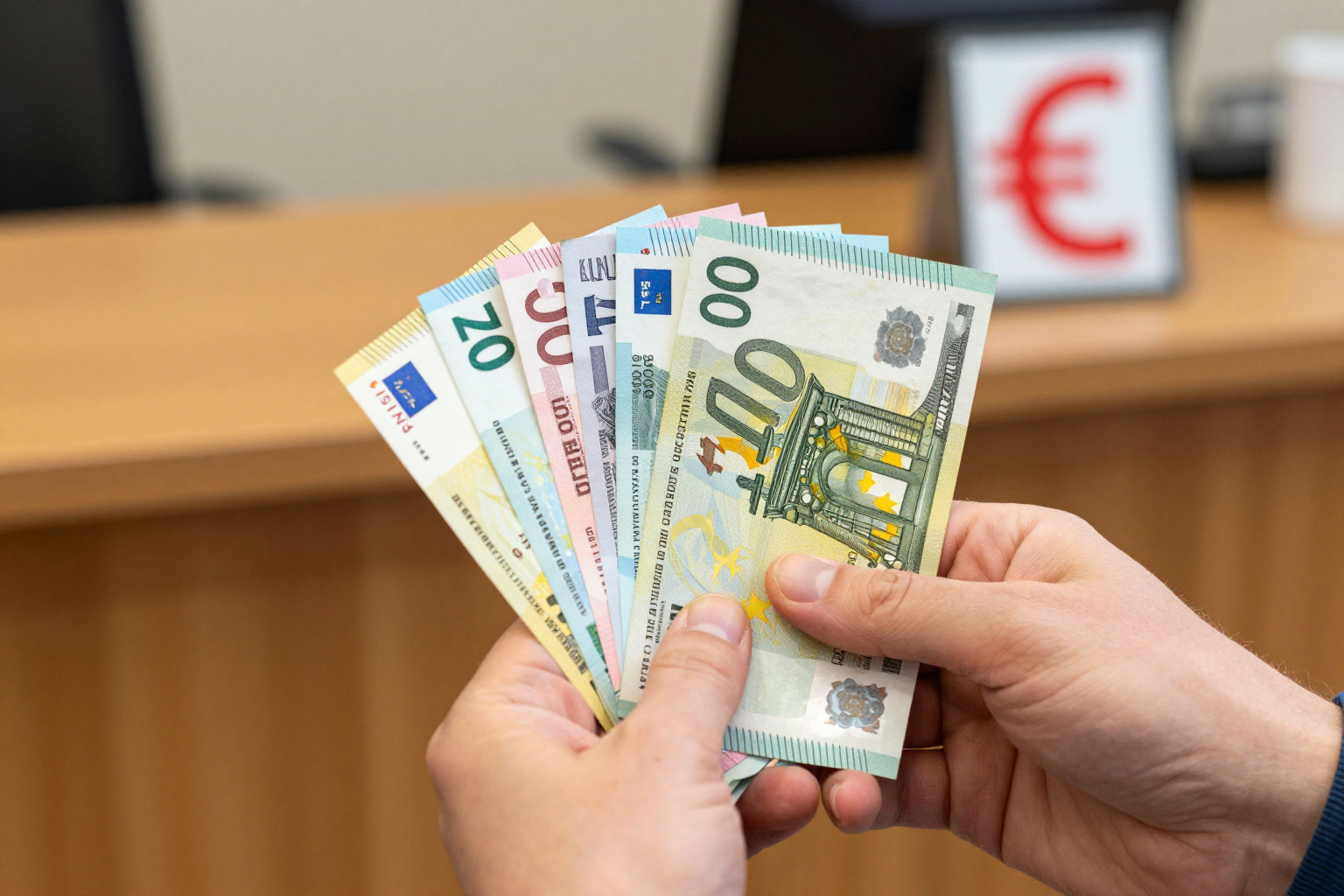
Few things put a dent in a travel budget quite like a bad money exchange. You hand over a crisp stack of your home currency, and in return you get a wad of foreign notes that somehow feels thinner than it should. That gut feeling is usually right. The truth is, most travellers lose money on currency conversion without ever realising it. The question is whether you want to keep losing it, or whether you’re ready to learn how a few small choices can save you a surprising amount.
Every currency has something called a mid-market rate. That’s the rate used by banks and financial institutions when they trade with each other. If you look up EUR to USD on Google, you’ll see this number. But you’ll never get it.
Instead, you’ll be offered two other rates: the buy rate (what a provider will pay to take your foreign currency) and the sell rate (what they charge you to hand it over). The gap between those two is called the spread, and it’s where exchange providers make their money. For example, if the mid-market rate is 1.1000, a currency kiosk might sell US dollars to you at 1.0700. That 0.03 difference doesn’t sound huge, but on a $500 transaction it adds up to over $13 just in the spread, before any fees.
Understanding this basic mechanic is the foundation of getting a fair deal. If you want a deeper look, a practical guide on foreign currency exchange breaks down exactly how banks and bureaus structure their pricing.
You’ve seen the signs: “No commission!” “0% fee!” It’s easy to think you’re getting a great deal until you compare the rate to the mid-market one. The truth is, “commission-free” exchanges simply build their profit into the exchange rate instead. You’re still paying, just invisibly.
Let’s look at concrete numbers. You want to buy 500 euros. A stall at the airport quotes you 1.15 USD per euro, while your bank’s online rate is 1.12. On the surface, the airport looks more expensive by $15. But if the airport advertises “no fee” and the bank charges a flat $10 handling fee, the airport might actually be slightly cheaper if you need the cash immediately. That’s why you can’t just look at one number.
Fees come in all shapes. Some providers charge a percentage of the transaction, some charge a flat fee, and some simply widen the spread. Reading the fine print and doing the maths before you hand over your credit card is essential. This is exactly the kind of thing that gets overlooked, and you can learn more about it in our guide to currency exchange without the nasty surprises.
Not all money exchange services were created equal. Your choice of provider can double the cost of your conversion. Here’s how the usual suspects stack up.
Your own bank often offers fairly reasonable rates, especially if you order the currency in advance. However, they usually charge a delivery fee if you want it at home, and an in-branch transaction fee. Some online-only banks have eliminated those costs but make it harder to get physical cash.
These are the worst places to convert currency, hands down. They rely on your desperation. You’re stuck, you’re tired, you need cash. That’s why their spreads are so wide and their fees so aggressive. A good rule of thumb: if you’re standing less than 100 meters from your departure gate, you’re about to get a poor deal. Always avoid these if you can.
In most big cities, you’ll find independent exchange shops that actually quote close to the mid-market rate. They lure customers with better offers because they compete for volume. But you still need to be careful. Some charge a “handling fee” that only appears at the till. Look for one that clearly displays both the rate and any commission. If you’re travelling soon, your best bet is often a dedicated currency exchange near me search, which can point you to reputable local businesses instead of relying on memory.
Online currency specialists have grown massively in recent years. You order the cash on your mobile phone, pay at a good rate, and the money gets mailed to your house or collected from a pickup point. These services usually have far lower overheads, so their rates are better than most physical branches. You just need to order a few days ahead to guarantee delivery. If you’re exchanging a larger amount, the savings quickly outweigh the waiting time.
Using a local ATM with a fee-free card can be a decent way to get currency at the mid-market rate, but it’s not always the cheapest. Your home bank might charge a foreign transaction fee of 1.5% to 3%, and the ATM operator in the other country often adds its own surcharge. If you take out $200 each time and pay a $5 fee, that’s 2.5% off the top. If you have a card with zero foreign transaction fees and a bank that reimburses ATM surcharges, then yes, ATMs are fantastic. For everyone else, it pays to compare.
The good news is that you don’t need to be a financial wizard to get a fair rate. You just need a small checklist.
You might wonder: should I just bring all my money in cash, or should I rely on digital payments? The answer depends on where you’re going and what you’re doing. Cash is still king in many places like Morocco, Vietnam, or rural Italy. But for larger payments, an international transfer is often more efficient.
When you exchange $2,000 in cash at a kiosk, you might lose 5% to 7% in spread and fees. That’s $100 to $140 gone. If you instead send that money from your bank account to, say, a hotel’s bank account, you could lose as little as 1% to 2% with a reputable transfer service. The difference is significant. For a detailed comparison of your options, take a look at our practical guide to international money transfer, which breaks down the fee structures of banks, brokers, and online platforms.
Most exchange providers are honest, but a few will try to pull a fast one – especially in tourist-heavy areas. One common trick is to show you a rate on the board that’s actually terrible, then add a “service fee” before counting out a smaller stack. Another is to give you the cash and quickly distract you so you don’t count it. That’s why you should always count your money in front of them, slowly. If they rush you, that’s a red flag.
Before you agree to any transaction, ask them to write down the exact amount you’ll receive in the foreign currency. Then do the maths on your phone, comparing to the mid-market rate. If it’s off by more than 4% or 5%, you’re likely being overcharged. You can also search for reviews online if you’re in any doubt. A little skepticism goes a long way.
Finally, remember that the best exchange rate is often the one you never have to use because you planned ahead. Keep your wallet fuller and your stress lower by treating money exchange as part of your trip preparation, not an afterthought at the airport. A few minutes of homework today can easily save you the price of a nice meal while you’re travelling.
Slot ID: blog-post-bottom