
Loading article...
Slot ID: blog-post-top
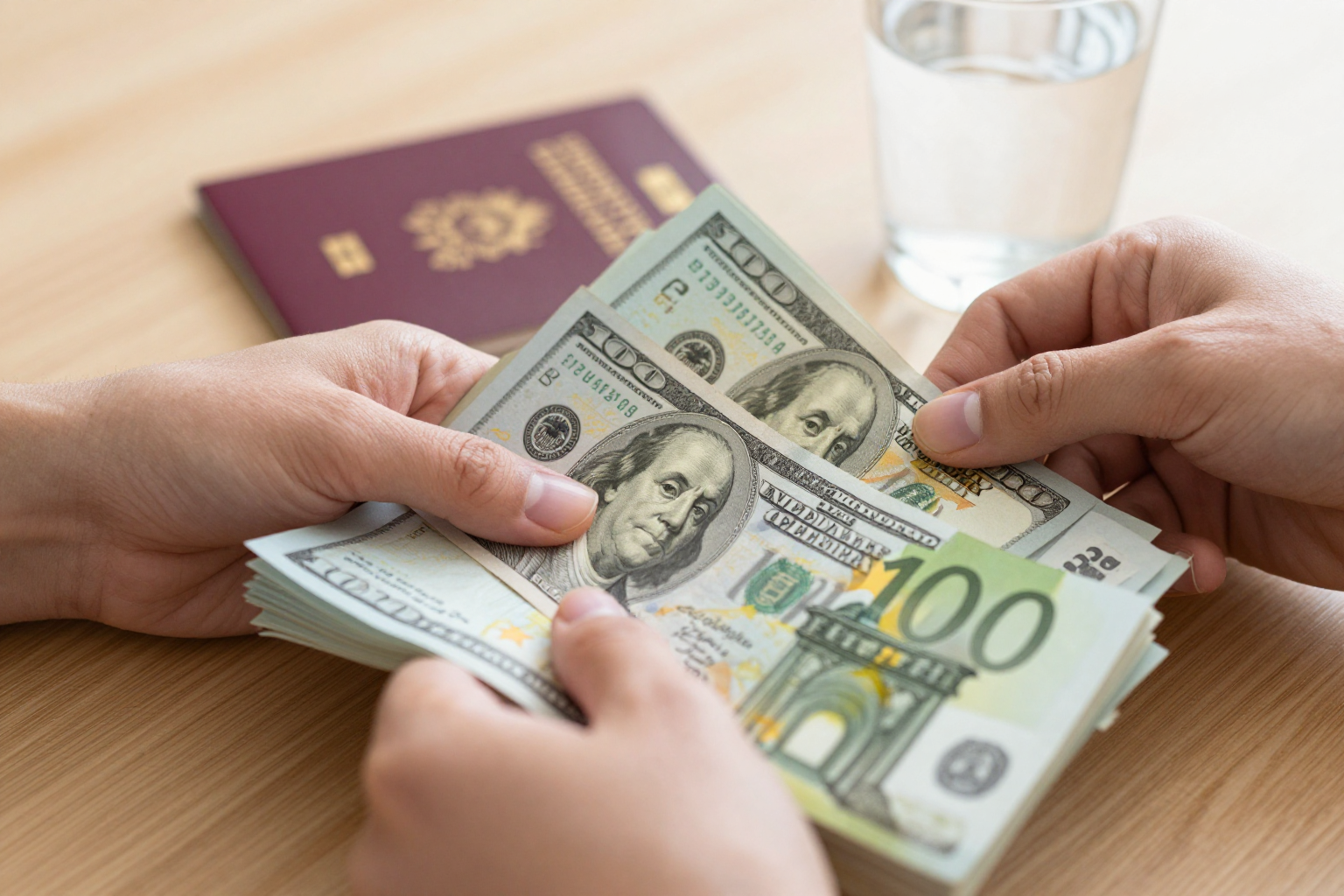
The first time you send money abroad, the fee quoted at the counter looks reassuringly small. You send £500, it costs £4, done. But when the money lands in Manila or Warsaw, the amount is slightly less than you calculated. That difference isn't a flat fee—it's woven into the exchange rate. If you'd rather not lose money to invisible markups, wise money transfer starts with knowing where the costs actually hide.
A truly wise money transfer gets your funds to their destination quickly, reliably, and at a fair cost. That means no double-digit margins on the exchange rate, no opaque tiered fees, and no surprises when the money finally lands.
Banks love to quote a rate like 1.12 for EUR/USD when the actual market rate is 1.15. That 3-cent gap doesn't sound like much, but multiply it by a €10,000 transfer and you've just paid €260 in hidden costs. A wise transfer uses the mid-market rate—the same one you see on Google—and charges a transparent fee on top. That's the core of the Wise money transfer model, and it's why the platform became so popular.
Wise, formerly TransferWise, was created in 2011 by two Estonians who were tired of losing money on cross-border payments. Instead of moving your money directly, Wise matches your transfer with someone moving money in the opposite direction. This peer-to-peer method means funds never actually cross borders in many cases. Local transfers happen in each country, so you get the mid-market rate and a much lower fee.
For example, sending USD from New York to EUR in Berlin: Wise takes your dollars, deposits them into its Dallas account, and releases euros from its London account to your recipient. The network fees are tiny compared to Swift transfers, and the savings are passed on to you.
Most banks add a 3-5% margin to the exchange rate. Let's say you're sending $1,000 to India. A typical bank charges a flat $12 fee plus a 2% margin, which totals about $31.80 for a $1,000 transfer. A wise money transfer might charge $8.50 in fees, all-in. Over many transfers, that difference compounds—faster than you'd think.
For a $500 transfer from the UK to the US:
On a €10,000 business invoice, the bank's hidden rate could be €230 worse than Wise. But wise money transfer isn't always the cheapest for every corridor. Some countries, especially emerging-market currencies, have local providers that are cheaper. That's why you can't assume—you have to compare.
Wise shines for common pairs like EUR/USD, GBP/USD, or sending to major Asian currencies. But for smaller currencies, a local payment service or even a foreign currency exchange might beat Wise on both cost and speed. If you need cash in hand quickly, your best bet is a physical exchange. Our guide to getting a fair rate on currency exchange without the airport markup explains how airport counters quietly rob you and where to find better options.
Also, Wise isn't designed for sending money to yourself in the same currency, or for transferring between accounts in the same country. For those, you're better off with a simple wire or even a payment app like Zelle.
To make a wise money transfer, always calculate the total cost in the destination currency. That's the amount your recipient actually receives. Don't just look at the fee line—check the exchange rate spread. Some providers tempt you with a low upfront fee and then hit you with a rate that's 4% off market. Our practical guide to international money transfer rates and fees walks you through the comparison process, including hidden costs that banks prefer to keep blurred.
Even with Wise, you can shave off more money by paying attention to how you pay and when.
Wise charges an additional fee if you use a debit or credit card. A simple bank transfer (ACH or SEPA) is usually free. For a €2,000 transfer, that's a real difference of €15-20.
Since Wise charges a flat fee, sending £10,000 once instead of £2,000 five times saves you £12 in fees—not huge, but still a free lunch. If you're saving for a property or paying a contractor, batch your payments.
Exchange rates fluctuate daily. Wise's rate alerts let you set a target rate, and they notify you when the market hits that level. It takes ten seconds to set, and it can save you hundreds on large transfers. For more on predicting these fluctuations, check out this guide on avoiding nasty surprises in foreign currency exchange.
Yes, but let's be specific. Wise is authorised by the Financial Conduct Authority (FCA) in the UK, and in the US, it's registered with FinCEN. It customer-funds are held in segregated accounts, meaning your money isn't mixed with the company's operating cash. That protects you in the unlikely event of insolvency. They also use two-factor authentication and, unlike many banks, have a clean track record of anti-fraud measures. But no system is perfect—phishing scams and fraud still happen. Always double-check the recipient's account details before you confirm.
However, Wise isn't a bank in the traditional sense, so your money isn't protected by the Financial Services Compensation Scheme (FSCS) if it goes bust. That's a low risk, but a risk worth knowing about.
We cling to banks out of habit. The name on the door feels safer. Standing in line feels official. But the math doesn't care about nostalgia. Every year, people send billions across borders without checking whether their 'cheap' international transfer really is cheap. The real enemy isn't the fee structure—it's our belief that switching is harder than it actually is. Opening a Wise account takes less than four minutes. The same time it takes to read this article.
Wise isn't the end of the road. Open banking and instant payment networks are forcing traditional banks to lower their margins. Stablecoins, like USDC, are becoming a serious alternative for some corridors, offering near-zero fees and instantaneous settlement. But for now, wise money transfer means comparing the total cost, not just trusting a familiar logo. The market is more competitive than ever, and the consumer is finally winning.
When you've set up your transfer, run through this list to keep it cheap and smooth:
The smartest way to move money isn't about being smarter than the system—it's about using the tools that were already built to punish you less. Wise money transfer isn't a magic trick. It's just the clearest example of what happens when a company exposes the true costs and lets you decide. The next time you send money overseas, bring that comparison to the table. Your recipient will feel the difference, even if they can't see the paper trail.
Slot ID: blog-post-bottom