
Loading article...
Slot ID: blog-post-top
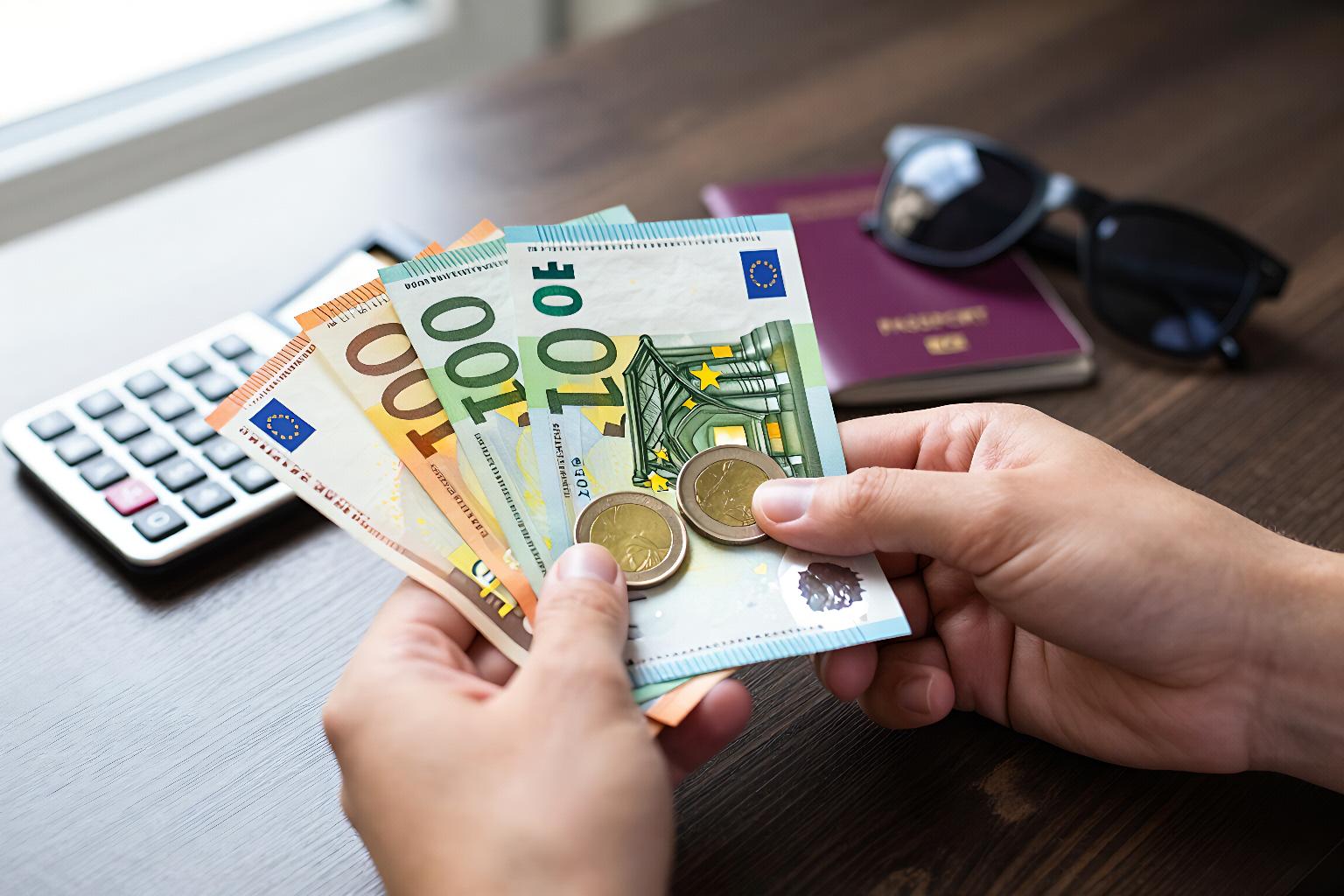
You've booked the trip, packed your bags, and decided to carry some local currency for your first day. Then comes the less glamorous task: money exchange. It looks straightforward, but most people end up paying more than they intended, simply because they don't understand the fundamentals of how and where currencies are traded.
This guide will walk you through the basics from zero assumptions. You'll learn what an exchange rate actually is, why no one offers the "real" rate, and how to compare options honestly. By the end, you'll be able to swap your home currency for foreign cash with confidence.
At its most basic, money exchange happens when you convert one currency into another. You hand over pounds, dollars, or yen, and receive euros, baht, or any other legal tender in return. The number of units you get for each unit you give is the exchange rate.
But that rate isn't a fixed number set by the universe. It moves constantly, influenced by international markets, central banks, inflation, and even news headlines. If you compare quotes on Monday and Wednesday, you'll probably see a slightly different value.
For example, if the EUR/USD rate is 1.08, that means one US dollar buys 1.08 euros. Or rather, that is the mid-market rate, which financial institutions use when trading among themselves. That number will be the reference point for everything else, but you will rarely get it.
Imagine you're in a European airport kiosk. The electronic board might show “We Buy 1.12” and “We Sell 0.96” for the same currency pair. Both numbers are related to the same dollar-euro relationship, but they serve different purposes.
The "buy" rate is what the dealer pays when buying foreign cash from you. The "sell" rate is what you pay to buy foreign cash from them. The gap between them is called the spread, and that spread is the dealer's primary source of profit. The wider the spread, the worse the deal for you.
This is also why a headline promising "0% commission" can still rip you off. The commission is simply baked into the spread. When you see a rate that looks far from the one a Google Search shows, that's the spread on display. The whole reason a rate can look so unfavourable is best explained in our detailed breakdown of why the rate you see isn't the rate you get.
Not all places that offer money exchange follow the same pricing rules. Some make money purely on the spread, while others add visible fees. Here are the typical venues you'll encounter.
Banks often offer decent rates for their own customers, especially if you order currency in advance. For non-customers, fees can be high. Ordering usually takes one or two working days.
Convenience comes at a price. Airport and hotel exchange counters almost always charge wider spreads because they know you're stuck. If you only need enough for a cab, purchase a small amount there, but don't rely on it for your whole budget.
Popular tourist streets are full of independent money exchange offices. Their rates vary enormously from shop to shop, and some advertise one rate on a big sign but offer a worse one once they see your cash. Before you step inside any location, read up on how to vet a local retailer with our currency exchange near me 101 guide.
Using your debit card in a foreign ATM often gives you a more favourable exchange rate than a retail counter, but your home bank may charge a foreign transaction fee plus an out-of-network ATM fee. Those can add up to a lot of money.
Beginners often assume they only need to compare quoted exchange rates. That assumption can cost hundreds on a long trip. Money exchange has several separate layers of cost, and each one needs to be checked.
Many travellers only notice the first two, but there are more mundane ways to lose money. Even before you hand over your passport, you may be falling into traps that have nothing to do with the exchange rate. Let's look at the common mistakes that quietly eat into your travel cash so you know what to avoid.
When most people think of money exchange, they imagine physical banknotes being swapped across a counter. But your money changes value whenever it crosses borders through other means too.
Sending an international wire transfer is a form of money exchange, because your funds are converted into another currency before reaching the recipient. Using your credit card abroad is also a money exchange with rates set by your card network, though you never see that conversion happening in real time.
If you plan to send money to a foreign bank account rather than carry cash, a conventional bank wire is rarely your cheapest route. Online transfer specialists often undercut bank fees while offering exchange rates much closer to the real mid-market rate. For a plain-English overview of how these transfers work, or if you want to see why the exchange rate still matters, start with our guide to sending money abroad.
One particular provider that gets a lot of beginner attention is Wise. It openly advertises the mid-market rate, and those curious about their pricing can read a detailed comparison on this site that covers Wise money transfer fees, rates and first steps.
To bring the concepts together, let's work through a real-world calculation. Suppose you're planning to buy £1,000 worth of euros for a holiday across the European mainland. If the true mid-market rate is 1.15 euros per British pound, your £1,000 should theoretically buy you €1,150 at a perfectly fair exchange.
An airport kiosk might offer you a rate of 1.05. That would hand you only €1,050, a loss of €100. A more reasonable high-street shop could offer 1.12, giving you €1,120, a loss of €30 compared with the ideal.
Even between those two options, the difference is €70, money that otherwise would have gone toward nice dinners or a train pass. Most beginners don't sit down to do this math before picking a money exchange service, which is understandable. Yet it's only two minutes with a calculator.
For an even deeper walk-through of what to inspect before making your first currency conversion, you may find it helpful to review a plain-English guide to swapping your money as an absolute beginner.
Before you agree on anything, ask two questions. First, what exchange rate are you offering, and second, what total amount in your home currency will you receive after every fee is included? Compare that final figure with an online currency converter that uses the live mid-market rate. That reveals how much margin you're paying.
If you're standing at a physical exchange counter and your gut says something feels off, walk away. You almost always have another option, whether that means waiting until you reach your destination city centre or using an online service. Be aware that the rate itself fluctuates, so a so-called “late booking” window could reduce your savings, but the price structure is not a mystery.
The fundamentals matter the most: understand the spread, do the math in your own currency, and avoid exchanging convenience for excessive cost. That one hour of learning will serve you for every trip you will ever take.
Slot ID: blog-post-bottom