
Loading article...
Slot ID: blog-post-top
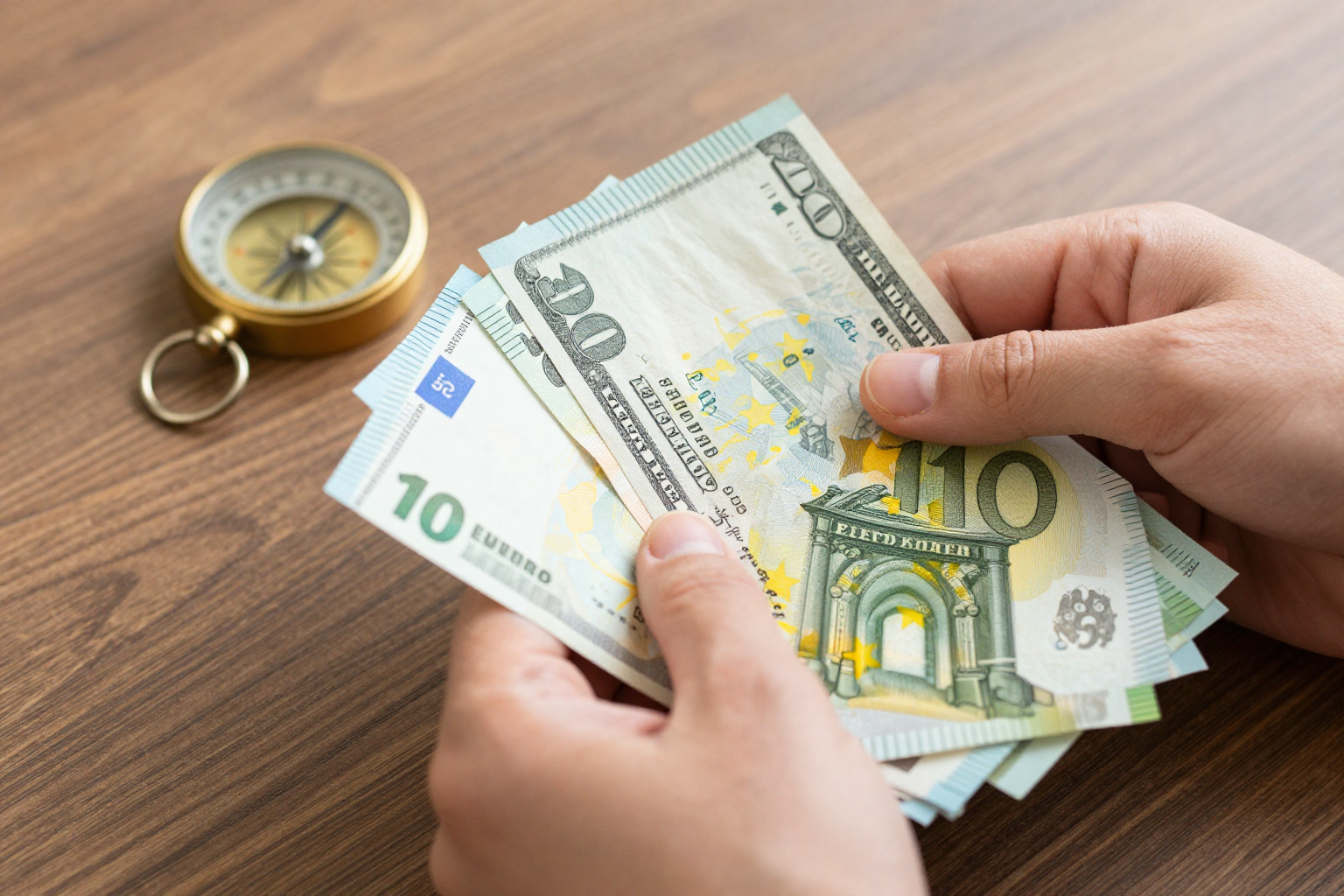
You're standing at an airport currency exchange counter, staring at a digital board. It says EUR/USD 1.08. Or maybe it says 0.925. But when you hand over $600, you get €508.20, not €555.60. Why? Because the exchange rate you saw wasn't the rate you got. This guide walks through the practical steps of reading and using exchange rates, with real numbers, so you know exactly what you're paying.
Every exchange rate is a pair. The first currency is the base. The second is the quote. So EUR/USD 1.08 means one euro costs 1.08 US dollars. If the rate is 0.925 for USD/EUR, that means one US dollar costs 0.925 euros. The pair matters more than the number. If you mix them up, you'll miscalculate your conversion by a lot.
The rate you see on Google or in an exchange rate today article is the mid-market rate, also called the interbank rate. It's the average of the buy and sell rates that big banks use when trading among themselves. You will never get that rate as a regular consumer. Banks, airports, and online services all add a markup to make a profit. The mid-market rate is useful as a starting point, but it's not what you'll receive.
Suppose you're converting $600 to euros. The mid-market rate is 0.925 (meaning 1 USD = 0.925 EUR). Multiply: 600 x 0.925 = 555. That's €555 if you could get the mid-market rate. But the airport kiosk offers 0.847 for US dollars. Multiply: 600 x 0.847 = 508.20. You receive €508.20. The €46.80 difference is the cost of the spread.
This 9% gap is typical at airports and hotels. If you're heading to Europe, the factors that move the euro exchange rate also affect what you'll pay. Central bank decisions, inflation data, and political news all shift the rate. But the kiosk's spread is usually a bigger cost than any small daily movement.
At the end of your trip, you have €200 left. You want dollars. You don't multiply by 1.08; you need the inverse. If the mid-market rate is 1.08, then 1/1.08 = 0.9259 USD/EUR. But the airport's buy rate for euros is 1.05. So €200 x 1.05 = $210. At the mid-market rate, you'd get $216. That's another €6 loss, on top of what you already paid when buying the euros.
Currency exchange services post two rates: buy and sell. Buy is what they pay to buy the base currency from you. Sell is what they charge you to sell it to you. The spread is their profit. For example, a board might show EUR/USD 1.07/1.09. If you sell euros, you get 1.07 dollars per euro. If you buy euros, you pay 1.09 dollars per euro. That's a 1.9% spread, which is actually a good deal for a physical kiosk.
Online transfer services often advertise a low spread but add a fixed fee. To compare, calculate the total dollar amount you'd receive after all charges. This is what the article money converter: why the rate you see isn't the rate you get explains in depth. Let's do a concrete example.
Service A offers a rate of 0.920 with no fee. Service B offers a rate of 0.925 but charges a $10 flat fee. With A, you get 1,000 x 0.920 = $920 worth of euros (actually €920). With B, you first pay the fee, so only $990 is converted: 990 x 0.925 = €915.75. Service A gives you €4.25 more. The headline rate was better, but the fee made it worse.
Tools like Google and Oanda's currency converter show live mid-market rates. They're great for estimating, but you won't get that rate at any retail counter. If you're comparing banks, look at the actual effective rate they offer. The difference between the mid-market rate and your effective rate is the true cost. To see why this gap exists in everyday transactions, read the breakdown of currency exchange rates: why the rate you see isn't the rate you pay.
If you're transferring a large sum or buying a property overseas, a small rate shift can cost hundreds or thousands. A forward contract lets you fix the exchange rate today for a future date. Banks and brokers offer this for a premium, but it protects you from swings. For a vacation trip of a few hundred dollars, it's rarely worth the trouble.
Next time you're exchanging money, check the pair, find the mid-market rate, and then calculate the effective rate you're being offered. The few minutes of math can save you a surprising amount.
Slot ID: blog-post-bottom