
Loading article...
Slot ID: blog-post-top
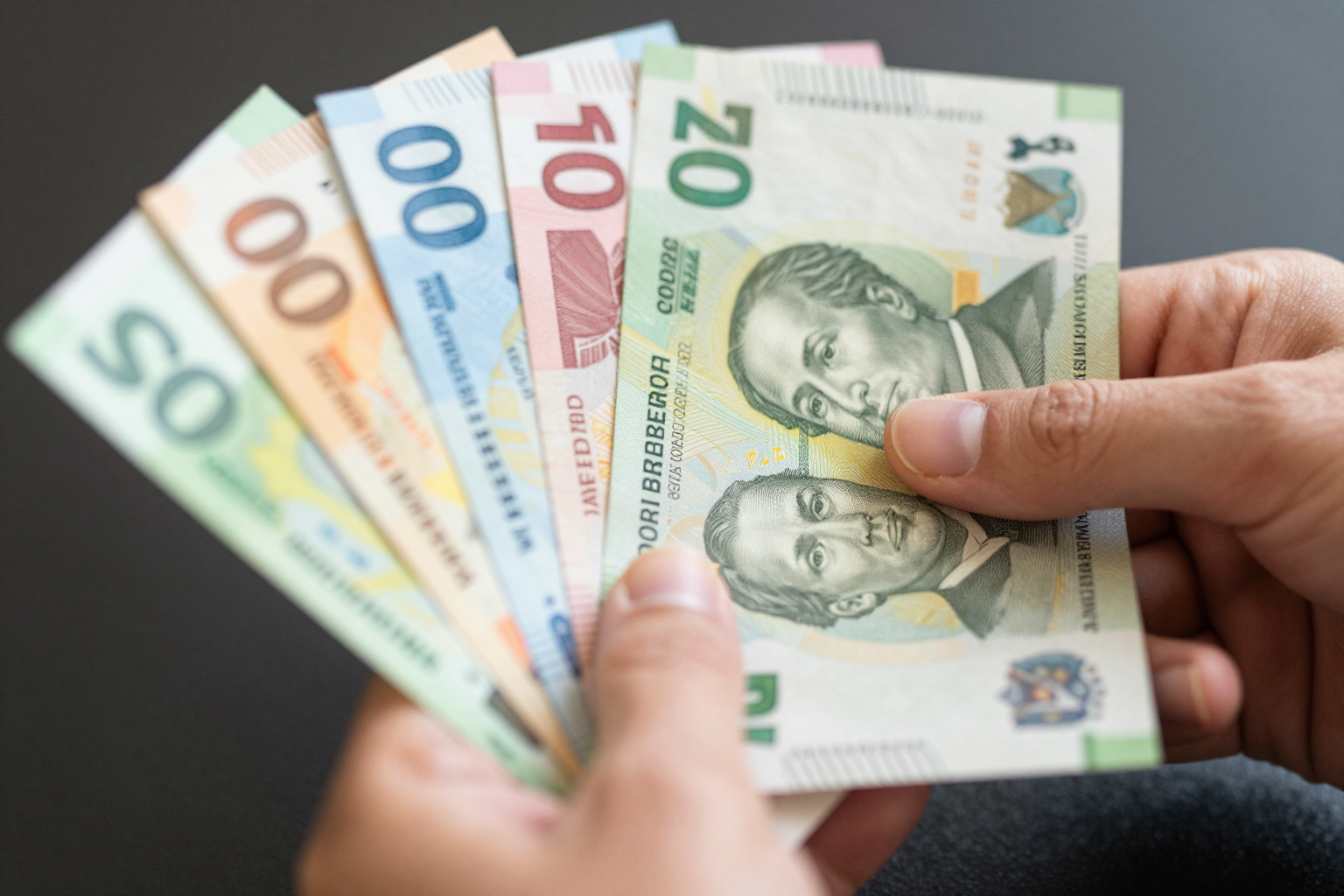
At 8:14 this morning, one euro was worth $1.0854 in the global currency markets. That is the same euro you would spend in a Madrid tapas bar, but it is almost certainly not the rate your credit card issuer used. By the time the charge arrives, the rate might be 1.0782. On a €500 dinner, that difference costs you about $4. Across a year of travel, transfers, and overseas business invoices, small differences in currency exchange rates add up to serious money.
Most people check an exchange rate on the morning they travel or when they get a quote from their bank. They accept whatever number appears. But currency exchange rates are not single fixed numbers handed down from on high. They are dynamic, layered, and heavily influenced by where you get the quote. Understanding that can save you hundreds, sometimes thousands, of pounds, dollars, or euros a year.
An exchange rate is simply the price of one currency in terms of another. If the EUR/USD rate is 1.0850, it means one euro buys 1.0850 US dollars. The first currency in the pair is the base; the second is the quote currency. All rates are quoted this way, so you will see pairs like EUR/USD, GBP/USD, USD/JPY.
Rates are usually expressed to four decimal places in the interbank market. The last digit is a pip, short for "percentage in point". A move from 1.0850 to 1.0851 is one pip. Retail customers rarely talk in pips, but they are the language of the professionals who set the market.
The rate you see on a news site or a currency converter is the mid-market rate. This is the theoretical average between the price at which market makers buy and sell a currency. It lives in the global electronic network where banks, hedge funds, and central banks trade huge sums. No commercial bank will give you that exact rate, and neither will your forex card provider.
You might imagine a central bank prints a daily list of exchange rates. For a few currencies, that is partly true. But in most major economies, the rate is set by supply and demand in an open market. Buyers and sellers of currencies interact all day: a Japanese exporter selling US dollars, a Norwegian pension fund buying British pounds, an Australian student converting cash before a year in Berlin. The balance of those trades moves the rate every second.
Central banks influence, but rarely fix, the rate. When inflation is high or the economy is strong, the central bank may raise interest rates. Higher interest rates attract foreign capital, boosting demand for that currency and pushing its value up. That is why the US dollar strengthened sharply when the Federal Reserve started hiking rates in 2022. Geopolitical instability does the opposite. Capital flees toward safe havens like the Swiss franc or the Japanese yen, driving their values higher.
Some currencies are pegged to another anchor currency. The Danish krone is closely managed against the euro, and several Gulf currencies are pegged to the US dollar. In those cases, the exchange rate is not free floating; it is a political and economic decision.
The mid-market rate is the benchmark, but every provider that converts money for you adds a margin. That margin is how your bank, a money transfer service, or the airport kiosk makes its profit. The difference between the mid-market rate and the rate you actually get is the spread. If you want to see the exact mathematics, our exchange rate 101 guide breaks down every step of the calculation.
If the mid-market rate for GBP/USD is 1.2700, a bank might quote you 1.2555 for buying dollars. The 1.4% difference is the spread. On a £5,000 transfer, that leaves £70 on the table. Some banks in Europe charge spreads of 3% or more for euro to Polish zloty conversions. The spread you are offered depends on your relationship with the bank, the size of the transaction, and how skilful the customer service rep is at negotiating.
On top of the spread, some providers add a flat fee. It might be called an "online fee", a "dispatch fee", or a "CHAPS charge". A £12.50 fee on a small transfer is a very different burden than on a million-pound transaction. That is why you should always compare the total cost in percentage terms, not just the headline rate.
The only honest way to compare offers is to ask each provider for the rate and all fees in writing, then convert those fees to a percentage of the amount you are sending. For example, if you are sending $10,000 and your bank offers you 6.69 Polish zloty per dollar while the mid-market rate is 6.72, the total cost is roughly 0.45%. Another service might quote a better-looking 6.70 but charge a $120 flat fee. On a $10,000 transfer, that works out to more than 1.2% plus the tiny spread. The second offer is actually worse.
When an online converter shows you a rate, remember it is not a quote. It is a mid-market snapshot. For a plain-language explanation of what converters can and cannot tell you, read our post on how to get a real rate instead of a rounded-up guess.
Online converters are useful for a ballpark figure. They are not tools for predicting your final cost. Google's built-in converter pulls the mid-market rate directly from interbank data. It does not include any retail markup. Oanda's calculator works the same way. Our detailed review of the Oanda currency converter and where it falls short explains exactly what those tools show and what they miss.
So if you rely on a converter to set your budget, you are likely to be disappointed when you see the actual rate on your banking app. The network that processes your card payment uses a wholesale rate, and your card issuer then converts it with a margin. There is no single source of truth for the rate you will receive, but you can get close if you ask the right questions.
You do not need to be a foreign exchange trader to avoid losing money. A few habits will improve the rates you receive on every conversion.
Every currency trader will tell you not to try to time the market. The same applies to individuals. Short-term movements are nearly impossible to predict without deep knowledge of central bank policy and macroeconomic data. A rate can shift 1% overnight because of a political tweet, an unexpected inflation figure, or a natural disaster. You might chase a better rate for a week and end up with a worse one.
What you can control is the medium term. If you know you will need to make a large payment in two months, a forward contract can lock in today's exchange rate for a future transaction. For example, if you need to pay €200,000 for a property in the south of France at the end of the summer, you can get a September rate today. The provider will often require a margin deposit of about 5%, but the protection may be worth it if the rate turns against you.
When you open your banking app and look at the currency desk, you will see two numbers for each pair. The first is the rate the bank uses when it buys that currency from you. The second is the rate when the bank sells it to you. Since you are almost always on the selling side when you convert your money, the lower number matters.
If a table shows EUR/PLN: 4.2950 / 4.3050, the bank will buy your euros for 4.2950 zloty and sell you euros for 4.3050 zloty. The difference is the bank's margin. The mid-market rate in that example sits around 4.3000. The exact numbers you see depend on whether the price includes a spread or a separate fee. Ask your account manager what the two numbers mean for your specific account.
Learning to read the buy and sell side of a currency quote is the most useful skill for dealing with exchange rates. It reveals exactly what the provider takes from you. That awareness, more than any app or rate alert, is what keeps more money in your pocket.
Slot ID: blog-post-bottom