
Loading article...
Slot ID: blog-post-top
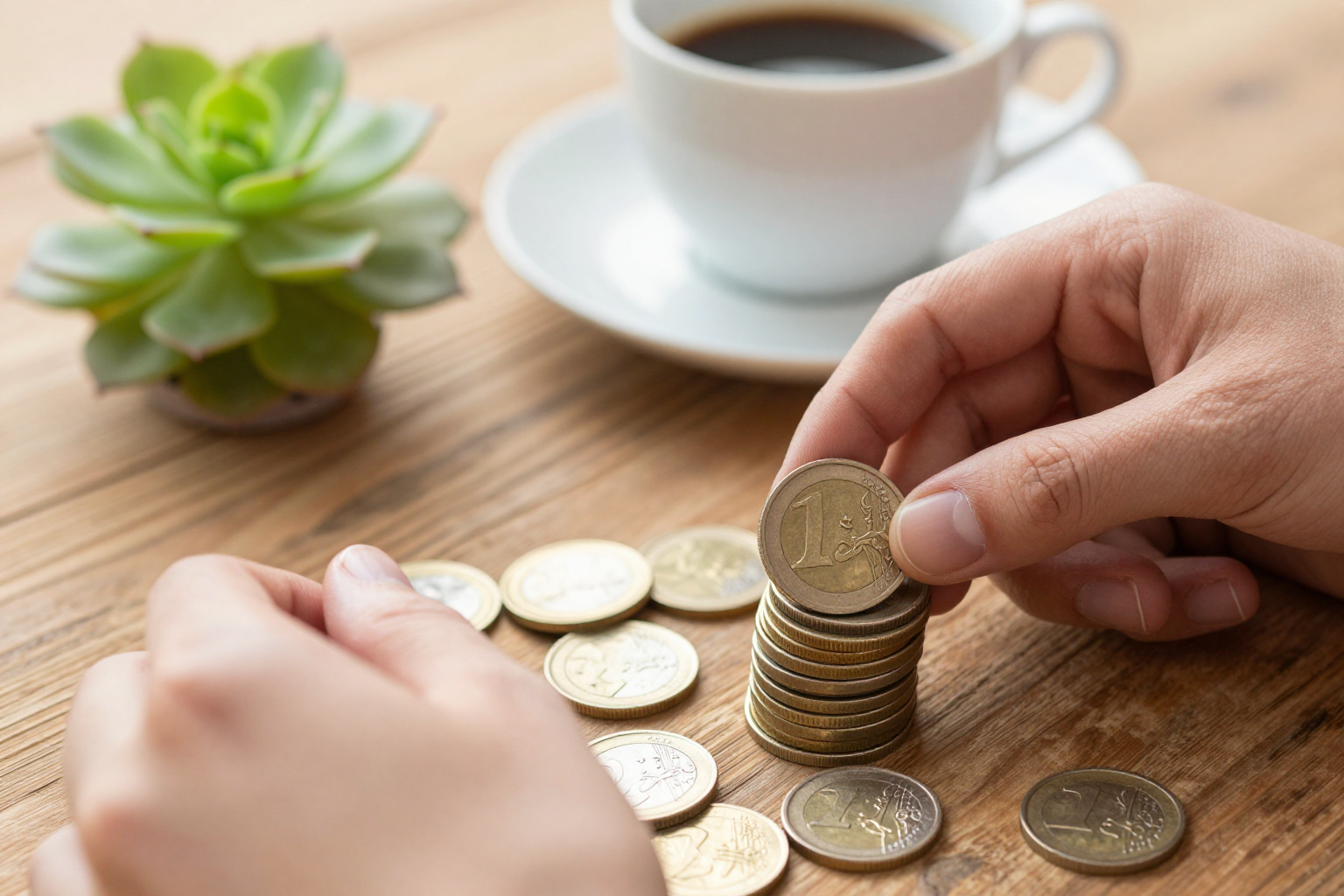
On an ordinary Tuesday morning, €100 might be worth $108.50. By Thursday, the same note could trade for $106.80. The euro exchange rate is never still, and those small shifts can change the cost of a hotel booking, a freelance invoice, or a monthly transfer to family abroad. Yet most people check the rate only when they are about to exchange money. That's a mistake, because the rate you see online is rarely the rate you actually get.
This article is not a prediction. No one can tell you tomorrow's euro exchange rate with confidence. Instead, it's a practical look at what moves the currency, where your money gets eaten, and how to spot a fair quote before you hit send.
Currencies don't move because of rumour alone. They move because thousands of banks, fund managers, and trading desks are constantly adjusting to new numbers. If you want to understand why EUR changes, you have to watch a few forces.
Banks and investors decide where to park their money based on what a currency can earn. When the European Central Bank raises its benchmark deposit rate, holding euros becomes more attractive. Capital flows into the eurozone and the euro tends to strengthen against the dollar. When the ECB cuts rates, money flows out and the euro softens. The last few years have shown how sensitive the euro is to every hint from the ECB's governing council. Traders react to the decision itself, the press conference, and even the absence of a comment.
Inflation erodes the real value of money. If eurozone inflation stays high, the ECB is forced to keep rates higher, which supports the euro. If inflation drops faster than expected, markets price in future rate cuts and the euro weakens. The real trigger is the gap between eurozone inflation and US inflation. When that gap narrows, EUR/USD tends to trade quietly. When it widens, the pair can trend for months.
During the early days of the war in Ukraine, the US dollar gained as investors fled to safe assets. The euro, the world's second reserve currency, lost ground even though Europe's economy had not collapsed. Similar patterns appear with tensions in the Middle East or uncertainty over trade deals. Traders move to dollar assets for safety, then drift back when the risk settles. This is why the euro can jump or fall without any direct news from Europe.
Keep in mind that the daily number is only a snapshot. For a slower, clearer look at how to read these moves, this explainer on exchange rate today shows why Friday's close is not a promise for Monday.
A quick Google search tells you that €1 is worth $1.08. That is the interbank mid-market rate, the number banks use among themselves. You will never get that exact rate. Banks, currency exchanges, and online transfer services mark it up to make a profit. Some add a percentage, some charge a fixed fee, and some bury the extra cost in a worse exchange rate. The difference between the mid-market rate and the rate you actually get is called the spread.
Most people notice this when they compare the screen at a bank with an online quote. The bank may offer 1.0515 while the mid-market is 1.0801. That is a 2.6% mark-up. On €2,000, you lose €52 before any service fee is applied. If you have never looked into why the rate you see isn't the rate you pay, this is the first step to saving money.
Exchange rates are not just for traders. They affect real decisions.
If you are planning a trip to Portugal, a 3% shift in EUR/USD changes your spending money. When the euro has strengthened in the weeks before your departure, your pounds or dollars buy fewer coffees and fewer nights in a hotel. When the euro drops, the same vacation feels cheaper. You cannot time the market perfectly, but you can avoid exchanging money at airport kiosks, where the spread is often wider than 8%.
An importer that buys €10,000 of Italian machinery each month is at the mercy of the rate. An invoiced price of €10,000 costs roughly $10,800 at 1.08 and $11,000 at 1.10. Over a year, a two-cent move can cost thousands. Some businesses build a buffer into their prices. Others use forward contracts with their bank. That tool is not just for big corporations. Even one-off contracts can be hedged if the amount is large enough.
If your pension or rental income arrives in euros but you spend dollars or pounds, the exchange rate is your real monthly salary. A 5% swing in the euro exchange rate changes your standard of living more than most tax adjustments. Many expats watch the mid-market rate and transfer only when it's favourable. That works when you have a cash buffer. Just don't assume a headline number tells the full story. The market can move against you while you wait.
Even when an exchange service advertises "no commission", you are still paying. The real costs hide in several places:
Add those up, and a simple €500 transfer can cost you more than 10%. That's why comparing the headline rate alone is meaningless.
Stop checking Google and then accepting whatever your bank offers. Spend five minutes comparing actual numbers. The easiest method is to find the live mid-market rate, then divide the rate your provider offers by that number. If the result is above 1.02, you are paying a spread of more than 2%.
Popular tools like the Oanda currency converter show live interbank rates, which is useful for a quick comparison. But they also have limits. A free converter cannot tell you what your specific bank will charge, and the rate shown can be quite different from the final cost of a transaction.
For everyday use, a good currency converter should show the mid-market rate and allow you to enter your transfer amount and fee. You want a tool that gives you a real rate instead of a rounded-up guess. Once you have that number, ask your bank for its all-in quote and do the math.
At its core, getting a fair deal comes down to understanding your spread. The advice in exchange rate 101 explains how a single percentage point in a mark-up can cost you hundreds of pounds over a year, especially if you send money regularly.
You don't need a finance degree to keep more of your money. Build these habits:
The euro exchange rate will never be perfectly predictable. But you don't need to predict it. You need to understand what you're being quoted and avoid paying a private tax on every transaction. That is a rate you can control.
Slot ID: blog-post-bottom