
Loading article...
Slot ID: blog-post-top
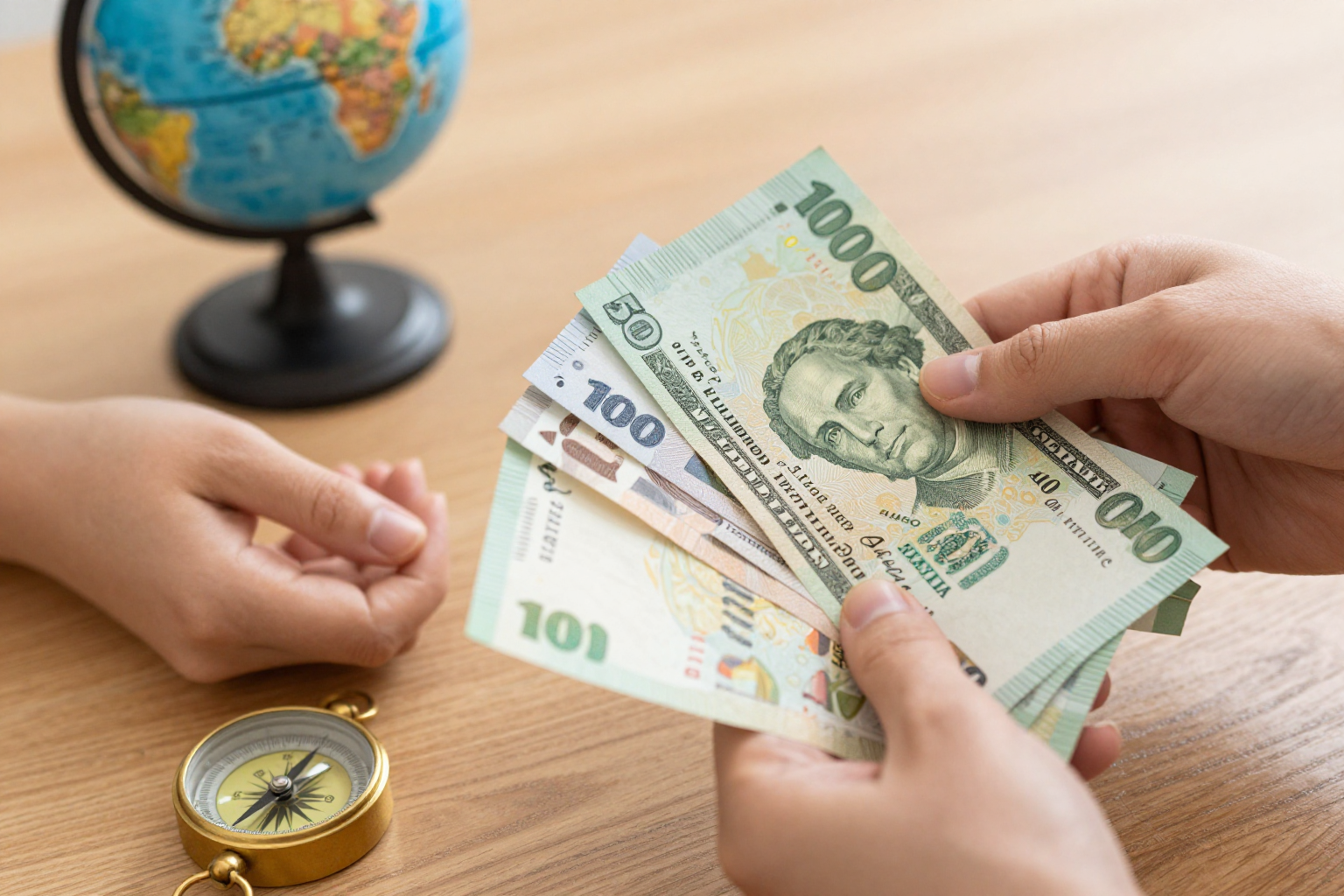
You check the exchange rate today, see 1.0850, and assume that's the magic number. Then you exchange $500 and end up with less than you budgeted. That gap between what you see and what you get is normal – unless you know how to work with the numbers. This guide gives you a repeatable, step-by-step process for using today's exchange rate in real transactions. With worked examples, you'll learn exactly where the rate comes from, how to calculate what you'll actually receive, and how to lock in a rate when the market moves in your favour.
Today's exchange rate for EUR/USD might be 1.0850, but that single figure is usually the mid-market rate – the midpoint between what banks pay and charge each other. It's not a quote you can trade on. To use it properly, you need to know where it comes from and how fresh it is.
Your best source for a current, mid-market reference is your bank's professional trading desk, a trusted financial site, or a dedicated converter like those we use in our step-by-step OANDA converter guide. Many apps show the rate from the previous second or minute, but for a rough decision that's fine.
If you're not 100% sure what the number means or which side of the market you're on, take a minute to brush up with our guide to reading an exchange rate – it uses real math and makes the second step easier.
Every currency quote has two prices: the bid (what the bank pays to buy from you) and the ask (what the bank charges to sell to you). The difference is the spread, and that's where the bank makes money.
Let's make it concrete. Suppose you have $500 and want euros. Your bank's live rate card shows: EUR/USD bid 1.0800, ask 1.0900. To buy euros with dollars, you trade at the ask: 1.0900. So $500 ÷ 1.0900 = €458.72. If you then decide to convert those euros back right away, you trade at the bid: €458.72 × 1.0800 = $495.42. You just lost $4.58 on the round trip – not because the rate moved, but because of the spread.
That's why the 'exchange rate today' on a news site isn't your exchange rate. Your rate is the bid or ask, depending on which way you're converting.
Most currency converters online show the mid-market rate. That's useful for comparison but dangerous for planning. The right way to use a currency converter is to treat the result as a starting figure, not a guarantee.
Here's how to do it in under a minute:
For example, if the mid-market EUR/USD rate is 1.0850, a fair retail quote would be between 1.1067 and 1.1284. Anything above that, and you're paying too much.
The real number you care about is the bottom line: how much arrives in the other currency. Let's work through a full example.
You need to send €1,000 to a supplier. You check the exchange rate today and see EUR/USD 1.0850. That suggests the trip should cost $1,085. But your bank quotes you 1.1000 for the transfer. Their rate means €1,000 costs $1,100. Add a $20 transfer fee, and your total cost is $1,120.
Compare that to a currency broker quoting 1.0900 with no fee: €1,000 costs $1,090. The broker saves you $30. Over a year of regular transfers, that's significant. To see the different pricing models side by side, our step-by-step guide to getting a better exchange rate compares quotes across banks and specialist services.
Here's a quick checklist for comparing any two options:
Exchange rates move every second. The rate you see at 9:00 might be gone by 9:05. If you're planning a large transaction, you can protect yourself by locking in today's rate using a forward contract. You and your provider agree to exchange a set amount at today's rate on a future date. That eliminates the risk of a sudden surge.
Many online currency platforms also offer limit orders. You specify a rate you're comfortable with, and the trade executes automatically when the market hits it. For example, if today's rate is 1.0850 and you'd be thrilled with 1.0750 for your upcoming euro purchase, you set a limit order at 1.0750 and wait. The order fills if the market dips to that level.
The same principle applies when you see a rate you like. If you're planning a purchase, don't wait until the last minute. Use rate alerts and act when the number matches your budget. And if you're using a bank or service that hides the true cost, the explanation of why the rate you see isn't the rate you get will help you spot the difference.
Once you've done the analysis, the last step is simple: check it again. The exchange rate today is a moving target. It can shift between the time you budget and the time you hit 'confirm'. A rate move of 1% on a $10,000 transfer is $100 – easily enough to warrant a second look.
Set an alert on your phone's currency app for the exact pair you're trading. When the alert triggers, repeat the calculation from step 4 with the current numbers. If the new rate is significantly better than your earlier check, you may want to move quickly. If it's worse, see if your provider allows you to lock in a rate for a short period.
The habit of re-checking keeps you grounded in the real market and prevents you from accepting a stale quote, especially during volatile trading sessions when the exchange rate today can change by more than 1% in a single hour.
Slot ID: blog-post-bottom