
Loading article...
Slot ID: blog-post-top
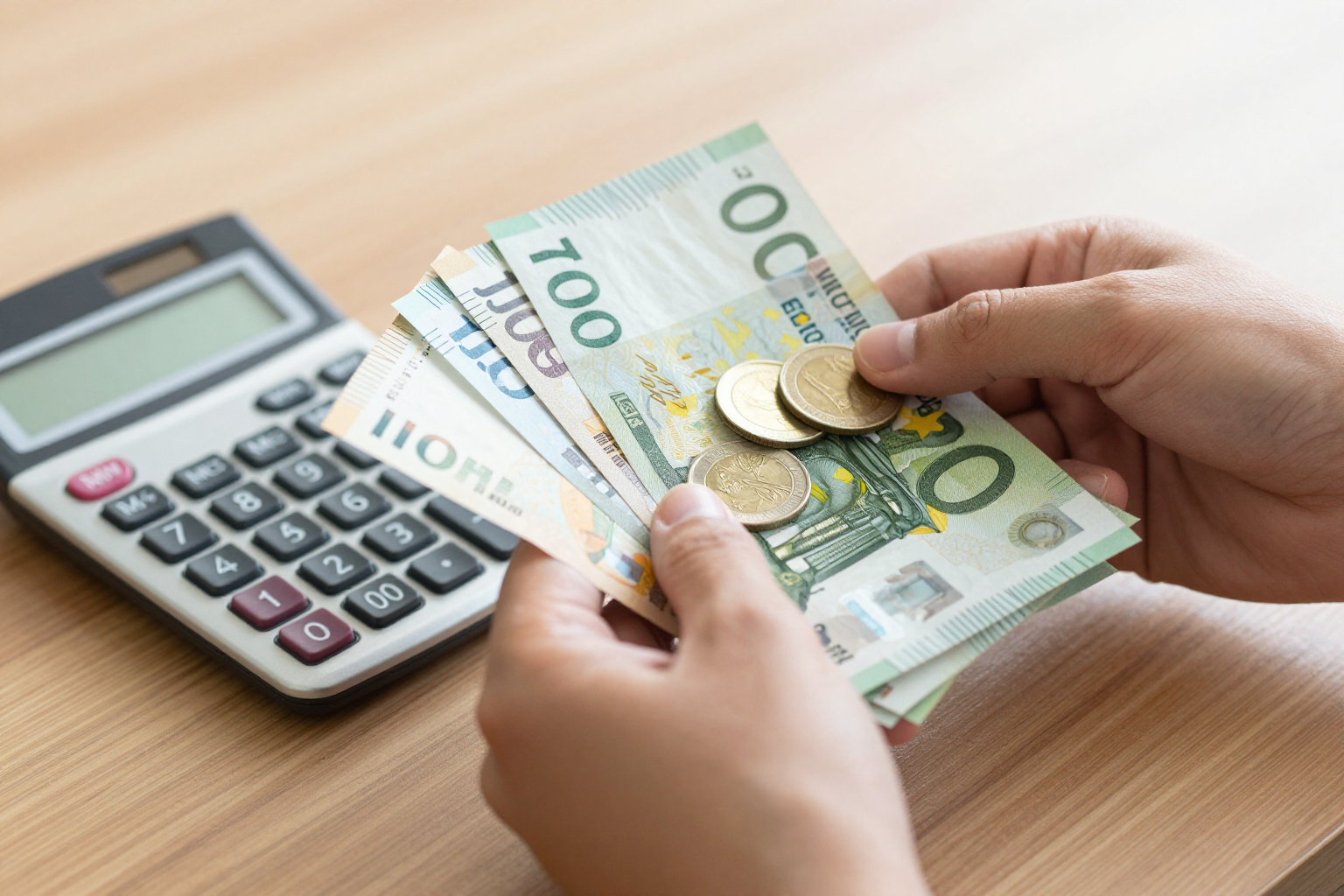
You're about to send $1,000 to a bank account in Italy. A quick search shows a USD/EUR exchange rate of 0.9217. Your bank's online transfer page offers 0.8900. That's a 3.4% gap, and it's money you'll never see again.
That gap happens because currency exchange rates shown in headlines are clean mid-market prices, while the rates we actually get are padded with fees and markups. This guide walks you through the exact steps to compare currency exchange rates before you commit. The examples use real numbers you can follow on your own calculator.
The mid-market rate is the average of the bid and ask prices from global foreign exchange trading. It's the pure exchange rate with no fees or margins. Financial sites and currency converters show it, but your bank won't. It's the number you start from.
Suppose today's mid-market rate for USD/EUR is 0.9217. That means $1 buys €0.9217. So $1,000 at that rate gives you €921.70. Write that number down. It's your fair target for any conversion you're about to make.
Exchange rates move by the minute. Economic data, central bank decisions, and market sentiment all push the numbers around dozens of times per hour. The mid-market rate you see at 9 a.m. won't match the one at 3 p.m. So your first move is to pull the current rate from a live source, not your bank's promotional email.
Use a dedicated financial platform or a reliable currency data feed. For a closer look at how the daily number moves and what it means for your money, read our guide to exchange rate today. The key is to check the rate at the moment you're about to transact.
Now ask your bank, transfer service, or exchange office exactly what exchange rate they'll give you. They might say "0.8900" for a USD to EUR transfer. That figure includes their markup. Often, the rate is buried in the fine print or only appears near the end of the transaction process.
To read a quote like that correctly, you need to know which currency is the base and which is the quote. The math is straightforward once you understand it, and our step-by-step guide on how to read an exchange rate breaks it down with real examples. The short version: at 0.8900, you receive €0.89 per dollar, not the €0.9217 the market would give.
Here's how to measure the gap between the fair market rate and the offered rate.
Mid-market: $1,000 × 0.9217 = €921.70
Offered: $1,000 × 0.8900 = €890.00
Loss: €31.70. To turn that into a percentage, divide the loss by the mid-market result: €31.70 ÷ €921.70 = 0.0344, or 3.4%.
That's the kind of hidden cost that eats into international payments. It's exactly why the rate you see on a money converter is rarely the rate you get. The mechanics of that gap, and how to fix it, are explained in depth in our article on why the rate you see isn't the rate you get.
The provider with the best headline rate isn't always the cheapest. You also have to factor in fixed fees. The best way to compare is to calculate the final amount received for the same initial amount.
Let's test it with $1,000 being converted to euros:
Provider A: rate 0.8900, fee $5. You get ($1,000 - $5) × 0.8900 = €885.55.
Provider B: rate 0.9200, fee $10. You get ($1,000 - $10) × 0.9200 = €910.80.
Provider C: rate 0.9000, fee $0. You get $1,000 × 0.9000 = €900.00.
Provider B wins even though its rate isn't the best on paper, because the higher rate more than offsets the fee. Running these numbers yourself is easy if you do it carefully. If you're new to manual conversions, our guide on the right way to use a currency converter shows you how to avoid the common input mistakes that ruin the math.
One more trap: many providers freeze exchange rates over the weekend. A quote you get on Friday can be stale by Monday, and the rate you're then offered might be worse. If you're comparing on a weekend, ask for the live weekday rate instead.
Let's put all the steps together with a fresh scenario. You're converting $2,000 to euros on a quiet Tuesday. The mid-market rate is 0.9217.
Your bank offers 0.9000 with a $10 wire fee. An online transfer service offers 0.9180 with a $5 fee.
Bank: ($2,000 - $10) × 0.9000 = €1,791.00
Online service: ($2,000 - $5) × 0.9180 = €1,831.41
That's a difference of €40.41 in the online service's favour, just from a slightly better rate and a lower fee. And it's only €11.99 less than the mid-market benchmark of €1,843.40. Knowing how to compare currency exchange rates step by step turns a quiet loss into a measurable saving.
Slot ID: blog-post-bottom