
Loading article...
Slot ID: blog-post-top
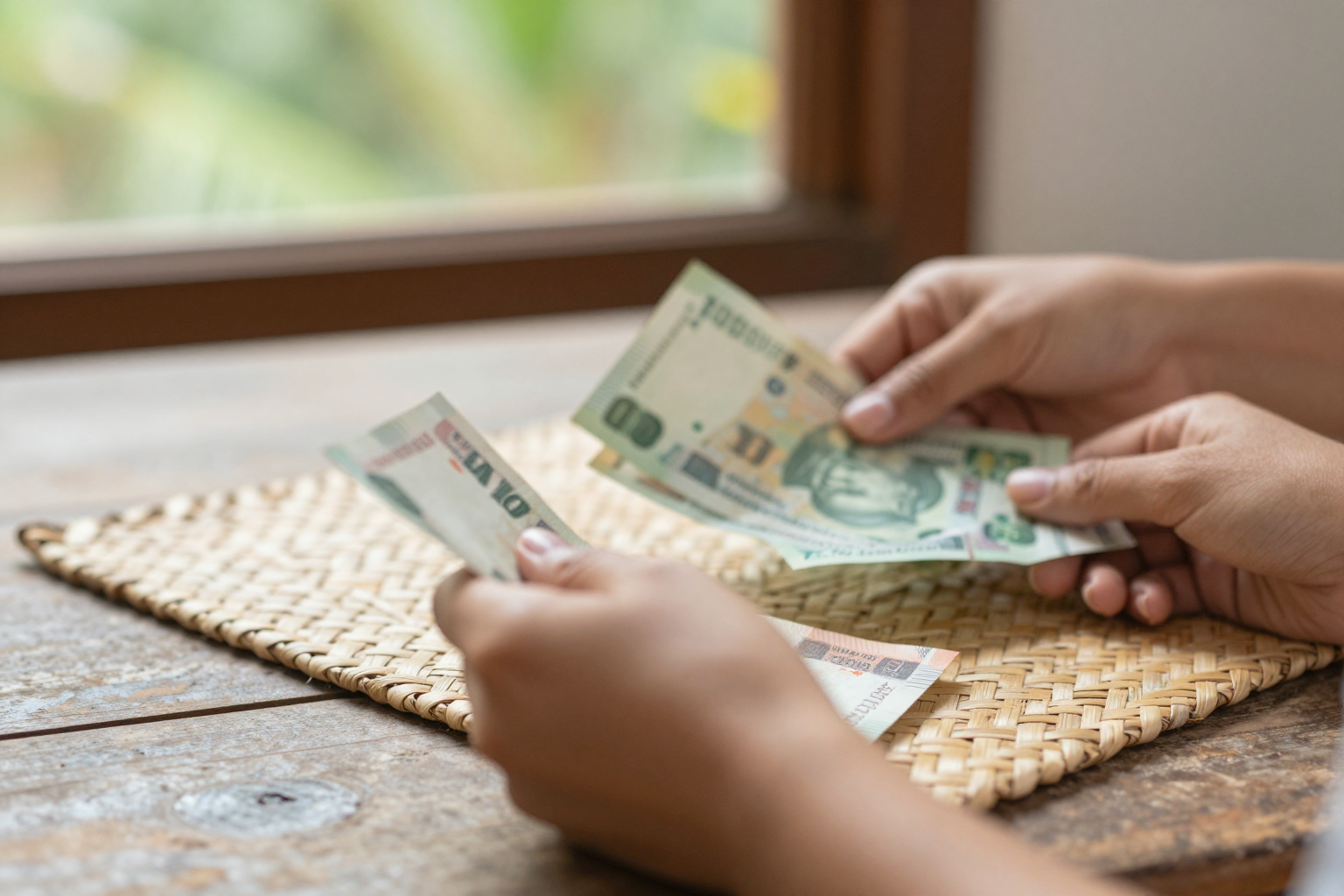
Punch "currency converter usd to php today" into a search bar and you get a single number. Maybe it reads 58.20. That figure is real, but it's also the least useful part of the answer. What actually matters is the rate you personally receive when dollars leave your account and pesos arrive in someone else's — and that number is usually a little worse, sometimes a lot worse.
So let's pull the quote apart and see what's inside it.
Every USD to PHP quote you see online — Google, XE, your bank's app — starts with the mid-market rate. It's the midpoint between the highest price buyers will pay for dollars and the lowest price sellers will accept, calculated from interbank trading. Banks move millions at that level. You and I don't.
Treat the mid-market rate as a benchmark, not an offer. It's like a house's listed valuation: handy for comparison, useless if nobody will actually transact with you at that figure.
Stack those three together and a "free" transfer can quietly cost 5% of the amount. On $1,000 that's roughly $50 — about a week of groceries in Metro Manila. The mechanics of closing that gap are covered in this walkthrough on how to convert USD to PHP without quietly losing money on the rate.
Numbers make this land. Take a mid-market rate of 58.20 pesos per dollar and convert $500 in three different places on the same afternoon.
Same dollars, same day, ₱1,200 apart. Nobody hands you an itemised bill for that difference. If you want a grounded sense of what those pesos actually buy once they land, this breakdown of what $100 really buys in the Philippines is a useful reality check.
The peso doesn't float in a vacuum. A few forces move USD/PHP constantly:
Remittance flows. Somewhere between $3 and $4 billion lands in the Philippines each month from overseas Filipino workers. Inflows spike in the run-up to Christmas, and the peso often firms up when dollar supply swells.
Bangko Sentral ng Pilipinas. The BSP watches inflation closely and occasionally steps into currency markets. A rate decision or a hawkish speech from the governor can nudge the peso a few centavos within minutes.
US Fed policy and Treasury yields. Higher US rates pull capital toward dollar assets, which usually strengthens the dollar against the peso. Two Fed meetings can do more to the rate than a month of ordinary trading.
Oil and import bills. The Philippines imports most of its fuel. Expensive crude means more dollars leaving the country and a softer peso.
Day to day, all of this usually produces movement of 0.2–0.5%. That's significant on ₱500,000 and background noise on ₱5,000. Which brings us to a point people get backwards.
Traders obsess over timing. Anyone sending a few hundred dollars almost never benefits from it. The gap in spread between two providers is usually ten times bigger than any move you could catch by waiting a week.
Wise, Revolut and similar apps quote near mid-market with a visible fee, often 0.4–1.2% all-in. Traditional banks land closer to 2–3% once spread and fees combine, though their posted rates on large transfers can be negotiable if you ask a human rather than clicking through the app.
Palawan Express, Cebuana Lhuillier and Western Union are fast and everywhere, but rates vary by branch and by day. Check two or three before committing. The difference between 56.90 and 57.40 on a $1,000 send is ₱500, which buys a decent dinner for four.
Foreign card withdrawals typically carry a ₱250 local fee plus whatever your home bank charges, layered on a weak conversion rate if you accept the machine's "convert to USD" prompt. Always decline that prompt and let your home bank do the conversion. The machine's rate is rarely kind.
Convenient and expensive. Use them for ₱2,000 of walking-around cash, not for a month's rent. If a kiosk is your only option on arrival, change the minimum and do the real conversion later.
For quick mental math on smaller sends, this 1 USD to PHP calculator breakdown shows how a single dollar stacks up after the various cuts are taken.
Peso earners face identical arithmetic in reverse, with one twist: the spread on PHP to USD is often wider because fewer providers compete for the business. A rate quoted at 57.90 when mid-market sits at 58.20 looks trivial until you're moving ₱200,000, where that 0.5% gap is ₱1,000 gone.
If that's your direction, this guide to converting PHP to USD, the rate, the fees, and what you actually walk away with lays out the full cost chain. A worked example of what 10,000 pesos really gets you in dollars is a good calibration exercise before you send anything sizeable.
Say you send $1,500 home each month and the mid-market rate is 58.20. That's ₱87,300 in theory. If your provider charges 1.5% all-in, you actually deliver about ₱85,990 — ₱1,310 less, or roughly $22.50. Over a year that's $270, which is not nothing.
The practical fix is boring but effective: run the numbers on two providers each quarter, keep a note of the all-in percentage you're paying, and switch if it creeps above 1.5%. Rates will keep moving every day regardless. Your cost of converting doesn't have to move with them.
Slot ID: blog-post-bottom