
Loading article...
Slot ID: blog-post-top
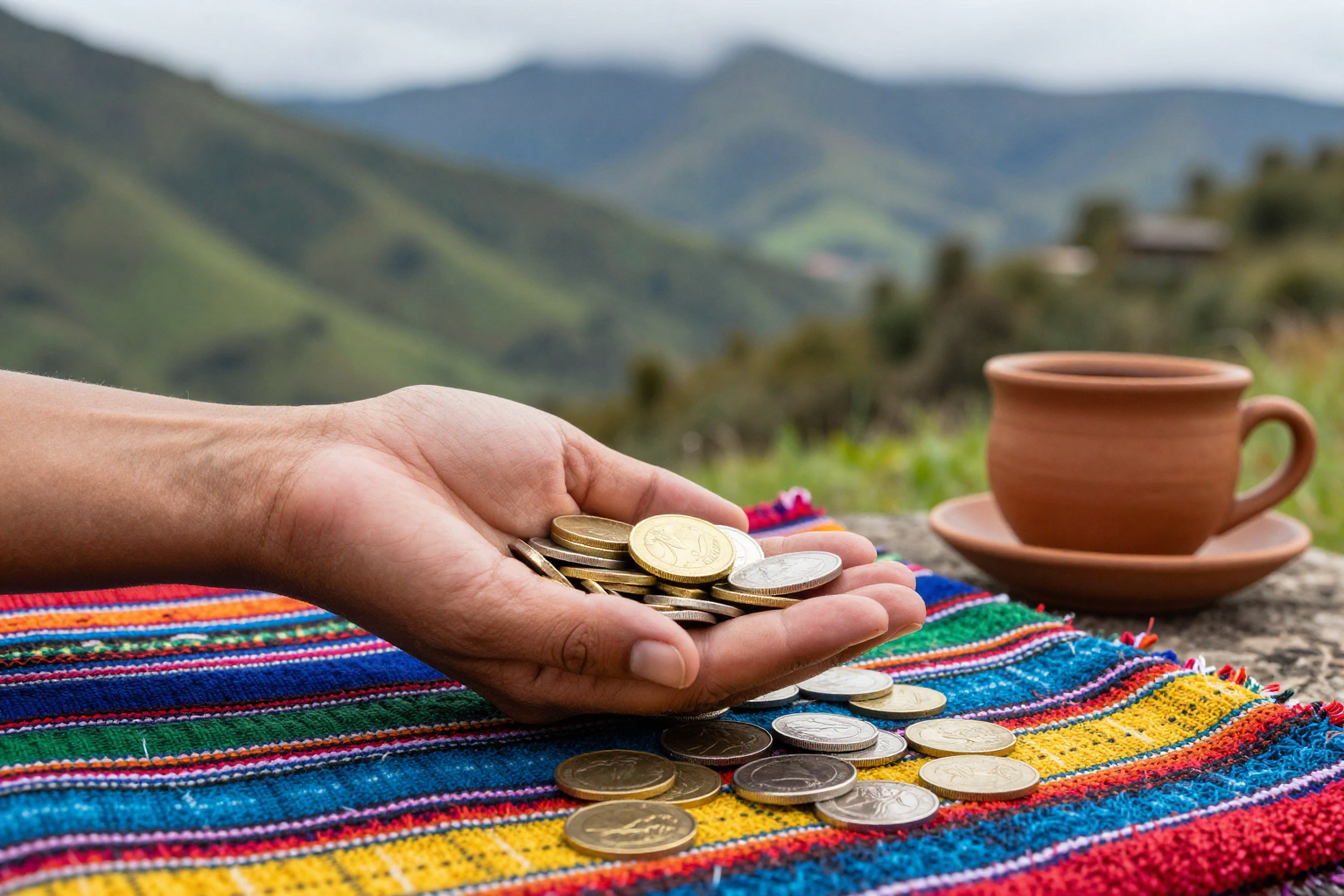
You land in Bogotá, grab a coffee, and the price in pesos makes your head spin. A 5,000-peso cup of coffee sounds outrageous until you realize it's about $1.30. But when you hit the exchange counter at the airport, you quickly learn that the colombian peso to dollar rate you saw online isn't what you're getting.
The truth is, there are many rates for the Colombian peso. The one on your screen is called the mid-market rate. The one in your pocket after exchanging cash is something else entirely. This guide explains how to get the closest to the real rate, whether you're traveling, sending money, or just planning a budget.
The Colombian peso (COP) is one of the most stable Latin American currencies over the long term, but it's also prone to sharp swings. As of early 2025, the exchange rate hovers around 3,800 to 4,000 pesos per US dollar. But that number can shift by a few hundred pesos in a single week, depending on oil prices, elections, or global risk sentiment.
Colombia exports oil, coffee, and coal. When oil prices rise, the peso strengthens. When the US dollar strengthens, the peso usually weakens. This makes planning a budget tricky if you rely on a rate you saw weeks ago.
If you type "colombian peso to dollar" into Google, you'll see a mid-market rate. This is the rate banks use when they trade with each other. No one sells currency at that rate without a markup. The difference between the mid-market rate and the rate you get is called the spread.
For example, if the mid-market rate is 3,900 COP per USD, a bank might sell you US dollars for 3,700 COP (if you're converting from pesos to dollars) or buy your dollars at 4,100 COP (if you're converting dollars to pesos). That spread is how they make money.
The same principle applies to other currencies, as the Google rate vs. real rate trap is common for travellers in India and beyond.
You have four main options: airports, local exchange houses, ATMs, and credit cards. Each has its own pros and cons.
The worst place to exchange money in Colombia is the airport. You can expect to lose 10% to 15% on the mid-market rate. If you arrive with cash, it's better to exchange just enough to get to your hotel and then find a local exchange house.
In most cities, you'll find exchange houses near shopping centres or financial districts. They post their rates on screens outside. Compare two or three before committing. Some offer better rates for larger amounts. You can usually get within 2% of the mid-market rate.
ATMs in Colombia often give the best exchange rate because they use the Mastercard or Visa rate, which is close to mid-market. However, the fee structure can hurt. Banco de Bogotá, Davivienda, and Bancolombia charge fees anywhere from 15,000 to 35,000 COP (roughly $4 to $9) per withdrawal, and some charge an additional fee for foreign cards. The key is to withdraw larger amounts less frequently to minimize the fixed fee.
Using a credit card with no foreign transaction fee is the best way to pay for hotels, restaurants, and tours. The card issuer converts the charge at the daily commercial rate, which is very close to the mid-market rate. Just make sure you pay in Colombian pesos, not in dollars, when the terminal asks. That avoids dynamic currency conversion, which adds a hidden markup.
Let's put some numbers on it. Suppose the mid-market rate is 3,900 COP/USD, and you want to convert $500 into pesos.
Airport: You might get only 3,500 COP per dollar. You'd get 1,750,000 COP.
Exchange house: At 3,800, you'd get 1,900,000 COP.
ATM (with a $7 fee): You'd get 3,895 per dollar, so 1,947,500 COP, minus the fee in pesos (approximately 27,300 COP), netting you 1,920,200 COP.
The difference between the airport and the ATM is nearly $50. That's a decent meal in Cartagena.
For a similar breakdown on another major currency, check out our guide on getting the best USD to MXN exchange rate. The principles are the same, but the specifics matter.
If you're supporting family or paying for services, your options have improved in recent years. Traditional banks charge 5% to 8% plus a fixed fee. Online transfer services like Wise, Remitly, or Western Union online often offer better rates. At the time of writing, Wise charges around a 0.6% fee and uses the mid-market rate. Remitly occasionally offers promo rates that are even better than the mid-market rate for new users.
When comparing services, don't just look at the headline fee. The exchange rate matters more because it applies to the whole amount. A service with a $5 fee and a 1% spread is worse than one with a $10 fee and a 0.2% spread if you're sending $1,000.
If you're exchanging currency regularly, even a small change in the rate can matter. For example, an exporter in Colombia expects to receive $10,000. If the rate moves from 3,900 to 3,800, they receive 1,000,000 fewer pesos. That's why some people use forward contracts or limit orders through currency brokers.
But for typical travellers, the main thing is to avoid the airport. A little planning goes a long way. The same advice applies to anyone converting British pounds to dollars: the airline lounges and hotel desks rarely give you the best deal. Our Pound to USD exchange rate guide explains the same concept, just with a different currency pair.
The peso is sensitive to the price of crude oil, Colombia's main export. It's also tied to the US Federal Reserve's interest rate decisions. When the Fed raises rates, emerging-market currencies like the peso tend to weaken because investors prefer high-yielding US assets.
Politics also plays a role. The 2022 presidential election caused a dip in the peso, but it recovered. General market mood and local protests can create short-term volatility. It's a good idea to track the rate for a few weeks before your trip so you get a feel for the trend.
The colombian peso to dollar rate you see online is not the rate you'll get. It's a starting point. To keep more of your money, avoid the airport, use an ATM with a bank card that doesn't charge foreign transaction fees, or consider a credit card for most purchases. The percentage you save may seem small, but over a two-week trip, it adds up to the cost of a nice meal or a day tour.
Remember that rates change constantly. Always double-check the current rate before an exchange. And if you're exchanging a significant amount, it's worth shopping around. The same strategies that help you beat the spread on other currencies will work with the Colombian peso.
Slot ID: blog-post-bottom