
Loading article...
Slot ID: blog-post-top
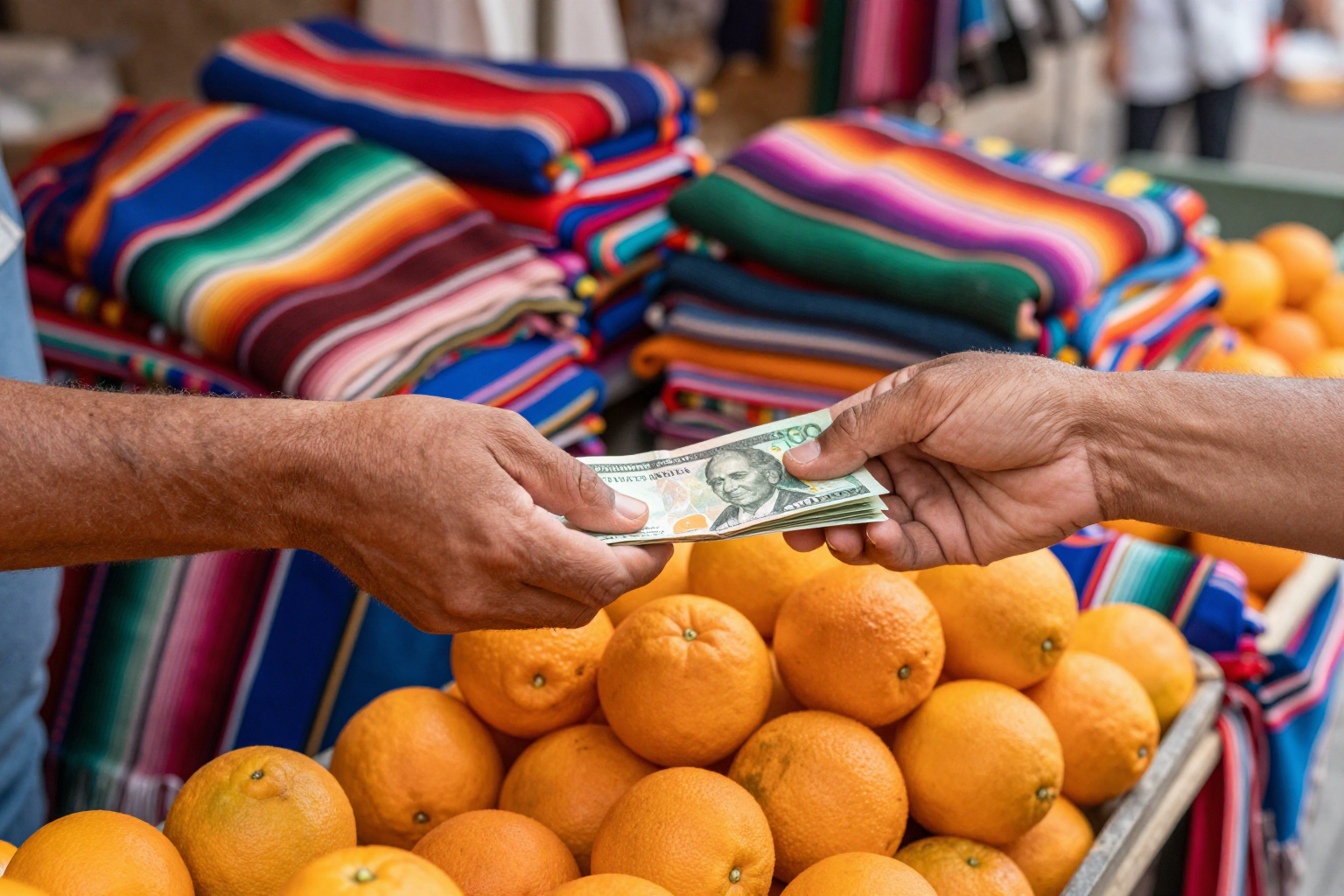
So you’ve booked the flights. Now comes the part nobody likes: figuring out how much your dollars are worth in Mexico. The USD to MXN exchange rate hovers around 17 or 18 pesos per dollar depending on the week, but that headline number rarely reflects what you’ll actually get. Banks and exchange booths add a markup, and that markup can quietly turn a $1,000 trip into a $50 loss before you even check in. This guide breaks down how the rate works, why it moves, and how to keep more pesos in your pocket.
The pair is quoted as USD/MXN. When you see 17.50, it means one US dollar buys 17.50 Mexican pesos. The ‘base’ is the dollar, the ‘quote’ is the peso. Understanding that simple distinction already separates you from a lot of travellers, because it makes it easier to compare rates across providers.
The rate constantly moves because two currencies are tied to the economies on both sides of the border. The US Federal Reserve's decisions on interest rates are a big driver. Higher US rates tend to strengthen the dollar. In Mexico, Banxico (the central bank) sets rates too, and their higher rates have historically attracted foreign capital, supporting the peso.
Mexico is a major oil exporter, so crude prices affect the peso. When oil prices climb, the peso often gains. US election cycles also create volatility, especially when immigration and trade agreements get dragged into the conversation. And of late, 'nearshoring' has brought more manufacturing money into Mexico, which gives the peso a long-term tailwind.
Not all exchange options are equal. Here’s what you’ll typically find.
If you're planning to exchange a significant sum, say over $1,000, call ahead or use an online compare service. The difference between 17.40 and 17.85 on $1,000 is about $26 – enough for a nice dinner in Roma Norte.
A big sign that says '0% commission' looks generous, but it's usually misleading. Providers make money on the spread – the difference between the wholesale rate and the rate they give you. The mid-market rate is the global average exchange rate that banks trade at. You'll never get exactly that rate, but you should get within 2–4 percent of it.
For comparison, if the mid-market rate is 17.80, a fair 'buy' rate at a casa de cambio might be 17.50. An airport booth might offer 16.90. That's a 5 percent hit, and many tourists never realise it until they do the math on their receipts.
The same trick shows up in other currencies. Whether you're converting dollars to pounds for a UK trip or trading your hard-earned cash for South Korean won, the spread is where the company earns its keep. We've covered the USD to pound conversion in detail, and a practical guide to the dollar-won exchange rate also highlights the same spread tactics.
When you swipe your credit or debit card in Mexico, the terminal will often ask whether you want to pay in dollars or pesos. Always pick pesos. This is known as dynamic currency conversion, and it sounds helpful but it's a trap. The DCC rate is set by the card processor, not you, and it can add 3 to 6 percent on top of the purchase.
The same applies at ATMs. The ATM will offer to convert the withdrawal to USD for you. Decline that, and let your bank do the conversion. Your bank's exchange rate plus its foreign transaction fee is still better than the ATM's inflated rate.
If you're coming from Canada, this advice is even more important: the peso/dollar conversion gets wrapped in a second layer of fees if you let the ATM choose the currency. For a breakdown of how banks hide these charges, our guide to CDN to USD hidden fees walks through the same problem in a Canadian context.
Let's put some numbers on this. On a day when the mid-market rate is 17.80, a $100 bill converted at the airport booth offering 17.10 gives you 1,710 pesos. That same $100 converted at a decent exchange house at 17.60 gives you 1,760 pesos. The difference of 50 pesos could be a full street-taco lunch.
Now scale that to a typical two-week vacation budget of $2,000. A 0.50 peso difference works out to 1,000 pesos lost – about 56 dollars. That's a day tour of Chichén Itzá with lunch. Or a little more than enough to buy a silver bracelet in Taxco.
It's tempting to watch the rate for a few weeks and wait for it to improve. While you might catch a good patch, the peso has traded in a range of roughly 16.80 to 18.20 over the past year. The daily swings are rarely bigger than 1–2 percent. For most travellers, the money you save by shopping around for a good spread outweighs the potential gain from waiting for the perfect rate.
If you're moving a large amount for a real estate purchase or a business deal, you might consider a forward contract through a currency broker. That lets you lock in today's rate for a future transfer. For everyday travel needs, it's overkill.
Make it a habit.
If the rate is tight, exchange what you need for the next three days, then repeat. You don't need to convert your whole budget at once. Doing it in smaller chunks also lets you take advantage of a better mid-market rate if it appears later in the week.
And if you're ever moving money in the opposite direction – from pesos back to dollars – the same rules apply in reverse. Our guide to converting pesos to USD covers the most cost-efficient routes, including wire transfers and digital wallets, for when you're heading home with a few thousand pesos left over.
Slot ID: blog-post-bottom