
Loading article...
Slot ID: blog-post-top
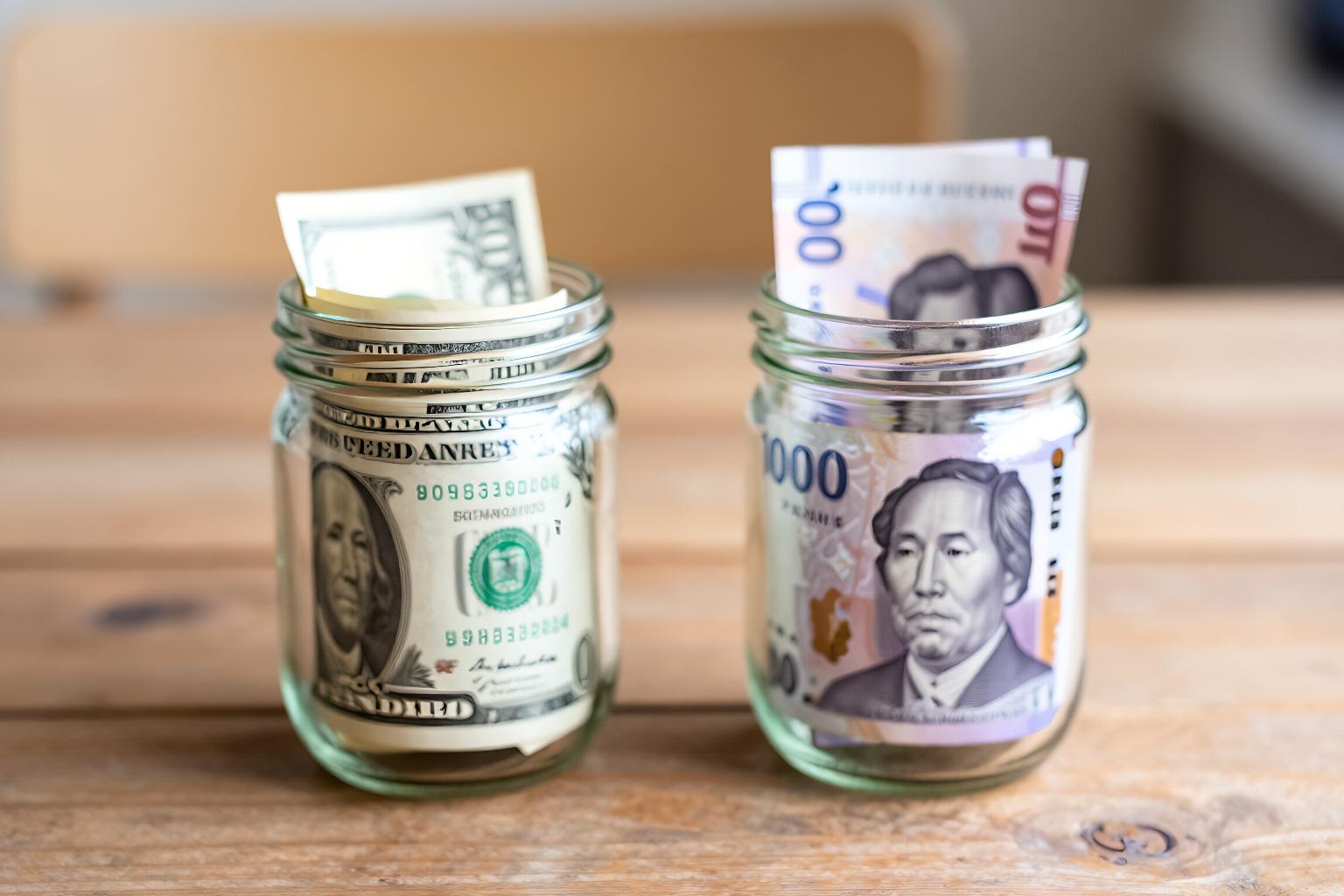
The Korean won might not be the first currency that comes to mind when you think about international exchange, but it should be. South Korea is one of Asia's biggest travel destinations, and its financial markets are sophisticated enough to move the dollar-to-won rate in ways that actually affect your budget. Whether you're heading to Seoul for a coffee crawl, booking a business trip to Busan, or just tracking the US dollar against a rising Asian economy, knowing how to convert dollars to won can save you a good amount of money.
Until 1997, the won was pegged to the dollar. These days it floats freely, so the exchange rate swings every single day. Recently, the dollar has been strong, with one US dollar hovering around 1,300 to 1,400 won. That sounds like a lot of won for a single dollar, but the value is relative. A cup of coffee in Seoul costs about 5,000 won, which is just over three and a half dollars.
Several factors push the rate up and down:
Here is the part most exchange shops don't advertise. The exchange rate you see on Google is never the rate you get. The mid-market rate is the theoretical midpoint between what buyers and sellers trade at on the global currency market. Banks and money changers add a margin on top, usually between 1% and 3%, and that margin is exactly where they make their profit.
A 1% spread sounds small until you do the math. On $500 you lose $5. On $5,000 that becomes $50. Walk into a tourist-focused kiosk in Myeongdong and the spread can easily hit 5%, which means you're handing over $25 on a $500 exchange.
Some services display a rate that already includes their profit, while others offer a halfway decent rate and then add a flat commission fee on top. You need to compare both numbers. The final amount in won is what matters, not the headline rate they show in neon letters.
Stopping at the Incheon Airport exchange window is convenient, but you'll pay for it. During peak travel months the spreads there can widen because they know you're leaving in 20 minutes. Exchange just enough for a taxi and some meals, then find a proper exchange shop once you're settled in the city.
If you're planning a return trip and end up with excess won, the same rules apply in reverse. Our guide to exchanging won back to dollars without getting ripped off covers the exact steps to keep your money safe.
Let's say you are taking $1,000 to Seoul. The mid-market rate is 1,390 won per dollar, which would make 1,390,000 won. Your bank gives you a rate of 1,369, meaning a 1.5% spread. You walk away with 1,369,000 won. That's 21,000 won less than your theoretical maximum. In a lively Korean barbecue restaurant, 21,000 won pays for two portions of samgyeopsal and a couple of sides.
Numbers like that show why comparing services makes sense. A small difference in the spread, multiplied across the total amount, adds up to a real meal, a museum ticket, or a decent pair of socks at a market stall.
One of the sneakiest costs comes at the payment terminal. When you use your credit card in Korea, the machine often asks whether you want to be charged in dollars or won. Always choose won. Picking dollars triggers dynamic currency conversion, and the rate applied by the card processor is typically 3% to 4% worse than the market rate. That extra fee appears on your bank statement as a small surprise a few days later.
If the cashier or hotel front desk pushes you toward paying in your home currency, politely decline. It's in their interest, not yours.
If you need to transfer money into a Korean bank account, the same logic applies. Legacy banks on both ends will charge a transfer fee at the sending side and often a receiving fee in Korea. Online services such as Wise or Remitly are usually cheaper because they use the real exchange rate and a fixed low fee.
For businesses that make regular payments to Korean suppliers, a forward contract allows you to lock in the dollar-to-won rate for a set date. That removes the guesswork from your budget. For occasional personal transfers, the flexibility of an online service beats a bank branch.
The strategies above are not limited to South Korea. The same pitfalls with airport kiosks and dynamic currency conversion show up in Australia, Canada, and Latin America. Before your next trip, check our guide to converting dollars to Australian dollars if you are heading down under, or take a look at the smart way to convert pesos to USD if you are travelling north from Mexico. European travellers will also find useful warnings in our US dollar to British pound guide, since the fee traps there look almost identical to the ones in Korea.
The dollar-to-won rate is not static. A strong US jobs report can push it up by ten won in an afternoon. An unexpected Bank of Korea action can send it down just as quickly. Set an alert in your currency app and wait for a favorable window before you exchange a large amount.
The foreign exchange market runs 24 hours on weekdays but closes on weekends. The rate you see on Saturday is really Friday's close. Won values rarely move much over the weekend, so waiting until Monday usually doesn't hurt. On a $1,000 exchange, a swing of 20 won per dollar means a 20,000 won difference, which is enough for a nice Korean BBQ dinner in Hongdae. That's worth a little patience.
Slot ID: blog-post-bottom