
Loading article...
Slot ID: blog-post-top
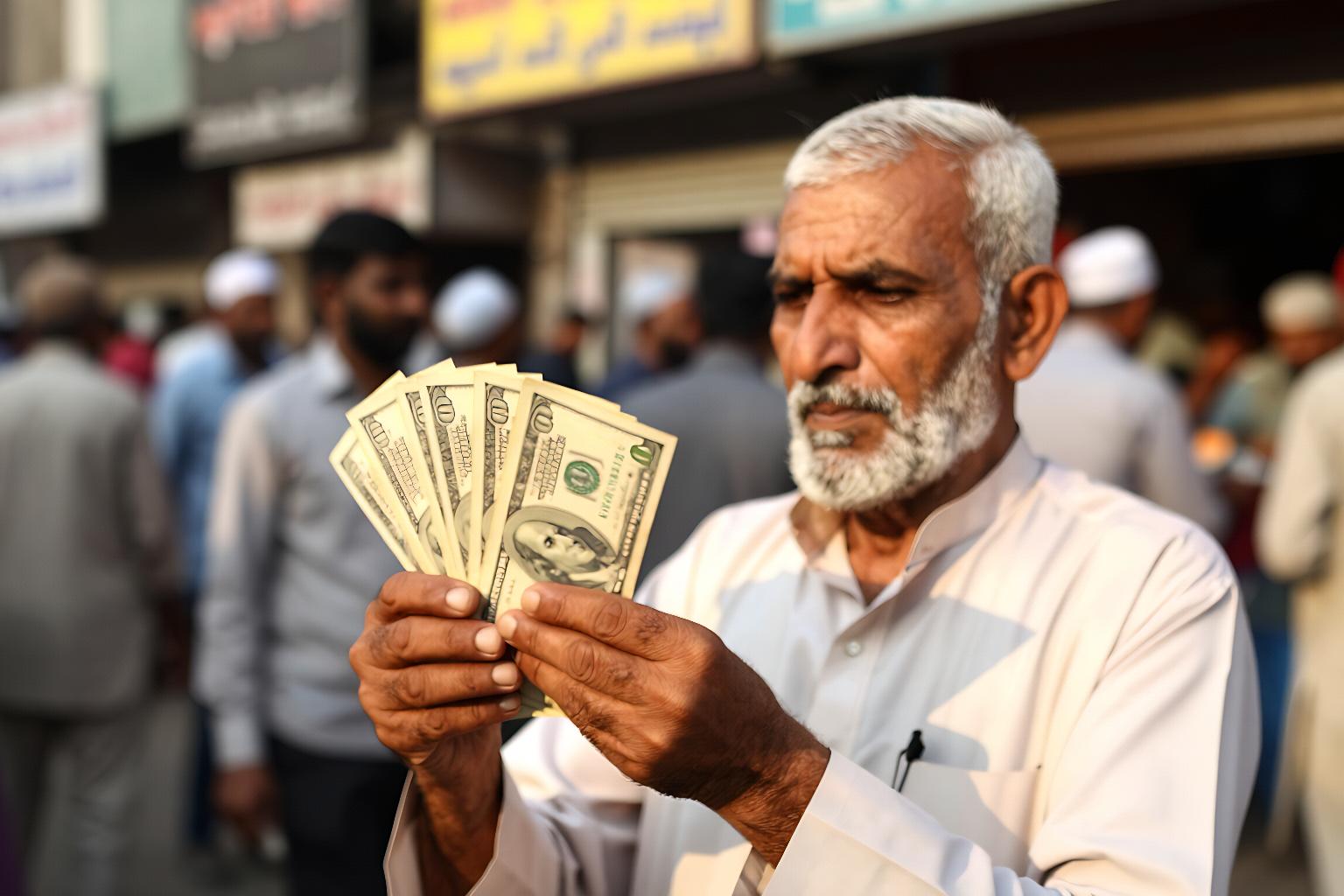
Walk into a currency counter in Rawalpindi on a Tuesday morning and ask for the dollar rate. You get a number. Ask the same question at a bank branch two streets over, then check a finance app, and you'll have three different figures before lunch. None of them is exactly wrong. That gap is the most useful thing to understand about the US dollar to Pakistani rupees exchange rate. It explains why your cousin's remittance arrived short, why imported medicine got more expensive last month, and why the number you Google is almost never the number you get.
At its core, the rate is a price: how many rupees one US dollar buys. At the time of writing it sits somewhere in the high 270s to low 280s depending on where you look. Simple enough. The complication is that Pakistan runs several parallel currency markets that move independently of each other.
A rate board outside an exchange company shows two prices: what the dealer will pay you for dollars, and what they'll sell them to you for. The difference, the spread, is their margin. And it's where most people quietly lose money.
Suppose the board reads 279.50 buying and 281.00 selling. Convert $1,000 and immediately convert it back and you've spent roughly Rs 1,500 without doing anything useful. Banks layer on service charges, flat fees on small amounts, and processing delays. That's why the figure on display and the figure that lands in your account rarely match — the board rate in Pakistan is only half the story, and the other half lives in the fine print.
Say you need rupees for a wedding expense and you have $500 in cash. Interbank is showing 280.10. Your bank's app quotes 279.40 after its margin, which gives you Rs 139,700. An exchange company nearby offers 280.60 — Rs 140,300 — but charges a flat Rs 500 fee on cash transactions under $1,000, so you net Rs 139,800. A dealer your friend knows offers 282, or Rs 141,000, with no receipt and no recourse if the notes turn out to be counterfeit.
Best regulated option: Rs 139,800. Best headline number: Rs 141,000. The gap between the safest deal and the loudest quote is Rs 1,200, roughly 0.9%. Run that across $10,000 and it becomes a Rs 24,000 decision, which is why what a hundred dollars really converts to is worth calculating before you commit to any larger amount.
Currency markets in Pakistan respond to a short list of forces, and most of them are macro rather than technical.
Start with the State Bank's published interbank rate for the day. That's your baseline, and it's the anchor every other quote is measured against. Then compare like with like: a buying rate against a buying rate, a selling rate against a selling rate, and always after fees.
Ask two questions at every counter. What is the final rupee amount credited for this exact sum? And what charges apply on top? A dealer quoting 281.50 with a Rs 800 fee is worse than one quoting 280.80 with nothing extra, and the only way to see that is to force the full number out loud. For a quick sanity check on small conversions, what one dollar actually gets you in Pakistan is a useful benchmark against the official figure.
For money you're physically carrying, the open market usually wins on price but costs you in risk. Buy from licensed exchange companies, count notes in front of the counter, and get a receipt. Never accept a rate that is dramatically better than everyone else's; it's usually a signal rather than a gift.
For money coming in from abroad, compare the all-in number: the rate, the transfer fee, and the receiving bank's charges. A service advertising 281 with a $12 fee can beat one offering 281.80 with a $3 fee plus a receiving charge. Bank-to-bank transfers through RAAST settle within hours now, so speed is rarely the deciding factor. The real differences sit in the margin.
Card payments are the least favourable route of the three. You get the network rate on the day of settlement, plus a foreign transaction fee of 2.5–4%, plus whatever your bank adds. A $300 online purchase can quietly cost 3% more than the number you saw when you clicked buy. If you're planning a large payment abroad, transferring funds directly almost always beats swiping.
Two figures tell you more about where the rupee is heading than any single day's quote. The first is the spread between interbank and open market. When that gap widens past about Rs 3, dollars are getting scarce in the retail market and pressure is building. The second is the State Bank's foreign exchange reserves, published weekly. Reserves covering three months of imports is comfortable; under six weeks is when rates start to move fast.
Watch those two alongside your own timing. If you have a payment due in six weeks, converting in three instalments spreads the risk of a bad day. If you're receiving dollars and have no deadline, there's no harm in waiting out a spike — but there's also no reward in waiting for a perfect rate that may not arrive. Set a target, convert when it hits, and ignore the noise in between. That discipline matters far more than picking the exact bottom.
Slot ID: blog-post-bottom