
Loading article...
Slot ID: blog-post-top
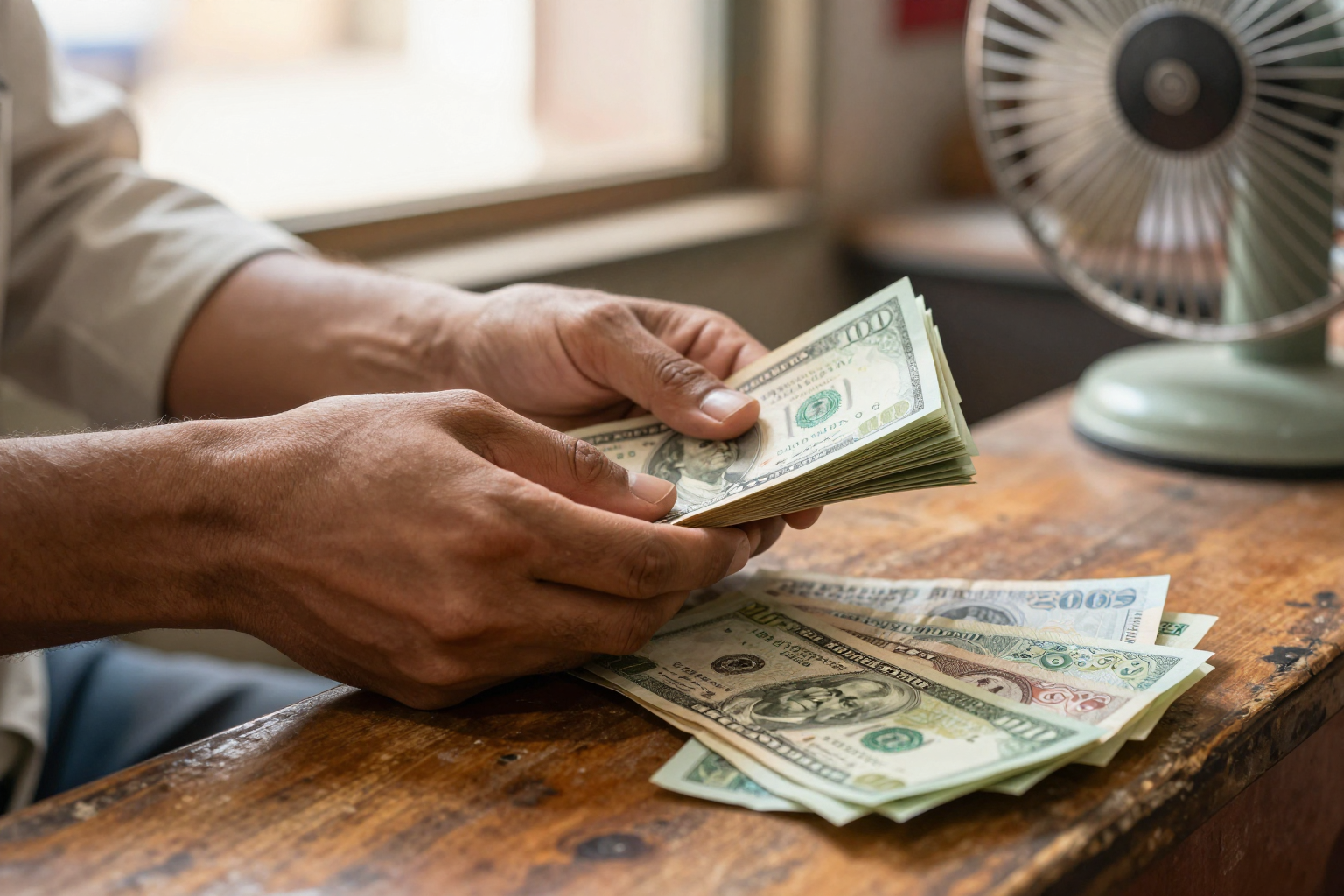
Type "1 usd to pkr" into a search bar and you get one clean number, sitting there with quiet authority. At the time of writing it's somewhere around 278 to 280 Pakistani rupees for a single US dollar. It looks settled. It isn't.
That figure is a midpoint, an average drawn from a market where commercial banks, money changers and currency dealers all quote slightly different prices on the same afternoon. What actually ends up in your hand depends on where you change the money, how much you're changing, and whether it moves as cash or as a wire transfer.
Suppose the interbank rate is 278.50. You walk into a money changer in Islamabad with a $100 note and he offers you 276.20. On a hundred dollars that's a difference of 230 rupees, roughly the price of two plates of biryani. On $5,000 the same gap costs you 11,500 rupees.
This isn't a scam. It's the spread, the dealer's margin for holding inventory, taking on risk and covering his own cost of buying dollars from the bank. Every currency market in the world works this way. The trouble starts when people plan a budget around the Google number and then feel cheated at the counter. The rate on the screen and the money in your hand are two related but distinct things, and knowing which one you're looking at saves a lot of confusion.
This is the price banks charge each other, and it's the number most news sites and currency apps publish. It applies to large electronic transactions between financial institutions. Ordinary people almost never get it. If your salary is remitted through a bank, you'll get something close to it, minus a service charge.
This is what you get when you physically hand over a dollar note. The open market rate typically sits a rupee or two above the interbank rate, sometimes more when demand for physical dollars spikes. During Hajj season, ahead of major import payments, or whenever rumour about rupee devaluation starts circulating, that gap can widen noticeably.
A responsible dealer will tell you both numbers if you ask. It's a fair question and worth asking, because what the rate on the board doesn't tell you is usually the more useful half of the story.
The rupee isn't floating freely against the dollar. It's managed, which means the State Bank of Pakistan intervenes to smooth out sharp moves. Even so, several forces push the number up and down week to week.
Say the published rate is 279.10 and your bank's app confirms it. You take $500 to a dealer offering 277.35.
500 × 277.35 = 138,675 rupees. Had you received the screen rate, you'd have got 139,550. The 875-rupee gap is your spread cost. Add a flat commission if the dealer charges one, and check whether any notes are old-series or marked, because some dealers discount those by another rupee or two per dollar. Ask for the final rupee figure before you push the cash across the counter, not after. That single habit is worth more than any rate-tracking app.
If you're receiving money from abroad, the channel matters as much as the rate. A bank wire into a Pakistani account usually converts near the interbank rate but carries a fixed fee of $15 to $35 on the sending side. Remittance services like Wise or Remitly often quote a slightly worse rate but charge lower fees. Informal hundi channels quote attractive numbers and carry legal and practical risk that isn't worth it.
For spending, a foreign debit card swiped in Lahore converts at the card network's rate plus a foreign transaction fee, typically 2 to 3 percent. That's often competitive with cash, though you lose the ability to negotiate. Knowing what the rate really means before you exchange helps you compare all three fairly instead of guessing.
Changing $20 at a airport kiosk is a bad deal in percentage terms. Fixed costs don't shrink with the amount, and airport counters know you have no alternative. A 3-rupee spread on $20 costs 60 rupees, which feels trivial until you realise it's over 1 percent of the transaction, before any commission. On $5,000 that same spread still costs 3 percent of nothing much in relative terms, but the absolute number is large enough to negotiate over. Dealers will often improve their quote by 20 or 30 paisa per dollar on a five-figure sum. Ask.
It's worth comparing regional rates now and then, if only to understand what a strong or weak currency actually means in daily life. The rupee's relationship with the dollar is a different story from the rupee's relationship with, say, the Indian rupee, and the same $1 that buys a litre of petrol in Pakistan buys considerably less or more depending on where you cross. What a single dollar buys in India makes for an interesting contrast, and it sharpens your sense of what an exchange rate is really measuring.
Abstract numbers become concrete quickly in Pakistan. One dollar, converted at the counter, gets you roughly a litre of petrol, or two cups of chai and a samosa, or a short rickshaw ride across a city. A kilogram of chicken costs about two and a half dollars. A monthly electricity bill for a mid-sized household in summer can swallow $40 to $60.
That perspective matters more than the second decimal place on any quote. The rate tells you what the market thinks a dollar is worth today. The prices around you tell you what it's worth to you. Track both, and you'll make better decisions than someone refreshing a currency widget every morning and still getting surprised at the counter.
Slot ID: blog-post-bottom